

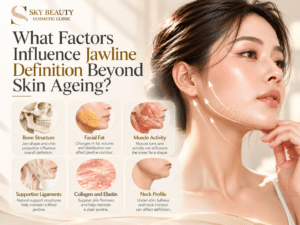
A sharply defined jawline is not simply a skin concern. What Factors Influence Jawline Definition Beyond Skin Ageing? The answer lies in the relationship between facial structure, volume distribution, muscle activity, and the delicate balance of the lower face and neck. For a result that feels refined rather than overdone, each of these details deserves careful consideration.
What Influences Jawline Definition Beyond Skin Aging?
Even smooth, well-cared-for skin can sit over a jawline that appears soft, recessed, or less sculpted than desired. Genetics play a meaningful role. The size and projection of the chin, the angle of the jaw, and the natural width of the lower face establish the framework that defines a profile long before visible aging begins.
For some people, a less prominent chin can make the jawline appear shorter or blend into the neck, even when skin laxity is minimal. Others may have a naturally broader lower face, creating a stronger but less tapered contour. Neither is inherently a flaw. They are anatomical variations that call for a personalized approach rather than a standard treatment plan.
Facial Fat and Volume Distribution
The face does not lose or gain volume evenly. Small pockets of fullness beneath the chin, around the jowls, or along the lower cheeks can soften the transition from face to neck. Weight fluctuations may make this more noticeable, but genetics can also determine where the body stores facial fat.
At the same time, volume loss in the cheeks and temples can change the way the lower face is perceived. When mid-face support diminishes, the eye is drawn downward, and the jawline may look heavier or less lifted. In these cases, treating only the jaw may not create the most balanced outcome.
Changes in mid-face volume can influence the overall appearance of the lower face. The appropriate approach depends on individual facial structure and assessment.
Muscle Activity and Facial Shape
The masseter muscles, located at the back of the jaw, are essential for chewing but can become enlarged through genetics, teeth grinding, or habitual clenching. When these muscles are prominent, they can create a square or wider lower-face shape.
For selected clients, options relating to masseter muscle activity may be discussed following an appropriate clinical assessment. This is not about eliminating natural facial character. It is about considering whether muscle bulk is contributing to a shape that feels out of proportion with the rest of the face. A skilled assessment also considers jaw function, dental history, and whether clenching should be addressed with a dentist.
Chin Projection, Bite, and Profile Balance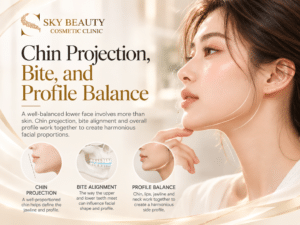
Jawline definition is viewed in three dimensions, not just from the front. Chin projection has a significant effect on how the jawline reads from the side. Chin projection can influence the appearance of the jawline and side profile. Individual facial proportions vary, and assessment should take these differences into account.
Bite alignment and dental structure can also influence the lower face. Cosmetic treatments can enhance contour, but they do not replace orthodontic or surgical care when there is a significant functional concern. This distinction matters. The most sophisticated aesthetic planning respects both appearance and underlying anatomy.
Skin Quality Still Matters, but It Is Only One Layer
Skin aging can contribute to a less defined jawline through collagen loss, reduced elasticity, and changes in texture. Sun exposure, smoking, stress, sleep quality, and hormonal shifts may accelerate these changes. However, skin tightening alone may not address fullness, structural imbalance, or loss of facial support.
When skin laxity is a concern, radiofrequency microneedling or ultrasound-based procedures may be discussed where appropriate. Suitability, potential outcomes and risks depend on the specific procedure and individual circumstances.precisely precisely
For more advanced laxity, non-surgical options may offer improvement but cannot replicate the effect of surgery.
A Personalized Approach Creates the Most Natural Result
A polished jawline treatment plan begins with proportion, not a single product or device. Depending on your features and goals, a clinician may assess chin support, cheek volume, muscle movement, submental fullness, skin quality, and the profile from multiple angles before recommending a path forward.
Depending on the assessment, options for discussion may include treatments relating to facial structure, muscle activity, skin quality or under-chin fullness. Each option has specific indications, limitations and risks. The best choice depends on what is actually creating the softness or imbalance.
At Sky Beauty Cosmetic Clinic, Personalized Aesthetic Care means looking beyond one area to create a result that complements your natural features. A considered consultation can reveal whether your ideal jawline is best supported through contour, skin refinement, muscle balancing, or a combination of carefully selected treatments.
Jawline goals are individual. Treatment discussions should consider natural facial features, realistic expectations and the limitations of each option.