

Why Pigmentation Shows More With Age in Macquarie Park
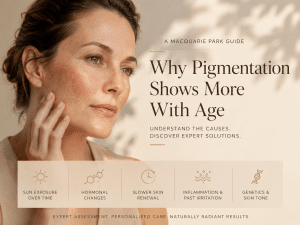
A spot that once seemed faint can suddenly feel much more visible in the mirror. Why Can Pigmentation Become More Noticeable With Age? A Macquarie Park Guide begins with a simple truth: pigmentation is rarely caused by one factor alone. Years of sun exposure, changing hormones, slower skin renewal, and past inflammation can all leave their mark on the complexion.
For many people, the concern is not that pigmentation has appeared overnight. It is that existing freckles, sun spots, or uneven patches have gradually deepened, spread, or become harder to conceal. With a considered plan, it may be possible to improve the appearance of clarity and create a more even, luminous-looking complexion while respecting the skin’s individual needs.
Why pigmentation becomes more noticeable with age
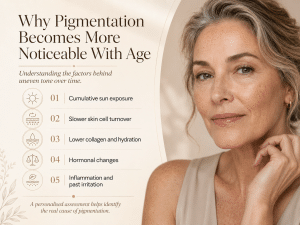
Melanin is the pigment that gives skin its color and helps protect it from ultraviolet exposure. Over time, repeated sun exposure can prompt pigment-producing cells to work unevenly. Rather than creating a uniform tan, this cumulative exposure may lead to concentrated areas of pigment, often called sun spots or age spots, on the face, chest, shoulders, and hands.
The greater issue is cumulative exposure. A Sydney lifestyle can mean regular incidental UV exposure during commutes, outdoor lunches, errands, and weekends outside, even when there has been no obvious sunburn. UVA rays also pass through clouds and glass, contributing to visible photoaging over the years.
Several changes can make pigmentation more apparent with age:
- Skin cell turnover naturally slows, so pigment can remain near the skin’s surface for longer.
- Collagen and hydration decline, which can make the complexion look less reflective and uneven tone stand out more clearly.
- Hormonal changes, including pregnancy, perimenopause, or some hormonal medications, can contribute to melasma in predisposed skin.
- Inflammation from acne, eczema, irritation, or aggressive treatments may leave post-inflammatory hyperpigmentation.
- Certain medications and medical conditions can increase photosensitivity or alter pigmentation patterns.
There is also a contrast effect. As the skin becomes drier, finer lines and texture changes can catch the light differently, making a pigmented area appear darker even when the pigment itself has changed only slightly.
Not all discoloration is the same
“Pigmentation” is a useful umbrella term, but treatment should never be one-size-fits-all. Sun spots tend to be more defined and may respond differently from diffuse melasma, acne-related marks, or redness that is mistaken for brown pigmentation. Skin tone, sensitivity, lifestyle, hormonal history, current skincare, and prior treatment response all influence the safest course of care.
Melasma requires particular consideration. It can be triggered by ultraviolet light, visible light, heat, and hormonal fluctuations. In some cases, overly aggressive energy-based treatment may not be suitable and requires careful consideration. This is why a professional assessment should come before selecting a laser, peel, or active skincare routine.
A new, changing, raised, bleeding, itchy, or irregularly coloured spot should be assessed by a qualified medical professional before cosmetic treatment. Cosmetic care can address many appearance-related concerns, but it should not replace medical assessment when required.
A refined approach to age-related pigmentation
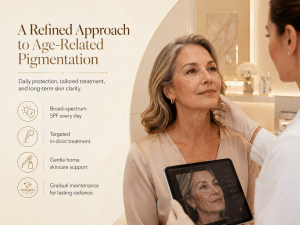
The most effective pigment plans typically combine daily protection with targeted in-clinic treatment. Broad-spectrum sunscreen is foundational, ideally applied generously each morning and reapplied when outdoors. Hats, sunglasses, and shade are equally valuable, especially after professional treatments when skin may be more reactive to UV exposure.
At Sky Beauty Cosmetic Clinic, personalised aesthetic care begins by identifying the type and depth of visible pigmentation, alongside factors that may be sustaining it. Depending on the assessment, a plan may include advanced laser treatments, carefully selected skin rejuvenation procedures, or professional skincare designed to support brighter, more even-looking skin.
Laser treatments can be an option for selected sun-induced pigmentation because they target visible pigment within the skin. However, the device, settings, and treatment schedule matter. Deeper skin tones and melasma-prone skin require particularly careful planning to support appropriate treatment outcomes.
In some cases, a gradual approach is preferable to a single intensive procedure. Skin preparation, gentle treatment sessions, consistent home care, and maintenance appointments can produce a more polished result while protecting the skin barrier. The goal is not to erase every natural freckle or create an artificial finish. It is to help the complexion look clearer, fresher, and naturally refined.
When to book a pigmentation consultation in Macquarie Park
Consider a consultation if makeup is no longer covering uneven tone as it once did, dark patches are becoming more noticeable, or previous treatments have delivered inconsistent results. A tailored plan can clarify whether the concern is sun damage, melasma, post-inflammatory pigmentation, or a combination of factors.
Results develop at different rates, and ongoing UV protection remains essential after treatment. With specialist oversight, precise technology, and a plan built around your skin rather than a trend, pigmentation care can become a confident part of long-term skin maintenance.