

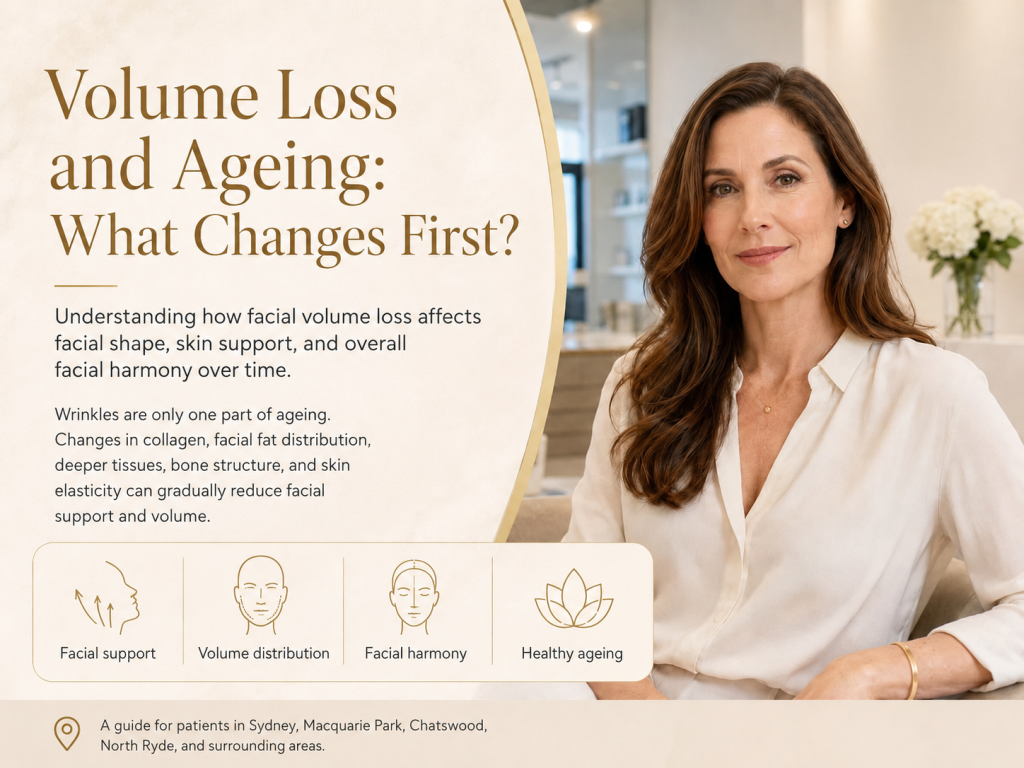
When people think about ageing, they often focus on wrinkles. However, one of the most significant changes that occurs as we get older is facial volume loss.
In modern aesthetic medicine, volume loss is widely recognised as a major contributor to an ageing appearance. It can affect facial shape, skin support, and overall facial harmony long before deep wrinkles become noticeable.
For patients across Sydney, Macquarie Park, Chatswood, North Ryde, and surrounding areas, understanding how facial volume changes over time can help create realistic expectations and support informed discussions during cosmetic consultations.
What Is Facial Volume Loss?
Facial volume refers to the natural fullness and support provided by the skin, fat compartments, connective tissues, muscles, and underlying bone structure.
When we are younger, these structures work together to create:
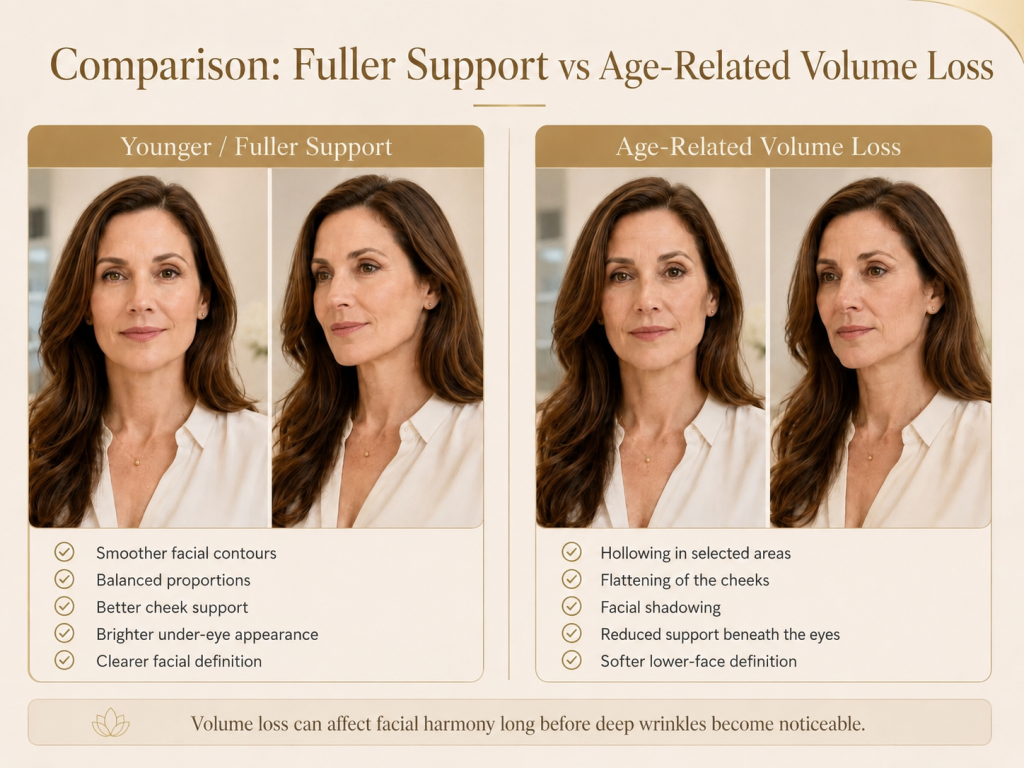
- Smooth facial contours
- Balanced proportions
- Healthy facial support
- A naturally refreshed appearance
As we age, gradual changes occur throughout the face.
These changes may include:
- Reduction in collagen production
- Changes in facial fat distribution
- Structural changes within deeper tissues
- Natural bone remodelling
- Reduced skin elasticity
The result is often a gradual loss of facial support and volume.
Why Volume Loss Is More Important Than Many People Realise
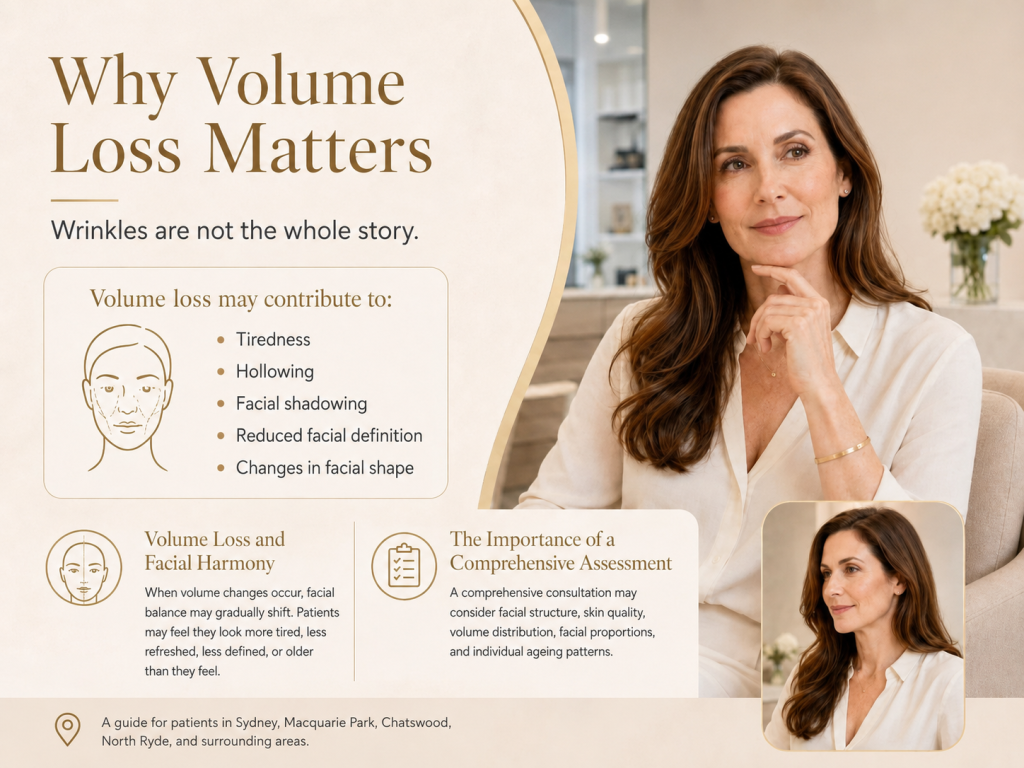
Many people assume wrinkles are the primary cause of facial ageing.
In reality, volume loss often contributes significantly to the appearance of:
- Tiredness
- Hollowing
- Facial shadowing
- Reduced facial definition
- Changes in facial shape
This is why two individuals of the same age can appear very different depending on how their facial structure has changed over time.
Modern facial rejuvenation increasingly focuses on understanding these deeper structural changes rather than simply treating surface lines.
Common Areas Affected by Volume Loss
Facial ageing does not occur evenly.
Certain areas are more likely to demonstrate visible changes over time.
Temples
The temples play an important role in framing the face.
Volume changes in this area may contribute to:
- A more hollow appearance
- Reduced facial balance
- Changes in facial contours
Even subtle changes can influence overall facial harmony.
Midface and Cheeks
The cheeks provide support to the central face.
As facial volume changes occur, patients may notice:
- Flattening of the cheeks
- Reduced facial support
- Changes in facial proportions
- Increased facial heaviness
The midface is often one of the first areas where age-related structural changes become noticeable.
Under-Eye Area
The area beneath the eyes is particularly sensitive to age-related changes.
Patients commonly report concerns such as:
- Tired appearance
- Facial shadowing
- Reduced support beneath the eyes
These concerns are often influenced by multiple factors, including volume changes and skin quality.
Lower Face and Jawline
Changes in facial support can affect lower-face definition.
Patients may notice:
- Softer jawline contours
- Reduced facial structure
- Changes in facial balance
These changes are a normal part of ageing.
How Facial Ageing Affects Different Ethnicities
Facial ageing patterns vary between individuals and ethnic groups.
For example, many Asian patients may experience:
- Midface volume changes
- Reduced facial support
- Changes in facial contours
before developing deep wrinkles.
This is one reason why comprehensive facial assessment is so important.
A personalised approach allows practitioners to understand the unique ageing patterns affecting each patient.
Volume Loss and Facial Harmony
Facial harmony refers to the balance between different facial features and structures.
When volume changes occur, this balance may gradually shift.
Patients may feel that they look:
- More tired
- Less refreshed
- Less defined
- Older than they feel
even if they cannot identify a specific reason.
This is often because subtle structural changes have affected overall facial proportions.
The Importance of a Comprehensive Assessment
Because facial ageing involves multiple layers of the face, modern aesthetic medicine increasingly focuses on holistic assessment.
A comprehensive consultation may consider:
- Facial structure
- Skin quality
- Volume distribution
- Facial proportions
- Individual ageing patterns
Rather than focusing on a single concern, practitioners assess how different factors interact to influence overall appearance.
Why Every Face Ages Differently
There is no single pattern of facial ageing.
Factors that influence ageing include:
Genetics
Genetics play a significant role in determining how the face changes over time.
Lifestyle
Daily habits can influence the rate and appearance of ageing.
Examples include:
- Sun exposure
- Smoking
- Nutrition
- Exercise
- Sleep quality
Environmental Factors
Climate, pollution, and ultraviolet exposure may all contribute to visible skin ageing.
Overall Health
General health and wellbeing can influence skin quality and facial appearance.
Because ageing is highly individual, treatment recommendations should always be personalised.
Supporting Healthy Ageing
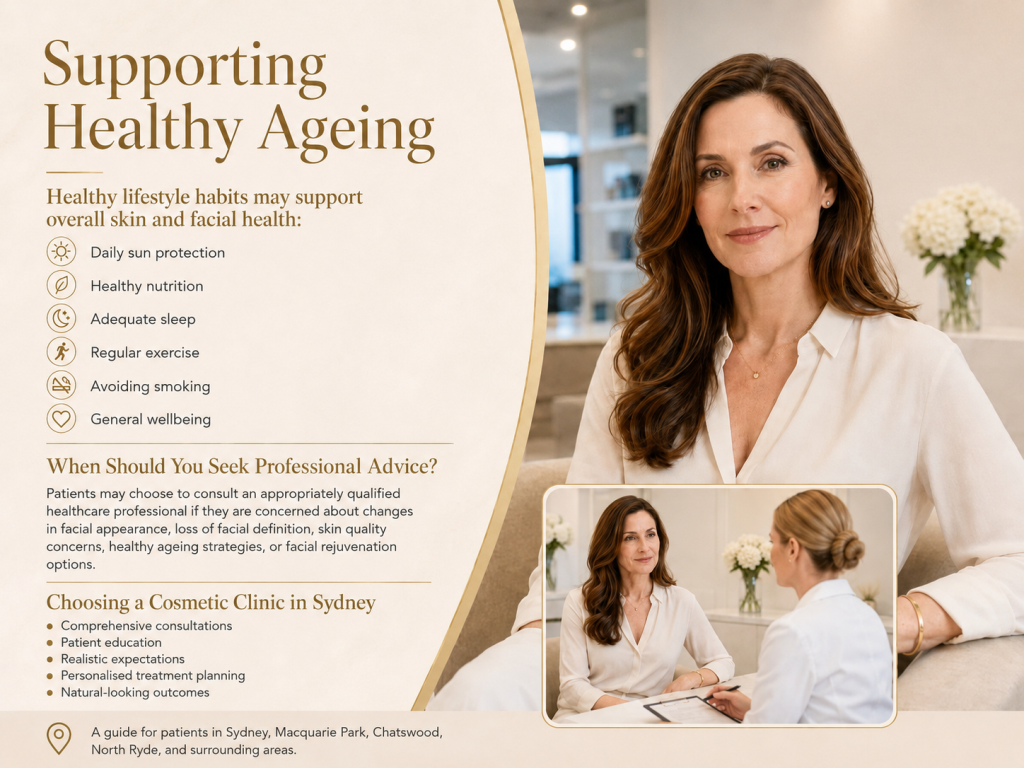
While facial volume changes are a natural part of life, maintaining healthy lifestyle habits may support overall skin and facial health.
Important habits include:
Daily Sun Protection
Sun exposure remains one of the leading contributors to visible skin ageing in Australia.
Healthy Nutrition
A balanced diet supports overall wellbeing and skin health.
Adequate Sleep
Sleep plays a vital role in recovery and repair processes.
Regular Exercise
Physical activity supports circulation and general health.
Avoiding Smoking
Smoking is associated with accelerated skin ageing and reduced skin quality.
When Should You Seek Professional Advice?
Patients may choose to consult an appropriately qualified healthcare professional if they are concerned about:
- Changes in facial appearance
- Loss of facial definition
- Skin quality concerns
- Healthy ageing strategies
- Facial rejuvenation options
A consultation allows practitioners to assess individual anatomy, discuss concerns, and provide personalised recommendations where appropriate.
Choosing a Cosmetic Clinic in Sydney
When researching cosmetic clinics in Sydney, Macquarie Park, Chatswood, North Ryde, or surrounding areas, look for practitioners who prioritise:
- Comprehensive consultations
- Patient education
- Realistic expectations
- Personalised treatment planning
- Natural-looking outcomes
The consultation process should focus on understanding your concerns rather than promoting a one-size-fits-all solution.
Final Thoughts
Volume loss is one of the most important yet often overlooked aspects of facial ageing. While wrinkles may be the most visible sign of ageing, changes beneath the skin frequently play a significant role in how the face evolves over time.
Understanding facial volume loss can help patients better appreciate the ageing process and engage in more informed discussions during cosmetic consultations.
Whether you are located in Sydney CBD, Macquarie Park, Chatswood, North Ryde, Epping, or surrounding suburbs, seeking advice from an appropriately qualified healthcare professional is an important first step in understanding your individual facial ageing concerns and exploring suitable management options.
Disclaimer
This article is intended for general educational purposes only and does not constitute medical advice. Any medical or cosmetic treatment should only be considered following consultation with an appropriately qualified healthcare professional. Treatment suitability, risks, benefits, and alternatives should be assessed on an individual basis.