

Understanding Structural Facial Ageing: Why the Face Changes Beyond Wrinkles
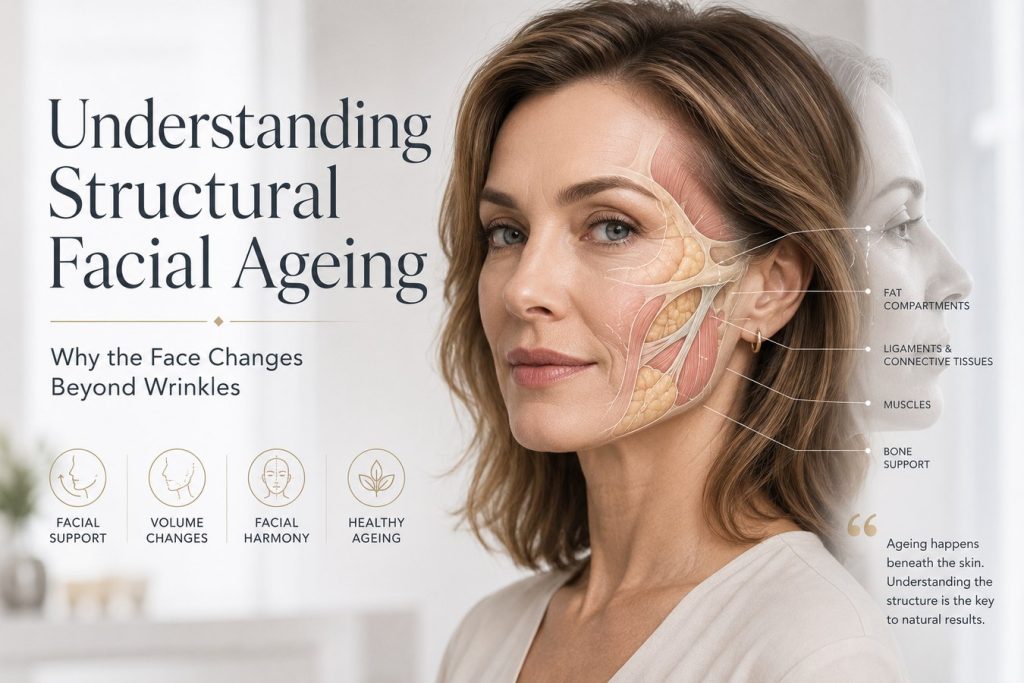
When most people think about facial ageing, they think about wrinkles.
However, wrinkles are only one visible part of a much larger process.
Modern aesthetic medicine increasingly recognises that many of the changes associated with ageing occur beneath the skin. These deeper changes affect facial shape, facial support, facial proportions, and overall appearance.
This process is known as structural facial ageing.
Understanding structural facial ageing can help explain why many people feel they look older, more tired, or less defined even when they have relatively few wrinkles.
For patients in Sydney CBD, Macquarie Park, Chatswood, North Ryde, and surrounding suburbs, understanding these changes is often the first step towards developing realistic expectations about healthy ageing and facial rejuvenation.
What Is Structural Facial Ageing?
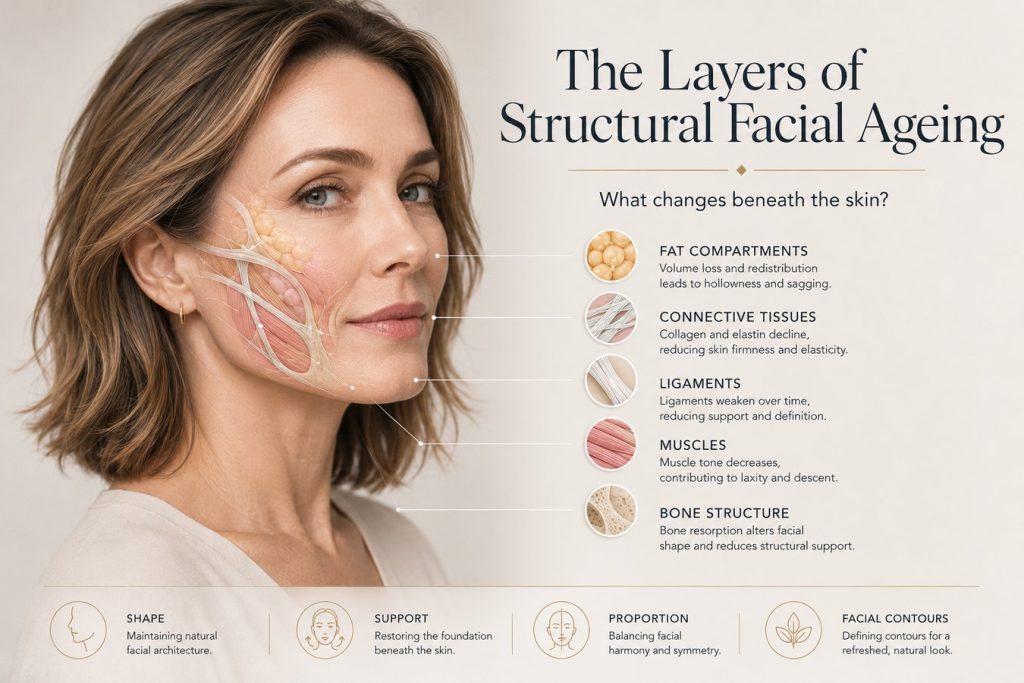
Structural facial ageing refers to age-related changes that occur beneath the skin.
These changes affect the deeper framework of the face, including:
- Fat compartments
- Connective tissues
- Ligaments
- Muscles
- Bone structure
Because these structures support the face, changes within them can significantly influence appearance.
In many cases, structural ageing contributes more to a tired or aged appearance than wrinkles alone.
Why Facial Ageing Is More Than Skin Deep
For many years, facial ageing was viewed primarily as a skin problem.
The focus was often on:
- Fine lines
- Wrinkles
- Skin texture
While these concerns remain important, research has shown that ageing affects every layer of the face.
As a result, modern facial assessment often considers both skin ageing and structural ageing.
A person may have relatively smooth skin but still appear older due to changes in facial support and facial contours.
The Layers of Structural Facial Ageing
Facial Fat Compartments
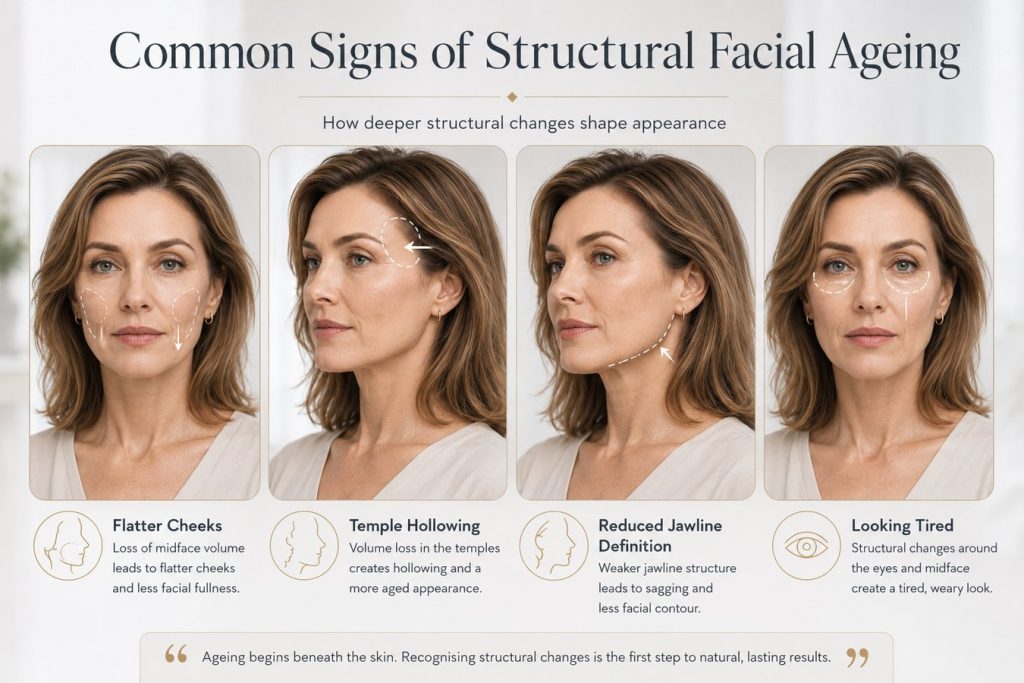
The face contains multiple fat compartments that provide shape, support, and contour.
When we are younger, these compartments help create:
- Smooth transitions between facial regions
- Full cheeks
- Balanced facial proportions
- Youthful facial contours
Over time, facial fat may:
- Decrease in volume
- Shift position
- Redistribute
These changes contribute to:
- Flatter cheeks
- Hollow temples
- Reduced facial support
- A tired appearance
Ligament Changes
Facial ligaments help anchor soft tissues to underlying structures.
As we age, these support systems may gradually weaken.
Reduced support may contribute to:
- Changes in facial contours
- Altered facial proportions
- Less defined facial structure
Although these changes are not visible directly, they influence how the face ages.
Muscle Changes
Facial muscles play an important role in expression and movement.
Over time, changes in muscle activity may influence:
- Facial balance
- Facial dynamics
- Expression patterns
Because muscles interact with surrounding tissues, these changes may contribute to overall facial ageing.
Bone Structure Changes
One of the most surprising aspects of structural facial ageing is that facial bones also change with age.
The facial skeleton provides the framework that supports:
- Skin
- Fat compartments
- Muscles
- Connective tissues
Natural age-related bone remodelling may affect:
- Facial proportions
- Facial support
- Structural balance
Because bone forms the foundation of the face, these changes influence everything above it.
Why Structural Ageing Makes People Look Older
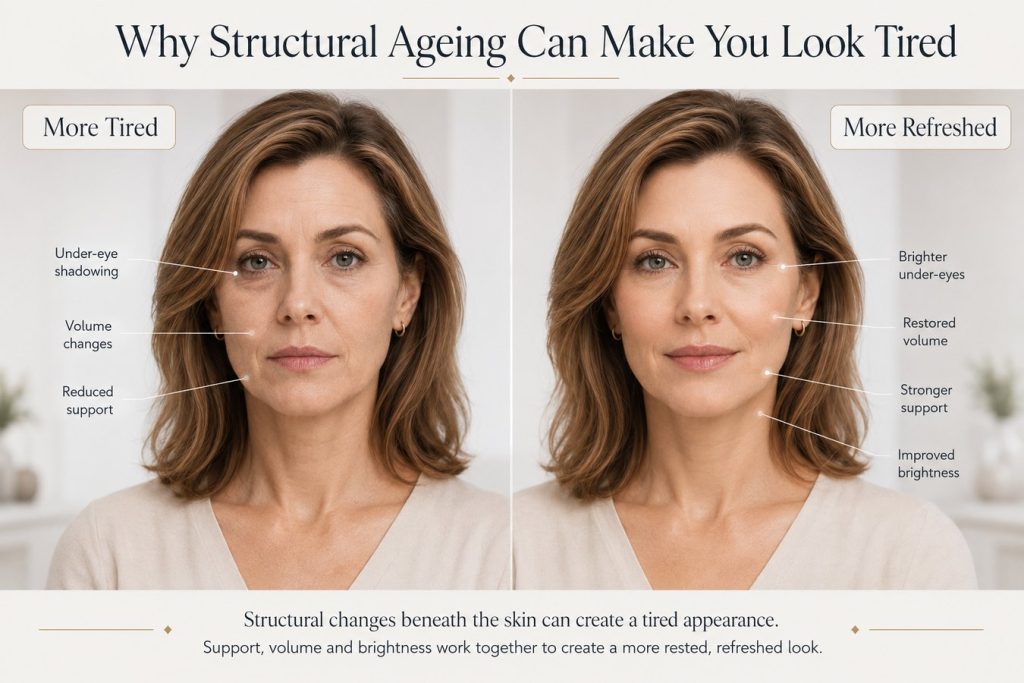
Many people assume wrinkles are responsible for looking older.
In reality, structural ageing often creates more noticeable changes.
Patients commonly report:
> “My face looks different.”
> “I look tired all the time.”
> “My face seems flatter.”
> “I look older in photos.”
These concerns are often related to structural changes rather than wrinkles alone.
Common Signs of Structural Facial Ageing
Flatter Cheeks
Reduced midface support may contribute to:
- Less cheek projection
- Reduced facial fullness
- Changes in facial contours
Temple Hollowing
Temple volume changes may affect:
- Facial framing
- Upper-face balance
- Facial harmony
Reduced Jawline Definition
Changes in facial support may influence lower-face contours.
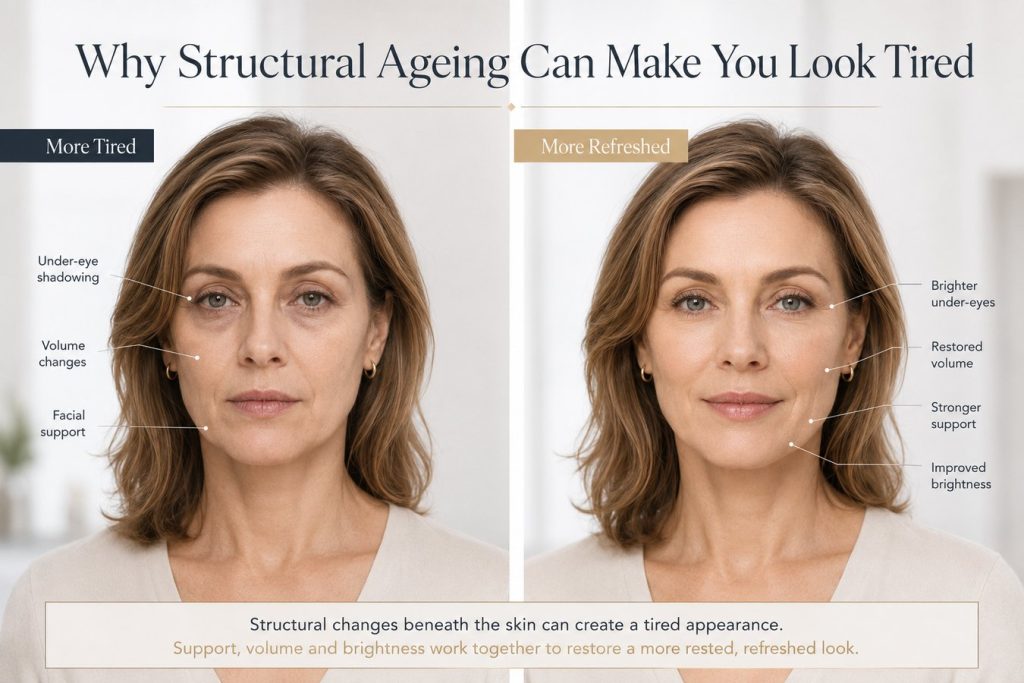
Looking Tired
Many people appear more tired because structural changes create:
- Facial shadowing
- Reduced support beneath the eyes
- Less facial brightness
These effects often become noticeable before significant wrinkles develop.
Structural Ageing vs Wrinkles
One of the most important concepts in modern aesthetic medicine is understanding the difference between structural ageing and wrinkles.
Wrinkles
Wrinkles affect the surface of the skin.
Examples include:
- Forehead lines
- Crow’s feet
- Fine lines around the mouth
Structural Ageing
Structural ageing affects the underlying architecture of the face.
Examples include:
- Volume loss
- Temple hollowing
- Midface flattening
- Reduced facial definition
A person can have minimal wrinkles yet still appear older because of structural changes.
Why Asian Faces Age Differently
Asian facial ageing often follows different patterns compared with ageing patterns commonly described in Western populations.
Many Asian patients notice:
- Midface volume changes
- Temple hollowing
- Reduced facial support
- Changes in facial contours
before deep wrinkles become prominent.
Common concerns include:
> “My face looks flatter.”
> “I look tired in photographs.”
> “I don’t look as refreshed.”
Because structural changes often occur before significant skin wrinkling, understanding structural ageing is particularly important for Asian patients.
Facial Harmony and Structural Ageing
Structural ageing influences facial harmony.
Facial harmony refers to the balance between:
- Forehead
- Temples
- Eyes
- Cheeks
- Nose
- Lips
- Chin
- Jawline
When structural changes affect one area, the proportions of the entire face may change.
This is why experienced practitioners typically assess the whole face rather than focusing on a single concern.
Lifestyle Factors That Influence Structural Ageing
While ageing is inevitable, certain lifestyle factors may influence how ageing appears.
Sun Exposure
Sydney’s high UV exposure contributes significantly to visible skin ageing.
Smoking
Smoking is associated with accelerated ageing and reduced tissue quality.
Nutrition
Balanced nutrition supports overall health and wellbeing.
Sleep
Quality sleep supports recovery and healthy appearance.
Exercise
Regular exercise contributes to general health and wellbeing.
Stress
Long-term stress may affect overall health and appearance.
Why Understanding Structural Ageing Matters
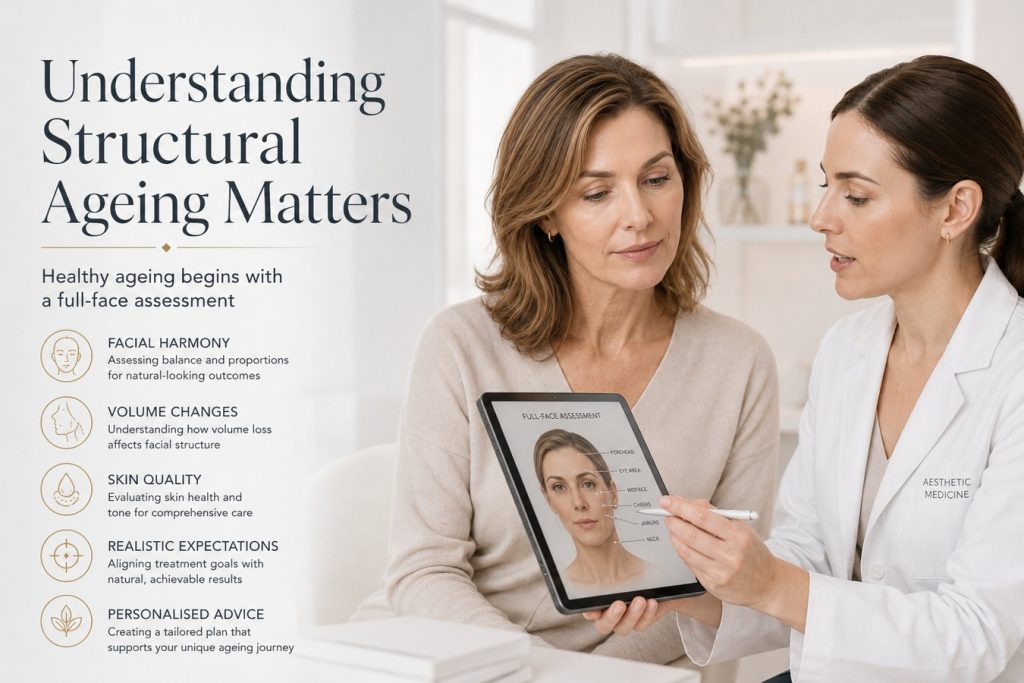
Many people become frustrated because they focus only on wrinkles while overlooking deeper changes occurring within the face.
Understanding structural facial ageing helps explain:
- Why you may look tired
- Why your face looks flatter
- Why photographs look different
- Why facial definition changes
- Why facial proportions evolve over time
This understanding often leads to more realistic expectations regarding ageing and facial appearance.
Final Thoughts
Structural facial ageing is one of the most important yet least understood aspects of the ageing process. Changes in facial fat compartments, connective tissues, muscles, ligaments, and bone structure all contribute to how the face evolves over time.
While wrinkles remain an important part of ageing, many of the changes that make people look older are actually caused by deeper structural changes beneath the skin.
Whether you are located in Sydney CBD, Macquarie Park, Chatswood, North Ryde, Epping, or surrounding suburbs, understanding structural facial ageing can help you better appreciate the natural ageing process and make more informed decisions about healthy ageing and facial rejuvenation.