

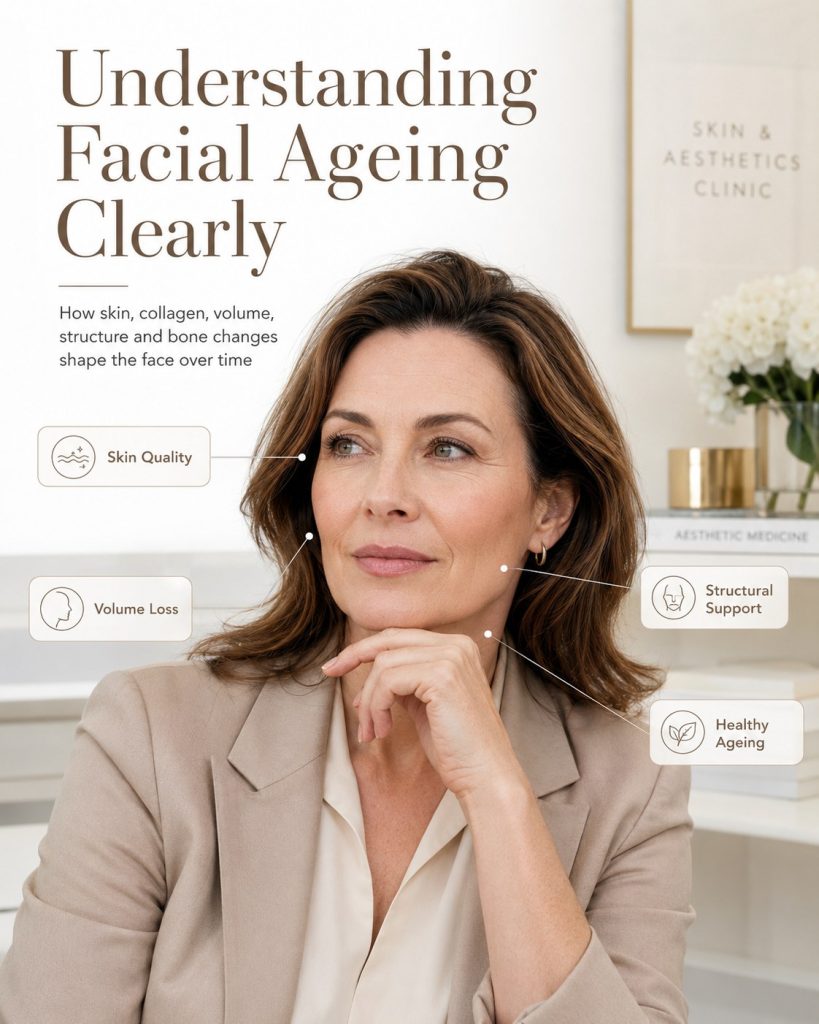
Ageing is a natural part of life, yet many people are surprised by how gradually and subtly the face changes over time. One day, you look in the mirror and notice that you appear more tired, less defined, or older than you feel.
Facial ageing is far more complex than simply developing wrinkles. In reality, ageing affects every layer of the face, including the skin, fat, muscles, connective tissues, and underlying bone structure.
Understanding these changes can help patients develop realistic expectations, make informed decisions about healthy ageing, and better understand the factors contributing to changes in facial appearance.
Whether you are in Sydney, Macquarie Park, Chatswood, North Ryde, or surrounding areas, understanding facial ageing is often the first step towards a more informed approach to facial rejuvenation.
Facial Ageing Is More Than Wrinkles
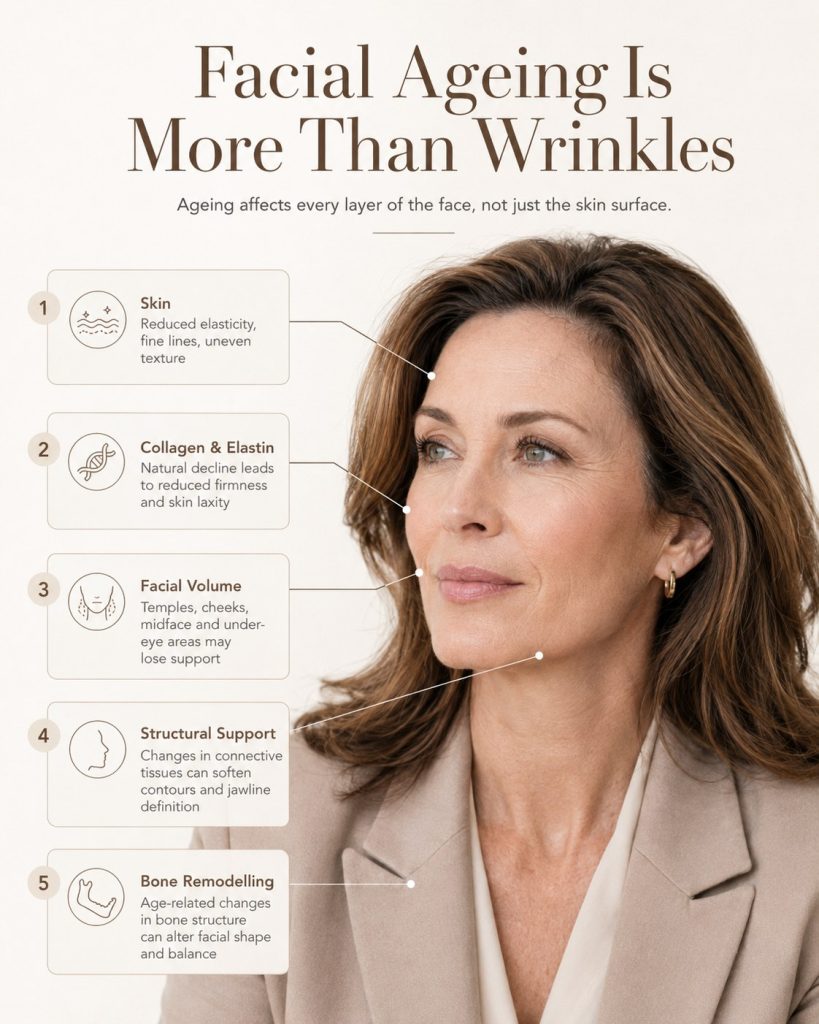
One of the biggest misconceptions about ageing is that wrinkles are the primary cause of an older appearance.
While wrinkles are certainly part of the ageing process, they are often only one visible symptom of deeper structural changes occurring beneath the skin.
Many people who look tired or older than they feel are actually experiencing changes related to:
- Facial volume
- Skin quality
- Facial support
- Structural ageing
- Changes in facial proportions
Modern aesthetic medicine increasingly focuses on understanding these deeper factors rather than treating wrinkles alone.
The Layers of Facial Ageing
To understand why the face changes over time, it is helpful to consider the different layers involved.
Skin
The skin is the most visible part of facial ageing.
Over time, natural biological processes may contribute to:
- Reduced elasticity
- Fine lines
- Wrinkles
- Uneven texture
- Changes in skin tone
Environmental factors such as ultraviolet exposure can also influence skin ageing.
Collagen and Elastin Changes
Collagen provides structure and support to the skin, while elastin contributes to flexibility and resilience.
From our mid-20s onwards, collagen production gradually declines.
This natural reduction may contribute to:
- Reduced firmness
- Skin laxity
- Fine lines
- Changes in skin quality
These changes occur slowly and are considered a normal part of ageing.
Facial Volume Changes
One of the most important aspects of facial ageing is volume loss.
As we age, facial fat compartments may shift, reduce, or redistribute.
This can affect areas such as:
- Temples
- Cheeks
- Midface
- Under-eye region
Volume changes can create:
- Hollowing
- Facial shadowing
- Reduced facial support
- A tired appearance
In many cases, facial volume changes contribute more to perceived ageing than wrinkles themselves.
Structural Support Changes
Ageing also affects the deeper support structures of the face.
Changes within connective tissues and supporting structures may influence:
- Facial contours
- Jawline definition
- Overall facial balance
These changes can alter facial proportions and contribute to a less defined appearance.
Bone Remodelling
Many people are unaware that facial bones also change over time.
Natural age-related changes in facial bone structure may influence:
- Facial support
- Facial shape
- Structural balance
Because bone provides the foundation for facial tissues, these changes can affect overall appearance.
Common Signs of Facial Ageing
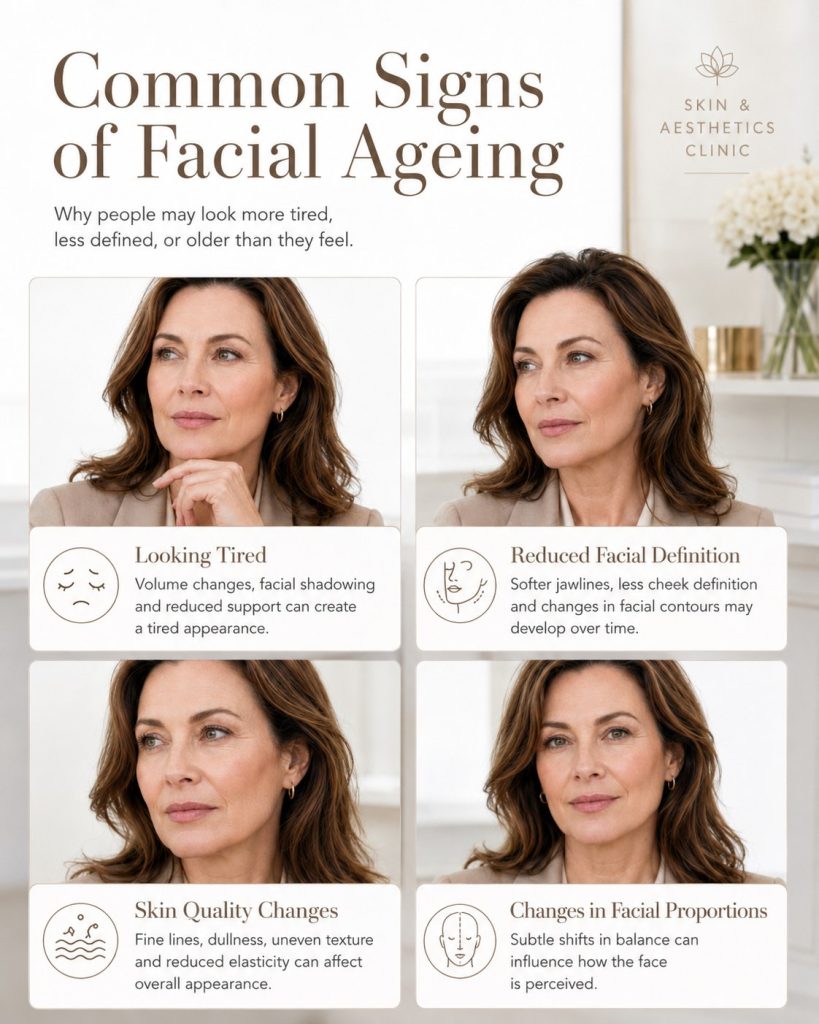
Although ageing affects everyone differently, common concerns include:
Looking Tired
One of the most common complaints is:
> “I feel fine, but everyone says I look tired.”
This often results from a combination of:
- Volume changes
- Facial shadowing
- Skin quality changes
- Structural ageing
Reduced Facial Definition
Patients may notice:
- Softer jawlines
- Less cheek definition
- Changes in facial contours
Skin Quality Changes
Common concerns include:
- Fine lines
- Uneven texture
- Dullness
- Reduced elasticity
Changes in Facial Proportions
Subtle shifts in facial balance can occur over time, influencing overall appearance.
How Facial Ageing Differs Between Individuals
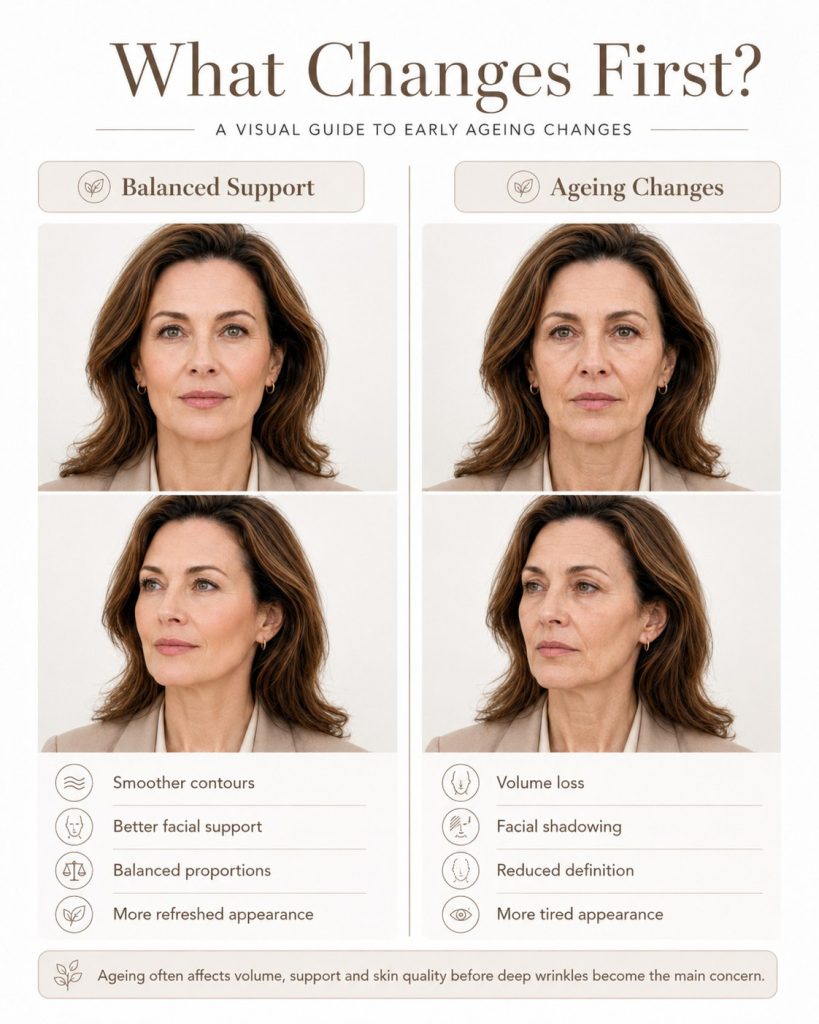
No two faces age in exactly the same way.
Several factors influence the ageing process.
Genetics
Genetics play a significant role in determining:
- Skin quality
- Facial structure
- Ageing patterns
Lifestyle
Daily habits can influence how ageing appears over time.
Important factors include:
- Sun exposure
- Smoking
- Nutrition
- Exercise
- Sleep quality
Environment
Environmental influences such as UV exposure and pollution may affect skin health and visible ageing.
How Asian Faces Age
Asian facial ageing often differs from ageing patterns commonly described in Western populations.
Many Asian patients may notice:
- Volume changes before deep wrinkles
- Midface changes
- Temple hollowing
- Reduced facial support
Because facial anatomy varies between ethnic groups, personalised assessment is particularly important.
Many Asian patients prioritise:
- Facial harmony
- Natural-looking outcomes
- Preservation of facial identity
rather than dramatic transformation.
Healthy Ageing and Facial Rejuvenation
Modern approaches to facial rejuvenation increasingly focus on healthy ageing rather than attempting to reverse every sign of age.
This philosophy emphasises:
- Skin quality
- Facial harmony
- Structural balance
- Long-term maintenance
- Realistic expectations
The goal is often to help patients look refreshed and healthy while maintaining their natural appearance.
Lifestyle Habits That Support Healthy Ageing
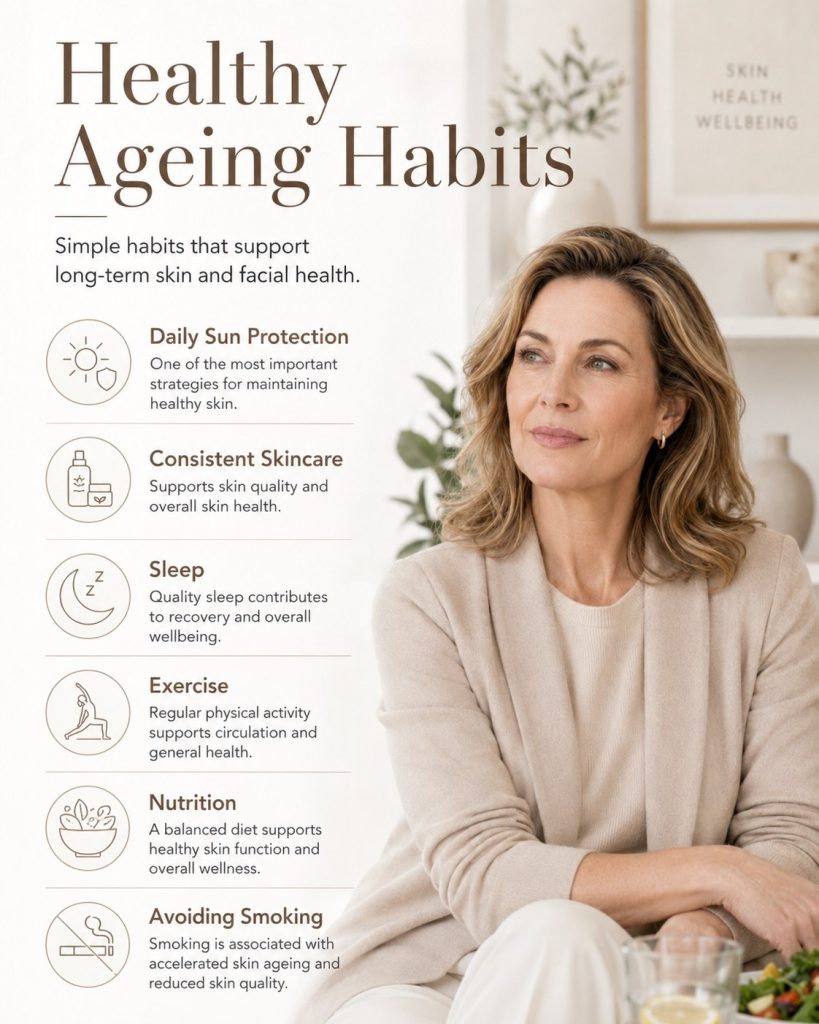
While ageing is inevitable, healthy habits may support long-term skin and facial health.
Daily Sun Protection
Sun protection remains one of the most important strategies for maintaining healthy skin.
Consistent Skincare
Appropriate skincare may help support skin quality and overall skin health.
Sleep
Quality sleep contributes to recovery and overall wellbeing.
Exercise
Regular physical activity supports circulation and general health.
Nutrition
A balanced diet supports healthy skin function and overall wellness.
Avoiding Smoking
Smoking is associated with accelerated skin ageing and reduced skin quality.
When Should You Seek Professional Advice?
Patients may choose to seek professional advice when they notice:
- Changes in facial appearance
- Loss of facial definition
- Skin quality concerns
- Persistent tired appearance
- Concerns related to healthy ageing
A consultation with an appropriately qualified healthcare professional allows for a personalised assessment of facial structure, skin quality, and individual concerns.
Final Thoughts
Facial ageing is a complex process that involves much more than wrinkles alone. Changes in skin quality, collagen production, facial volume, structural support, and facial balance all contribute to how we age.
Understanding these changes can help patients develop realistic expectations and make informed decisions regarding healthy ageing and facial rejuvenation.
Whether you are located in Sydney CBD, Macquarie Park, Chatswood, North Ryde, Epping, or surrounding suburbs, learning about facial ageing is an important first step towards understanding your facial concerns and exploring personalised options with a qualified healthcare professional.
Disclaimer
This article is intended for general educational purposes only and does not constitute medical advice. Any medical or cosmetic treatment should only be considered following consultation with an appropriately qualified healthcare professional. Treatment suitability, risks, benefits, and alternatives should be assessed on an individual basis.