

Rejuran Eye Macquarie Park: A Guide to Under-Eye Assessment

If you are concerned about dark circles, fine lines, thin under-eye skin or a tired-looking eye area, an under-eye assessment can help identify what may be contributing to the appearance.
At Sky Beauty Cosmetic Clinic Macquarie Park, the eye area can be assessed individually before Rejuran Eye or other treatment options are discussed.
This is important because under-eye concerns can look similar but have very different causes.
What Can Be Assessed Under the Eyes?
During an under-eye consultation, the practitioner may look at:
• Skin thickness
• Fine lines
• Crepey texture
• Dark-circle colour
• Visible vessels
• Pigmentation
• Hollowness
• Puffiness
• Symmetry
• Skin sensitivity
These factors can help determine whether the concern is mainly related to skin quality, pigmentation, vascular colour, facial structure or a combination of several issues.
Why Is Dark-Circle Type Important?
Dark circles are not one single condition.
They may appear blue, purple, brown or shadowed depending on the underlying cause.
Possible contributing factors include:
• Thin translucent skin
• Visible blood vessels
• Brown pigmentation
• Tear-trough hollowness
• Structural shadowing
• Genetics
• Sun exposure
• Previous irritation
At Sky Beauty Macquarie Park, identifying the likely type of dark circle can help guide a more appropriate treatment discussion.
What About Thin Under-Eye Skin?
Some clients have naturally thin or translucent skin around the eyes.
This can make underlying colour more visible and may also make fine lines appear more noticeable.
If thin skin and overall skin quality are important parts of the concern, Rejuran Eye may be considered as part of an individualised approach.
However, if clearly visible vessels or strong pigmentation are the main issue, another treatment approach may be more relevant.
Fine Lines and Crepey Texture
Fine lines under the eyes can be influenced by ageing, skin quality, dryness and repeated facial movement.
The practitioner may assess whether lines are:
• Present at rest
• More visible when smiling
• Associated with thin skin
• Accompanied by crepey texture
• Combined with dark circles
This can help determine whether a skin-focused treatment may be suitable.
Hollowness Can Create Shadowing
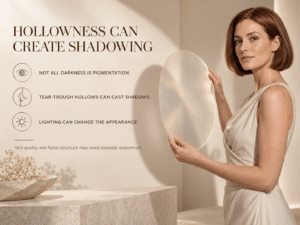
Not all dark-looking under-eyes are caused by skin colour.
Tear-trough hollowness can create shadowing, especially under overhead lighting.
If hollowness is the main contributor, the practitioner may discuss whether a treatment focused primarily on skin quality is likely to address the concern sufficiently.
At Sky Beauty Cosmetic Clinic Macquarie Park, skin and underlying facial structure may therefore be considered separately.
Puffiness Is Another Factor
Under-eye puffiness can also affect how dark circles and shadows appear.
The practitioner may look at whether puffiness is temporary, persistent or related to the underlying anatomy.
This is important because a client with puffiness may require a different treatment discussion from someone whose main concern is thin skin or fine lines.
How Long Have You Had the Concern?
You may be asked when the under-eye concern first became noticeable.
Dark circles present since childhood or adolescence may have a stronger genetic, anatomical or vascular component.
More recent changes may be influenced by ageing, sun exposure, skin quality or other factors.
The history of the concern can provide useful information during assessment.
Previous Eye Treatments Should Be Discussed
Tell the practitioner if you have previously had treatments around the eyes.
These may include:
• Rejuran Eye
• Laser or light-based treatments
• Skin-quality treatments
• Microneedling
• Chemical peels
• Other cosmetic procedures
Previous treatment response may help guide future planning.
Medical History Is Part of the Assessment
Medical history may also be reviewed before any treatment is considered.
Clients should mention:
• Current medical conditions
• Medications
• Allergies
• Previous reactions to cosmetic treatments
• Pregnancy or breastfeeding
• Active irritation or infection around the eye area
This information can affect treatment suitability.
Can More Than One Under-Eye Concern Be Present?

Yes.
Many clients have a combination of concerns.
For example:
• Thin skin plus visible vessels
• Pigmentation plus hollowness
• Fine lines plus shadowing
• Crepey texture plus dark circles
In these cases, one treatment may not address every contributing factor.
The practitioner may discuss whether Rejuran Eye, another treatment or a broader treatment plan may be more appropriate.
What Questions Can You Ask During Your Assessment?
Useful questions may include:
• What type of dark circle do I have?
• Is my concern mainly skin-related or structural?
• Could visible vessels be contributing?
• Is Rejuran Eye relevant to my concern?
• What temporary reactions may occur?
• How many sessions may be discussed?
• Are other treatment options worth considering?
The consultation is an opportunity to understand the eye area before deciding on treatment.
Why Is Individual Assessment Important?
Two clients may both say they have “dark circles,” but one may have thin blue-toned skin while another has brown pigmentation or structural shadowing.
This is why choosing treatment based only on the name of the concern can be misleading.
At Sky Beauty Macquarie Park, under-eye assessment focuses on identifying the factors contributing to the appearance before treatment options are discussed.
Rejuran Eye Assessment at Sky Beauty Macquarie Park
At Sky Beauty Cosmetic Clinic Macquarie Park, clients concerned about dark circles, fine lines, thin skin or other under-eye changes can begin with an individual eye-area assessment.
The practitioner may review skin thickness, pigmentation, visible vessels, hollowness, puffiness, texture, previous treatments and medical history.
For clients researching Rejuran Eye Macquarie Park, an under-eye assessment can help clarify whether Rejuran Eye may be considered as part of an individualised approach or whether another treatment option may be more appropriate.