

Non-Surgical Abdominal Contouring in Macquarie Park: What to Know
Abdominal appearance may change over time due to factors such as age, pregnancy, weight fluctuations, lifestyle and natural changes in skin elasticity.
Individual abdominal concerns may include localised fullness, changes in skin appearance, reduced firmness or changes in muscle tone.
Non-surgical abdominal contouring refers to cosmetic treatment options that may be considered for selected body contour concerns. These treatments are not intended for weight loss and should not be considered alternatives to surgical procedures.
At Sky Beauty Cosmetic Clinic in Macquarie Park, an individual consultation provides an opportunity to discuss abdominal contour concerns, assess relevant factors and explore suitable cosmetic treatment options.
What Can Affect the Appearance of the Abdomen?
Abdominal shape may be influenced by
• Subcutaneous fat • Visceral fat • Skin laxity • Muscle tone • Bloating • Posture • Pregnancy related changes • Scarring • Natural body proportions • A combination of factors
Different concerns require different approaches
A treatment intended for skin firmness will not have the same purpose as a treatment intended for localised fat or muscle tone
Is the Concern Subcutaneous or Visceral Fat?
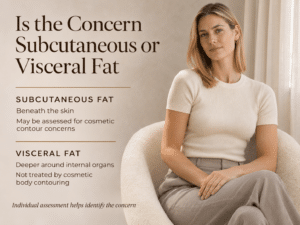
Subcutaneous fat is stored beneath the skin and can usually be felt or gently pinched
This is the type of tissue involved in many cosmetic contour concerns
Visceral fat is stored deeper inside the abdomen around internal organs
Cosmetic body contouring does not treat visceral fat
Patients concerned about abdominal weight or associated health risks should speak with an appropriate healthcare professional
Could the Fullness Be Bloating?
Bloating can make the abdomen look larger at different times of the day
It may be associated with digestion food intake constipation hormonal changes or another medical issue
Cosmetic treatment will not correct internal bloating
Medical advice may be appropriate when bloating is persistent painful worsening or accompanied by changes in bowel habits unexplained weight loss vomiting or other symptoms
Why Does Skin Laxity Matter?

Loose abdominal skin may develop after
• Pregnancy • Weight loss • Repeated weight fluctuations • Ageing • Changes in collagen and elasticity
Reducing fullness without considering skin quality may make existing laxity more noticeable
The practitioner may assess
• Skin thickness • Elasticity • Crepey texture • Stretch marks • Amount of excess skin • Previous surgery • Pregnancy history
Non surgical treatment may be more suitable for mild laxity than significant hanging skin
What About Abdominal Muscle Changes?
Reduced abdominal muscle tone can affect the contour even when there is little localised fat
Pregnancy may also contribute to separation of the abdominal muscles known as diastasis recti
A cosmetic consultation cannot replace medical or physiotherapy assessment for suspected muscle separation hernia or abdominal wall problems
Possible signs requiring further assessment may include
• A central ridge when sitting up • Bulging around the navel • Pain • Weakness • A firm or tender lump • Symptoms that worsen