

How Does the Neck Profile Influence the Appearance of a Double Chin?
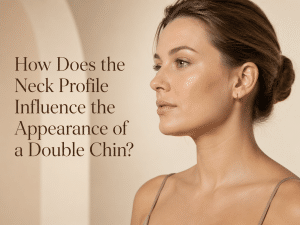
The appearance of a double chin is influenced not only by fullness beneath the chin, but also by the natural relationship between the chin, jawline and neck.
Neck length, skin quality, tissue distribution, muscle position and posture can all affect how clearly the jawline is separated from the neck. This is why two people with a similar amount of under-chin tissue may have very different profiles.
The Jaw-to-Neck Angle
The angle between the lower jaw and neck is an important part of the side profile.
Some people naturally have a clearly visible angle, making the jawline appear more defined. Others have a smoother transition because of their facial structure, neck anatomy or tissue distribution.
A softer jaw-to-neck angle can make under-chin fullness appear more noticeable, even when only a small amount of tissue is present.
Neck Length and Shape
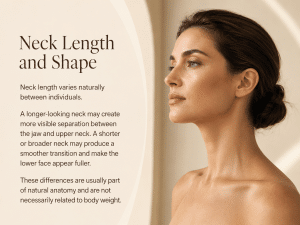
Neck length varies naturally between individuals.
A longer-looking neck may create more visible separation between the jaw and upper neck. A shorter or broader neck may produce a smoother transition and make the lower face appear fuller.
These differences are usually part of natural anatomy and are not necessarily related to body weight.
Chin Projection
The chin and neck profile should always be assessed together.
A smaller or less projected chin may create a shorter-looking jawline and reduce the visible space between the face and neck. This can make existing tissue beneath the chin appear more prominent.
From the front, the chin may look balanced. Its influence often becomes clearer from the side or three-quarter view.
Skin Quality and Support
Skin quality affects how closely the skin sits around the jaw and upper neck.
Changes in elasticity, thickness and structural support may soften the transition between the two areas. This can create the appearance of a double chin even without a significant increase in tissue volume.
Genetics, sun exposure, smoking, general health and weight fluctuations may all influence skin quality.
Soft-Tissue Distribution
The position and distribution of soft tissue within the upper neck can affect the profile.
Some people naturally carry more tissue directly beneath the chin. Others have tissue distributed further towards the sides of the jaw or lower along the neck.
The location of this tissue can influence whether the area appears more noticeable from the front, side or three-quarter angle.
Neck Muscle Position
Muscles within the neck contribute to its shape and movement.
Their natural position and activity may affect how the area looks while resting, speaking or turning the head. Visible lines or movement may be related to muscle structure rather than under-chin fat.
Functional symptoms such as pain, difficulty swallowing or unusual swelling require medical assessment rather than cosmetic treatment.
Posture and Head Position
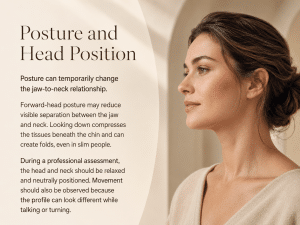
Posture can temporarily change the jaw-to-neck relationship.
Forward-head posture may reduce visible separation between the jaw and neck. Looking down compresses the tissues beneath the chin and can create folds, even in slim people.
During a professional assessment, the head and neck should be relaxed and neutrally positioned. Movement should also be observed because the profile can look different while talking or turning.
Why Photographs Can Be Misleading
Camera angle and lighting can exaggerate the appearance of a double chin.
A camera positioned below eye level may show more of the underside of the jaw. Flat lighting can reduce the natural shadow beneath the jawline, while close-range phone cameras may distort facial proportions.
A single photograph does not provide a complete view of the neck profile.
What Is Assessed During a Consultation?
A double-chin and neck-profile assessment may consider:
- Chin projection and position
- Jaw length and angle
- Jaw-to-neck transition
- Neck length and shape
- Skin quality and elasticity
- Soft-tissue distribution
- Muscle movement
- Facial symmetry
- Posture
- Medical and previous treatment history
The area should be examined from the front, both sides and three-quarter views while resting and moving.
Why Individual Assessment Matters
Not every double-chin concern is caused by the same factor.
An approach intended to address soft-tissue volume may not be appropriate when the appearance is mainly influenced by skin quality, chin projection or natural neck anatomy. In some cases, more than one factor may be involved.
A consultation should include realistic expectations, possible risks, limitations, alternatives and the option of having no treatment.
Double-Chin Consultations at Sky Beauty
At Sky Beauty Cosmetic Clinic, double-chin and lower-face consultations are available at our Sydney CBD and Macquarie Park clinics.
Each consultation begins with an individual assessment of the chin, jawline, skin, soft tissue and neck profile. The practitioner can explain how the neck may be influencing the appearance and discuss suitable professional options, alternatives or referrals where appropriate.
The neck profile plays an important role in how visible a double chin appears. Any cosmetic procedure carries potential risks and limitations, and individual suitability should be assessed by an appropriately qualified health professional before treatment.