

Nasal Base Sydney: What Factors Influence Its Appearance?

The nasal base is a central part of the face that can influence how the nose, cheeks, upper lip and surrounding mid-face appear in relation to one another. Although it is a relatively small area, its position can contribute to the overall proportions and profile of the face.
Some people naturally have a more projected nasal base, while others may describe the area as flatter or more recessed. These differences can be part of normal facial anatomy and do not necessarily indicate that anything is wrong.
For people researching Nasal Base Sydney, understanding the factors that influence this area can be useful before considering any options. Genetics, facial structure, cheek contours, nose shape, upper lip position and natural changes over time may all affect its appearance.
What Is the Nasal Base?
The nasal base generally refers to the lower part of the nose and its relationship with the surrounding central facial structures.
It sits close to the cheeks, upper lip and nasolabial region, which means its appearance is influenced by more than the nose alone.
When assessing this area, it can therefore be helpful to consider the overall mid-face rather than viewing the nasal base as an isolated feature.
Why Does the Nasal Base Look Different Between People?
Facial anatomy varies considerably between individuals.
Some people naturally have greater projection around the central face, while others have a flatter transition between the nose, cheeks and upper lip.
These differences can be influenced by several factors, including:
- Genetics
- Facial structure
- Nose shape and projection
- Cheek and mid-face contours
- Upper lip position
- Overall facial proportions
- Skin and soft tissue characteristics
- Natural changes over time
The relative importance of each factor differs from person to person.
Can Genetics Influence the Nasal Base?
Yes. Genetics can play an important role in facial appearance.
Inherited characteristics may influence the shape of the nose, cheek structure, facial proportions and the relationship between different areas of the mid-face.
This can help explain why some people naturally have a flatter or more prominent nasal base from a younger age.
Similar facial characteristics may also be noticeable among family members.
For this reason, the appearance of the nasal base should not automatically be interpreted as an age-related change.
How Does Facial Structure Affect the Nasal Base?
Facial structure can strongly influence how the nasal base appears.
The central face is made up of several interconnected anatomical areas. The relationship between the nose, cheeks, upper lip and surrounding structures can create different levels of projection and different facial transitions.
An area that appears relatively recessed in one person may simply reflect the proportions of surrounding facial features.
This is why an individual Nasal Base Sydney assessment may involve examining the entire central face rather than focusing only on one small area.
Does Nose Shape Make a Difference?
The shape and projection of the nose can affect how the nasal base is perceived.
A more projected nose may create a different relationship with the surrounding mid-face compared with a nose with less projection.
When viewed from the side, these differences can become particularly noticeable.
However, the nose should not be assessed in isolation. The upper lip, cheeks and overall facial profile also influence how the central face appears.
Why Are the Cheeks Important?
The cheeks sit immediately beside the nose and form an important part of the mid-face.
Their shape and projection can influence the transition toward the nasal base.
If the cheeks have relatively strong contours, the area around the nasal base may appear different by comparison. In another person, a softer transition between these areas may make the nasal base appear less defined.
These differences demonstrate why facial proportions are often more informative than examining a single feature alone.
Can the Mid-Face Influence Nasal Base Appearance?
Yes. The nasal base forms part of the broader mid-face.
The mid-face includes several structures that work together visually. Differences in their relative projection can influence how light and shadow fall across the central face.
A stronger change in contour may create more noticeable shadows around the nose, while a smoother transition may make the area appear softer.
This is one reason why the same nasal base may look different under different lighting conditions.
What Is the Relationship Between the Nasal Base and Upper Lip?
The nasal base sits directly above the upper lip.
The relationship between these areas can influence the appearance of the facial profile, particularly when viewed from the side.
Differences in projection or position can change how the nose and upper lip appear in relation to each other.
During a facial assessment, a practitioner may therefore consider the nasal base and upper lip together rather than evaluating either feature independently.
Can the Nasal Base Influence Nasolabial Folds?
The nasal base is located close to the upper portion of the nasolabial folds, the natural creases extending from the sides of the nose toward the corners of the mouth.
Because these areas are anatomically connected, the structure around the nasal base can form part of the overall facial relationships influencing how the nasolabial region appears.
However, noticeable nasolabial folds are usually influenced by multiple factors.
Cheek contours, skin characteristics, genetics, facial movement and natural changes over time may also contribute.
A visible nasolabial fold should therefore not automatically be attributed to the nasal base alone.
Why Can a Recessed Nasal Base Make Nearby Shadows More Noticeable?
Facial contours affect the way light falls across the face.
When one area has relatively less projection than the structures around it, changes in light and shadow may become more noticeable.
Around the nasal base, this can sometimes create stronger visual transitions between the nose, cheeks and nasolabial region.
Lighting can make these differences appear more pronounced, particularly in photographs.
This does not necessarily mean that the underlying anatomy has changed.
Can Age Influence Nasal Base Appearance?
Facial appearance naturally changes throughout adulthood.
Changes in skin characteristics and surrounding facial contours may alter the way different facial structures relate visually to one another.
As the cheeks and mid-face change, an existing nasal base characteristic may become more noticeable.
However, age is only one potential influence.
Some people naturally have a relatively flat or recessed nasal base from a younger age because of their individual anatomy.
Can Skin Characteristics Affect the Area?
Skin characteristics can influence the overall appearance of the central face.
Differences in thickness, elasticity, texture and general skin condition may affect how facial contours are displayed at the surface.
Natural changes in skin characteristics over time can also alter the visibility of facial transitions.
However, skin is only one component of nasal base appearance.
Underlying facial structure and surrounding contours may have an equally important influence.
Can Weight Changes Affect the Nasal Base?
Changes in body weight can alter facial contours in some individuals.
Changes around the cheeks and mid-face may affect how surrounding structures appear in relation to the nasal base.
Depending on a person’s individual anatomy, this may make the area appear more or less noticeable.
The effect varies considerably between individuals and should not be considered a universal explanation.
Why Does the Nasal Base Look Different From the Side?
The side profile can make differences in facial projection easier to see.
From this angle, the relationship between the nose, nasal base, upper lip and other facial structures becomes more apparent.
An area that appears relatively balanced from the front may look different from the side because facial projection is being viewed from another perspective.
For this reason, a professional facial assessment may consider both frontal and profile views.
Why Can Photos Make the Nasal Base Look Different?
Photographs can significantly alter the apparent proportions of the face.
Camera distance, lens type, lighting, head position and facial expression can all affect how the nose and central face appear.
Strong side lighting may create deeper shadows around the nasal base, while close-up photographs can alter the apparent proportions of facial features.
This is why a single selfie may not provide a complete representation of facial anatomy.
Does Facial Symmetry Influence Nasal Base Appearance?
Natural facial asymmetry is common.
The left and right sides of the nose, cheeks and surrounding facial structures may not be identical.
These small differences can affect how the nasal base appears from different angles.
A facial assessment can consider these natural variations rather than assuming that both sides should look exactly the same.
Is a Flat or Recessed Nasal Base a Problem?
Not necessarily.
A flatter or more recessed appearance may simply be part of an individual’s natural facial anatomy.
There is considerable variation in facial proportions, and there is no single nasal base shape that is appropriate for everyone.
Whether someone is concerned about the area is also highly individual.
A professional consultation can help distinguish between natural anatomical characteristics and changes that may have become more noticeable over time.
What May Be Evaluated During a Nasal Base Assessment?
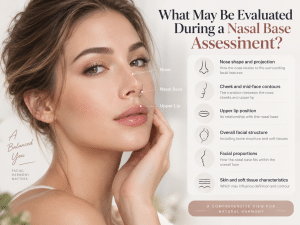
A facial assessment may consider:
- Nasal base structure
- Nose shape and projection
- Cheek and mid-face contours
- Upper lip relationship
- Nasolabial region
- Facial symmetry
- Skin characteristics
- Overall facial proportions
- Front and side profile
- Relevant medical and cosmetic history
- Individual concerns and expectations
The purpose is to understand how different facial structures relate to one another.
Why Is a Whole-Face Assessment Important?
The nasal base is only one component of the face.
Its appearance can be influenced by the nose, cheeks, upper lip, nasolabial region and broader facial proportions.
Looking only at the nasal base may therefore provide an incomplete picture.
A whole-face assessment can help identify which anatomical relationships are contributing to the appearance and provide a more individual understanding of the concern.
Nasal Base Sydney: Understanding Your Individual Facial Structure
The appearance of the nasal base can be influenced by genetics, facial structure, nose shape, cheek contours, upper lip position, skin characteristics and natural changes over time.
For people researching Nasal Base Sydney, it is important to remember that a flatter or more recessed appearance can simply reflect normal anatomical variation.
Rather than focusing on one feature in isolation, considering the relationship between the nasal base and surrounding facial structures can provide a more complete understanding of the central face.
At Sky Beauty Cosmetic Clinic in Sydney, our approach begins with an individual consultation and facial assessment. Our practitioners consider facial structure, proportions, surrounding contours, skin characteristics, relevant history and personal concerns before discussing whether any options may be appropriate for your individual circumstances.
If you would like to better understand your nasal base, mid-face or surrounding facial proportions, a consultation at Sky Beauty Cosmetic Clinic provides an opportunity to discuss your concerns and receive an individual facial assessment.