


Pigmentation rarely shows up at a convenient time. It tends to settle in after sun exposure, hormonal changes, acne, or simply years of cumulative skin stress, then stay far longer than most people expect. For clients who want clearer, more even-looking skin without relying only on creams and concealers, laser treatment for pigmentation is often one of the most effective medical aesthetics options available.
The appeal is straightforward. Lasers can target unwanted pigment with precision, which makes them especially valuable when dark spots feel resistant to skincare alone. But the right treatment is never just about choosing a machine. It depends on your skin tone, the type of pigmentation, how deep it sits in the skin, and how much downtime you are willing to accept in exchange for results.
How laser treatment for pigmentation works
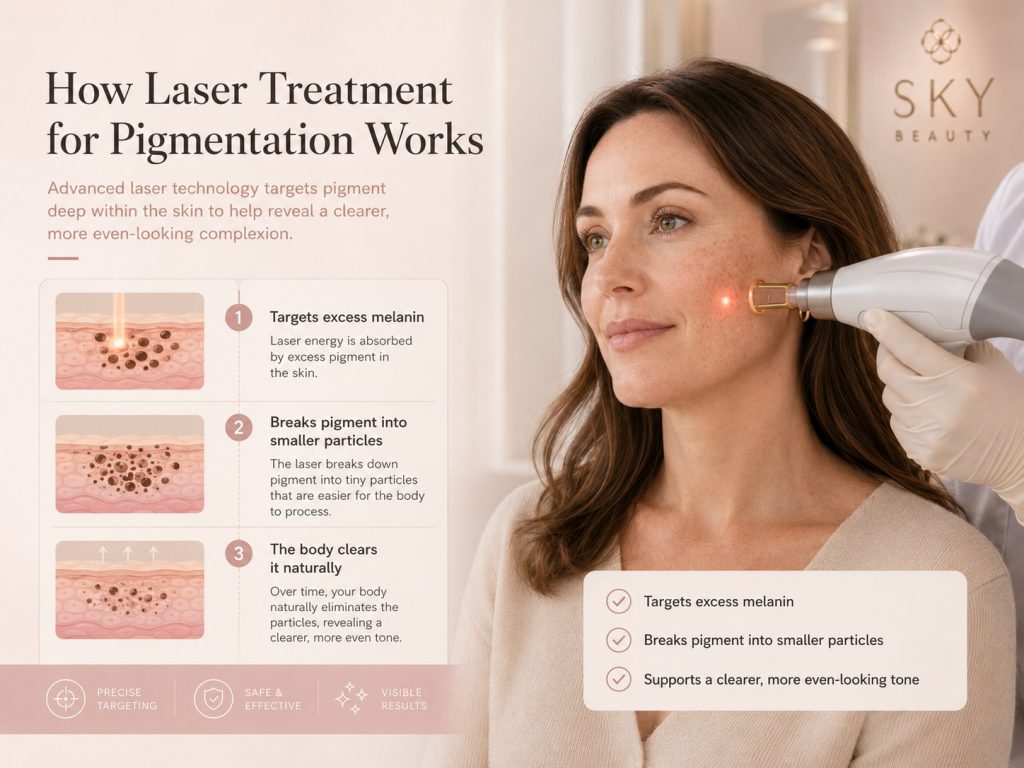
Pigmentation treatments are based on a simple principle: specific wavelengths of light are attracted to excess melanin in the skin. That light energy breaks the pigment into smaller particles, which the body gradually clears away. Over time, the treated area can appear lighter, more even, and closer in tone to the surrounding skin.
That is the science in simple terms. In practice, the treatment plan is more nuanced. Not all brown spots are the same, and not every mark that looks like pigmentation should be treated the same way. Sunspots, freckles, post-inflammatory hyperpigmentation from acne, and melasma can all behave differently. Some respond beautifully to laser. Others improve only when laser is combined with strict sun protection and a carefully selected skincare routine.
This is why a consultation matters. A medically guided assessment helps determine whether the pigment is superficial or deeper, whether your skin is prone to rebound pigmentation, and whether laser is the most suitable first step.
What types of pigmentation can be treated
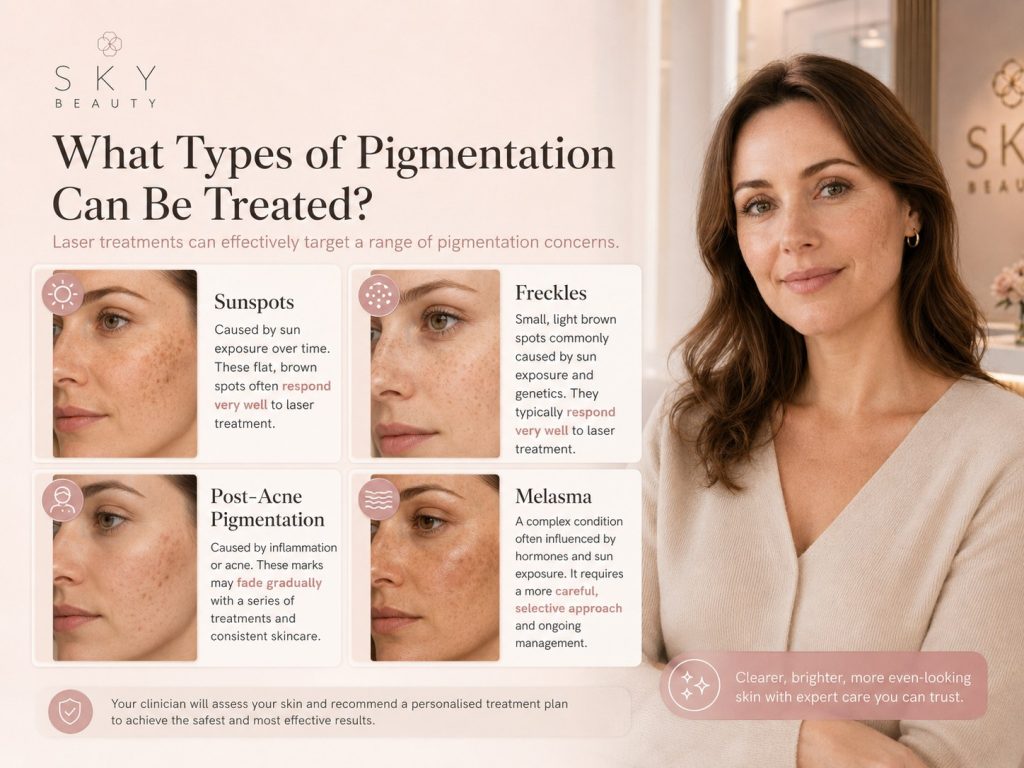
Many clients seek treatment for visible sun damage across the cheeks, forehead, nose, chest, or hands. These flat brown spots often respond well when the pigment is clearly defined and sits closer to the surface. Freckles can also be treated, although they may return if sun exposure continues.
Post-acne marks are another common concern. If the residual discoloration is brown rather than red, laser may help speed the clearing process. The timeline, however, varies. Fresh marks often behave differently from older, more established pigmentation.
Melasma is where expectations need to be more careful. Melasma is influenced by hormones, heat, sunlight, and inflammation, and it can be more unpredictable than standard sunspots. Laser may be appropriate in selected cases, but not every melasma patient is an ideal candidate for aggressive treatment. For some, a gentler or more staged approach is safer and more effective.
Who is a good candidate

A good candidate for laser treatment for pigmentation is not simply someone with dark spots. The best candidates usually have a clear diagnosis, realistic expectations, and a willingness to protect their skin properly after treatment. If you are looking for visible improvement rather than perfection, that mindset tends to align well with how pigmentation treatment works in real life.
Skin tone also matters. Darker skin tones can absolutely be treated, but they require thoughtful device selection and more conservative settings because the surrounding skin contains more active melanin. That increases the risk of post-inflammatory hyperpigmentation if treatment is too aggressive. In experienced hands, treatment can still be successful, but safety should lead every decision.
You may need to postpone laser if you have a recent tan, active skin irritation, certain infections, or if you are using medications or topical products that make the skin unusually sensitive. Pregnancy, recent procedures, and a history of abnormal scarring may also affect timing.
What the appointment usually feels like

Most clients want to know two things before they book: does it hurt, and how long will recovery take? The honest answer is that discomfort is usually manageable, but it is not identical for everyone. The sensation is often described as a quick snap against the skin, combined with heat. Some treatments feel very mild, while others are more intense depending on the device and treatment depth.

Appointments are typically quite efficient. After the skin is assessed and prepared, the laser is passed over the treatment area in a controlled pattern. Smaller spots can take only minutes. Larger areas naturally take longer. Cooling measures may be used to improve comfort and protect the skin.
Immediately afterward, the skin may appear pink or slightly swollen. Pigmented spots often darken before they fade, which can surprise first-time clients if they are not expecting it. That temporary darkening is commonly part of the process rather than a sign that something has gone wrong.
Results, downtime, and how many sessions you may need
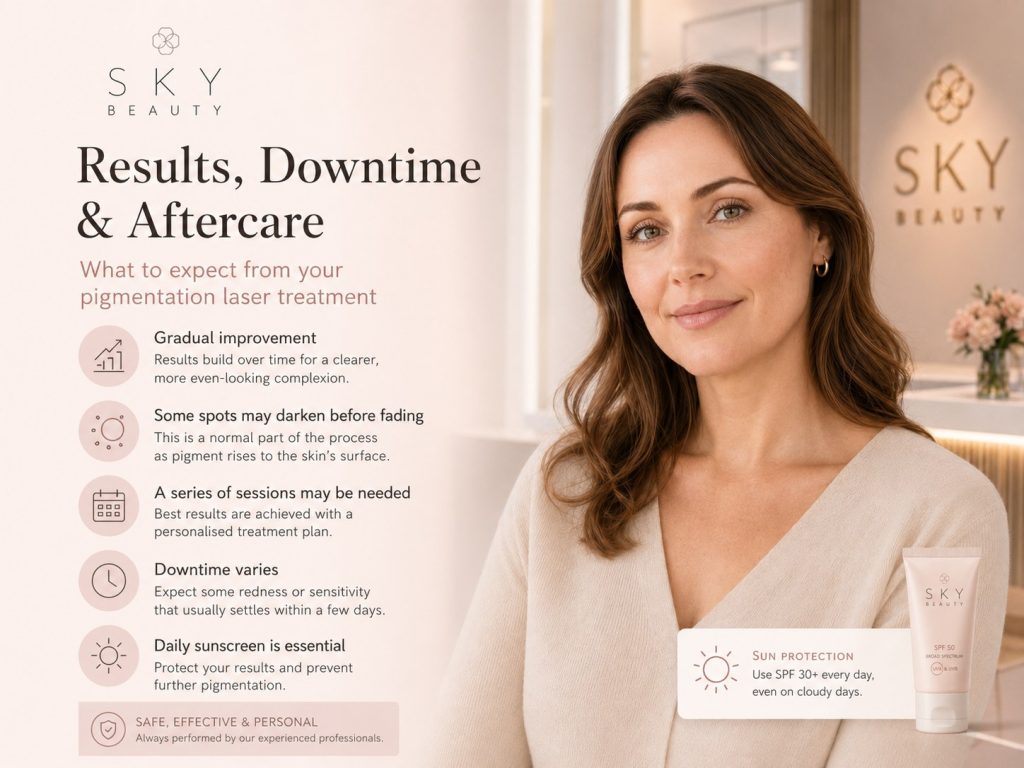
Some superficial spots begin to improve after one session, especially when the pigment is well defined. More diffuse or stubborn pigmentation often needs a series of treatments spaced several weeks apart. Most treatment plans are built around gradual improvement, not a single dramatic reset.
Downtime depends on the type of laser and the intensity used. Some clients return to work the same day with minor redness that is easy to manage. Others experience several days of darkening, dryness, or a lightly bronzed appearance before the skin clears. If you have a busy social calendar, timing your treatment well is worth considering.
Results are also shaped by what happens after the appointment. Even a technically excellent laser session can be undermined by unprotected sun exposure. Pigmentation is one of the clearest reminders that skin remembers what we do to it. Daily sunscreen is not an optional extra here. It is part of the treatment.
Why skincare and maintenance still matter
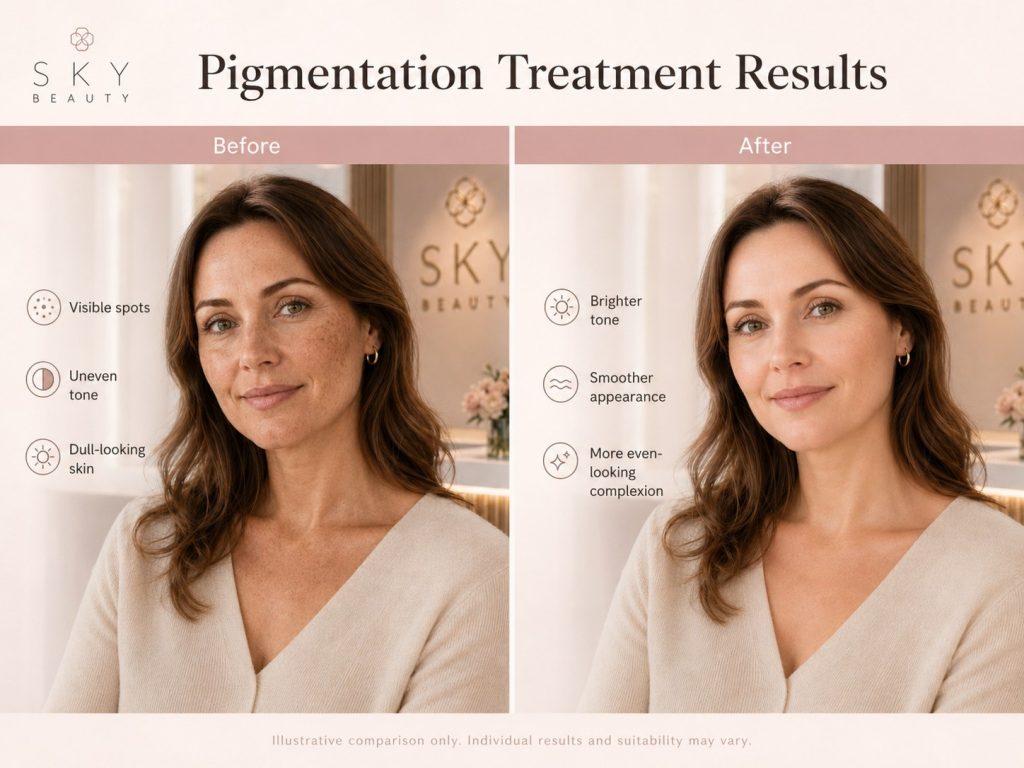
Laser can lift a significant part of the pigment burden, but it does not make the skin immune to future discoloration. Maintenance matters because the original triggers often remain in the background. Sun, heat, acne, inflammation, and hormonal shifts can all stimulate pigment again.
That is why the most refined results usually come from combination care. Depending on your skin, this may include brightening products, pigment-regulating ingredients, barrier support, and disciplined UV protection. For some clients, spacing out maintenance sessions keeps results looking fresher over time. For others, one course of treatment followed by strong home care is enough for long stretches.
A personalized plan tends to outperform a one-size-fits-all approach. In a consultation-led setting such as Sky Beauty Cosmetic Clinic, this is where clinical expertise makes a visible difference. The goal is not just to treat what is on the surface, but to reduce the chance of the pigmentation returning as quickly.
Risks and trade-offs to understand before booking

Every aesthetic treatment involves decisions, and laser is no exception. The main trade-off is that stronger settings may produce faster visible change, but they can also increase recovery time and risk. Gentler settings often require more sessions, yet they may be the wiser choice for sensitive skin or deeper skin tones.
Potential side effects include redness, swelling, temporary darkening, irritation, and in some cases post-inflammatory hyperpigmentation. Less commonly, blistering or textural change can occur, particularly if aftercare is poor or the wrong device is used. This is exactly why provider experience matters so much with pigmentation.
It is also worth remembering that not every dark mark should be treated cosmetically without assessment. If a lesion has changed in shape, color, or behavior, it should be medically evaluated before any cosmetic procedure is considered.
Questions worth asking at your consultation

If you are comparing clinics, ask what type of pigmentation they believe you have and why. Ask whether your skin tone changes the treatment plan, how many sessions they expect you may need, what the recovery usually looks like, and what steps are taken to reduce the risk of rebound pigmentation.
You can also ask what kind of results are realistic for your specific concern. A trustworthy provider will not promise flawless skin in one visit. They should explain the likely degree of improvement, the role of aftercare, and whether another treatment category may be more appropriate if laser is not your best option.
When laser treatment for pigmentation is chosen well, performed carefully, and supported with proper maintenance, it can be one of the most rewarding ways to restore clarity and brightness to the skin. The best next step is not rushing into treatment, but choosing a provider who sees your skin as individual and plans accordingly.