

Loose skin rarely appears all at once. It shows up quietly – along the jawline, around the cheeks, above the knees, or across the neck – until one day your reflection looks a little less defined than it used to. If you are wondering how to tighten sagging skin, the right answer depends on why it is happening, how advanced it is, and how much change you want to see.
The good news is that sagging skin is not a single issue with a single fix. It is usually the result of collagen loss, elastin breakdown, changes in facial fat, sun exposure, weight fluctuations, and the natural aging process. That means the most effective approach is rarely random product shopping. It is a tailored plan that matches your skin quality, your age, and your goals.
Why skin starts to sag in the first place
Firm skin depends on structure. Collagen gives skin strength. Elastin helps it snap back into place. Hyaluronic acid supports hydration and bounce. Over time, production of all three declines, and repeated UV exposure speeds that process up.
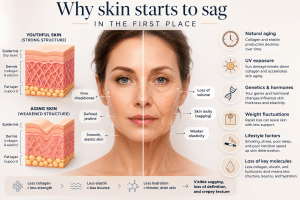
For some people, the first signs are subtle creasing and softness around the lower face. For others, it is a heavier appearance under the chin, looser upper arms, or skin that seems thinner and less resilient. Weight loss can also play a role. While losing excess weight can improve health and body contour, rapid or significant loss may leave behind skin that does not retract as easily, especially after age 35.
Hormonal shifts, stress, smoking, sleep quality, and genetics all influence how quickly this change happens. That is why two people of the same age can have very different levels of skin laxity.
How to tighten sagging skin at home
At-home care can improve skin quality and support firmness, but it works best for mild laxity rather than moderate to severe looseness. The key is consistency and realistic expectations.
A well-formulated skin care routine matters more than a crowded shelf. Retinoids can help stimulate collagen and improve texture over time. Peptides may support skin repair. Vitamin C helps defend against oxidative stress and can brighten dull, aging skin. Daily sunscreen is non-negotiable because ongoing UV damage weakens collagen even further.
Hydration also plays a role, although it is often overstated. Drinking more water will not lift loose skin on its own, but dehydrated skin can look thinner and more creased. A high-quality moisturizer with humectants and barrier-supporting ingredients helps skin appear smoother and healthier.
Nutrition deserves more attention than it usually gets. Protein provides the amino acids needed for collagen production. Vitamin C, zinc, and antioxidants support skin repair. Crash dieting tends to work against firmness because it can accelerate volume loss and leave skin looking more deflated.
Exercise can improve muscle tone beneath the skin, particularly in the body, but it does not tighten stretched skin directly. It does, however, improve circulation, support body composition, and help maintain results after professional treatment.
When skin care is not enough
There is a point where creams stop being the main answer. If the issue is deeper structural laxity rather than surface dryness or texture, topical products can only do so much.
This is where many people get frustrated. They invest in expensive serums expecting a lifting effect that skin care alone cannot deliver. A more sophisticated approach is to separate surface concerns from structural concerns. Skin care can improve texture, glow, and resilience. Device-based or regenerative treatments are typically better suited to creating measurable tightening.
Non-surgical treatments that can tighten sagging skin
For clients who want visible improvement without surgery, modern aesthetic medicine offers several strong options. The best treatment depends on the area being treated, the degree of laxity, and whether the skin also needs resurfacing, volume support, or collagen stimulation.
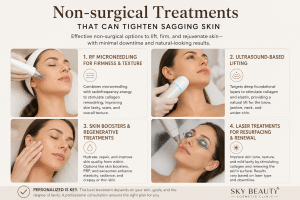
RF microneedling for firmness and texture
RF microneedling combines controlled micro-injury with radiofrequency energy delivered into the skin. This encourages collagen remodeling at a deeper level than traditional skin care can reach. It is often a smart option for early to moderate laxity, especially when sagging comes with enlarged pores, acne scarring, or crepey texture.
The result is not an overnight lift. Improvement develops gradually as collagen rebuilds over several weeks and months. That slower progression is actually part of its appeal for clients who want natural-looking change rather than a sudden shift in appearance.
Ultrasound-based lifting for deeper support
Ultrasound treatments target foundational layers beneath the skin to stimulate collagen where support has weakened. This can be especially useful along the brow, jawline, neck, and under-chin area. It is often chosen by patients who want a more lifted look but are not ready for surgery.
This category tends to suit people with mild to moderate sagging rather than very heavy or significantly lax skin. The outcome is elegant and progressive, not dramatic in the surgical sense. For the right candidate, that is exactly the point.
Skin boosters and regenerative treatments
Sometimes the skin does not only need tightening. It also needs better quality. Thin, tired, crepey skin often benefits from treatments that improve hydration, elasticity, and tissue repair. Skin boosters, PRP, and similar regenerative options can support healthier skin behavior and improve the way the skin reflects light and holds itself.
These are particularly useful when the concern is early aging, under-eye crepiness, or skin that has become dull and fragile. They are not a replacement for lifting technologies, but they can complement them beautifully.
Laser treatments for resurfacing and renewal
Laser-based treatments can help tighten skin to a degree, especially when laxity is paired with sun damage, pigmentation, rough texture, or fine lines. Some lasers focus more on resurfacing the top layers, while others heat deeper tissue to promote collagen formation.
The trade-off is downtime. In general, the more aggressive the treatment, the more recovery is involved. For busy professionals, this often becomes a deciding factor just as much as the clinical result.
How to know which treatment is right for you
The most effective plan is rarely built around a trend. It starts with an honest assessment of what is actually causing the skin to look loose.
If the problem is mild collagen loss, a collagen-stimulating treatment may be enough. If the face looks saggy because of volume loss, restoring structural support may matter more than tightening alone. If the lower face is heavy because of fat under the chin, contouring may need to be part of the plan. If the skin is severely lax after major weight loss or pregnancy, surgery may be the only option that can remove excess tissue.
That nuance matters. Many patients ask how to tighten sagging skin when what they really mean is how to look fresher, firmer, and more defined. Those are related goals, but not always solved in the same way.
A medically led consultation is valuable because it prevents overtreatment in one area and undertreatment in another. In a premium clinic setting such as Sky Beauty Cosmetic Clinic, that personalized planning is often what separates a refined result from a generic one.
What kind of results are realistic?
This is where expectations should stay polished, not inflated. Non-surgical treatments can absolutely improve mild to moderate sagging. They can firm, refine, and restore better contour. What they usually cannot do is replicate the result of a surgical facelift or body lift in someone with advanced skin laxity.
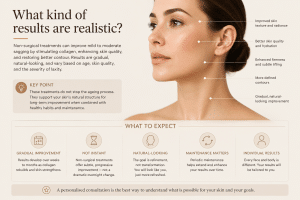
That does not make them lesser options. For many people, a subtle lift, stronger skin quality, and a more defined profile are exactly the right outcome. They want to look rested, not altered.
Maintenance also matters. Collagen stimulation is not permanent because aging does not stop. Depending on the treatment, most people benefit from a series followed by upkeep sessions over time. That ongoing care often produces better long-term results than chasing one dramatic fix.
Habits that help preserve firmer skin
Once you improve skin laxity, protecting the result becomes the next priority. Sun protection remains essential. Stable weight is helpful because repeated gain and loss can stress the skin. Strength training can support body shape and tissue quality. A strong skin care routine extends the benefits of in-clinic treatments.
It is also worth being selective with trends. Facial exercises, collagen supplements, and at-home devices can help some people modestly, but results vary widely. They should support a broader plan, not replace evidence-based treatment when the concern is significant.
Tighter skin is rarely about one miracle product or one appointment. It is usually the result of choosing the right treatment at the right stage, then maintaining skin health with intention. If your skin feels less firm than it once did, that does not mean you need to accept a tired or undefined look. With the right guidance, there is often a sophisticated path back to smoother contours and more confident skin.