

How Facial Contours Change With Age
Have you ever compared a recent photo of yourself to one taken ten or twenty years ago and noticed that your face seems different, even if you can’t quite pinpoint why?
While wrinkles are often associated with ageing, one of the most noticeable changes actually involves the contours of the face. As we age, the shape, structure, and balance of the face gradually evolve due to changes occurring beneath the skin. These shifts can affect facial definition, volume, and overall appearance, leading to gradual changes in facial balance over time.
Understanding how facial contours change with age can help explain why modern facial rejuvenation focuses on supporting facial structure and harmony rather than simply treating individual wrinkles.
What Are Facial Contours?
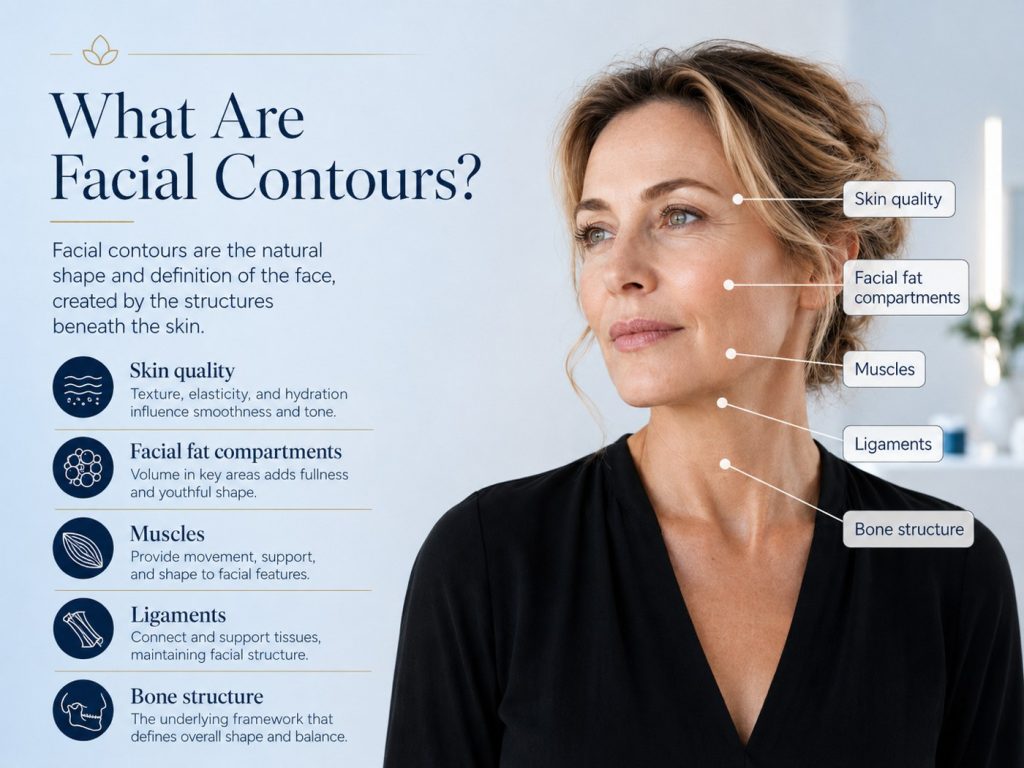
Facial contours refer to the natural shape and definition of the face. They are created by a combination of factors, including:
- Skin quality
- Facial fat compartments
- Muscles
- Ligaments
- Bone structure
In younger faces, these structures work together to create smooth transitions, balanced proportions, and well-defined features. The cheeks appear fuller, the jawline is more distinct, and facial contours reflect light evenly.
As ageing occurs, these support structures gradually change, altering the way the face looks from every angle.
Facial Structure: Balanced and Well-Supported
A youthful face is often characterised by volume concentrated in the upper and mid-face.
Common features include:
- Full, rounded cheeks
- Smooth facial contours
- Defined cheekbones
- Firm jawline
- Minimal shadowing beneath the eyes
This facial shape is sometimes described as an inverted triangle, where the widest part of the face sits through the cheeks and gradually narrows towards the chin.
Strong facial support helps maintain this balanced appearance.
Loss of Volume in the Mid-Face
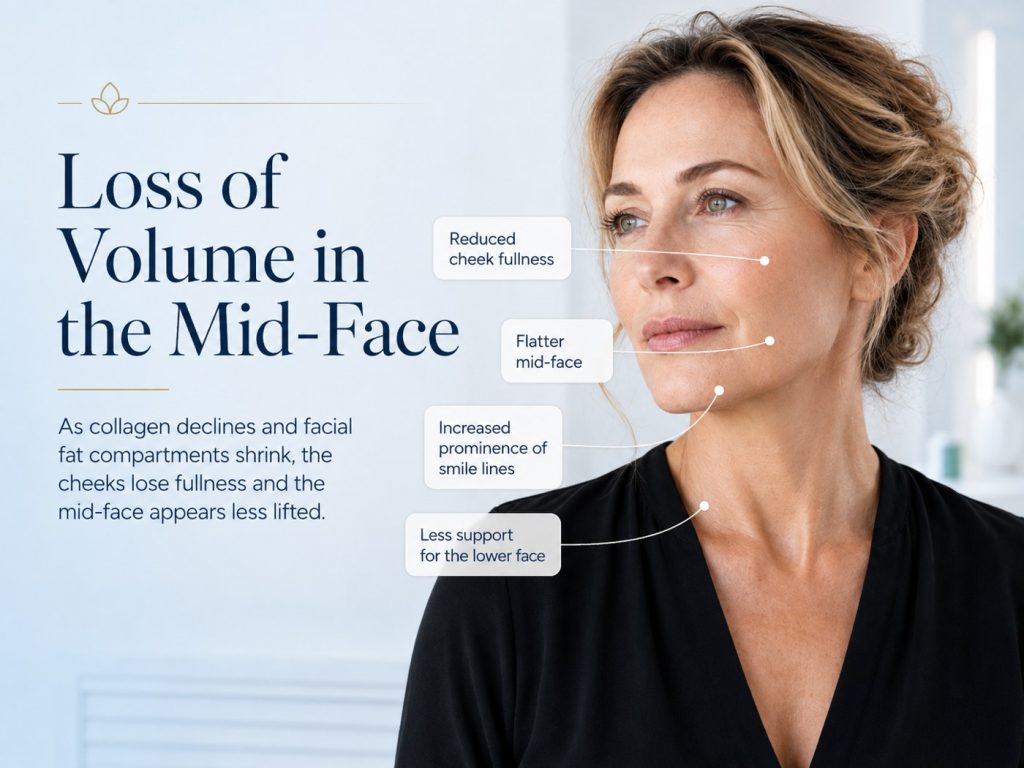
One of the earliest changes in facial contours occurs in the cheeks.
As collagen production declines and facial fat compartments gradually shrink, the cheeks may lose some of their natural fullness. This can cause the mid-face to appear flatter and less lifted than before.
As cheek volume decreases, patients may notice:
- Reduced facial definition
- A more tired appearance
- Increased prominence of smile lines
- Less support for the lower face
Even subtle changes in cheek volume can significantly affect overall facial contours.
Changes Around the Eyes
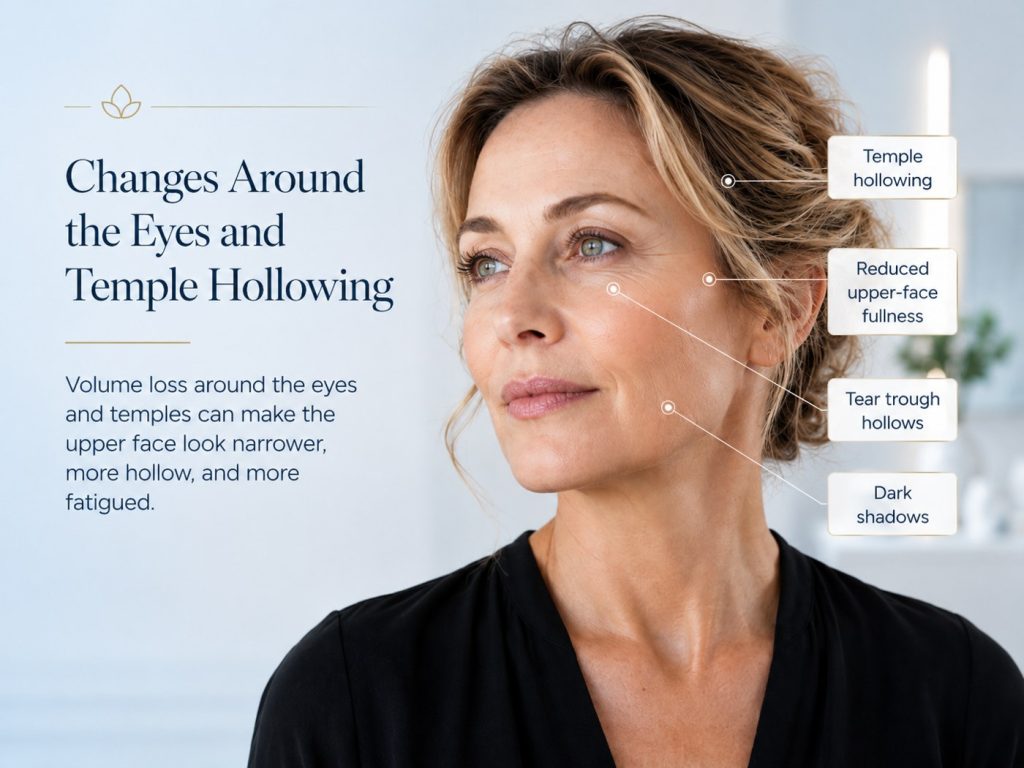
The eye area often shows signs of ageing earlier than other parts of the face.
Volume loss beneath the eyes can create hollows and shadows, while changes in skin quality may make the area appear less smooth.
These contour changes can contribute to:
- Tear trough hollows
- Dark shadows
- Changes in the appearance of the eye area
- Reduced upper-face fullness
Because the eyes are a focal point of the face, even minor contour changes can have a noticeable impact on overall appearance.
Temple Hollowing
The temples help create smooth transitions between the forehead, cheeks, and outer eye area.
With age, volume loss can occur in the temples, resulting in a narrower appearance through the upper face.
Temple hollowing may:
- Make facial features appear more angular
- Reduce facial balance
- Influence overall facial proportions
- Increase the visibility of surrounding bony structures
Although often overlooked, the temples play an important role in maintaining youthful facial contours.
The Development of Jowls
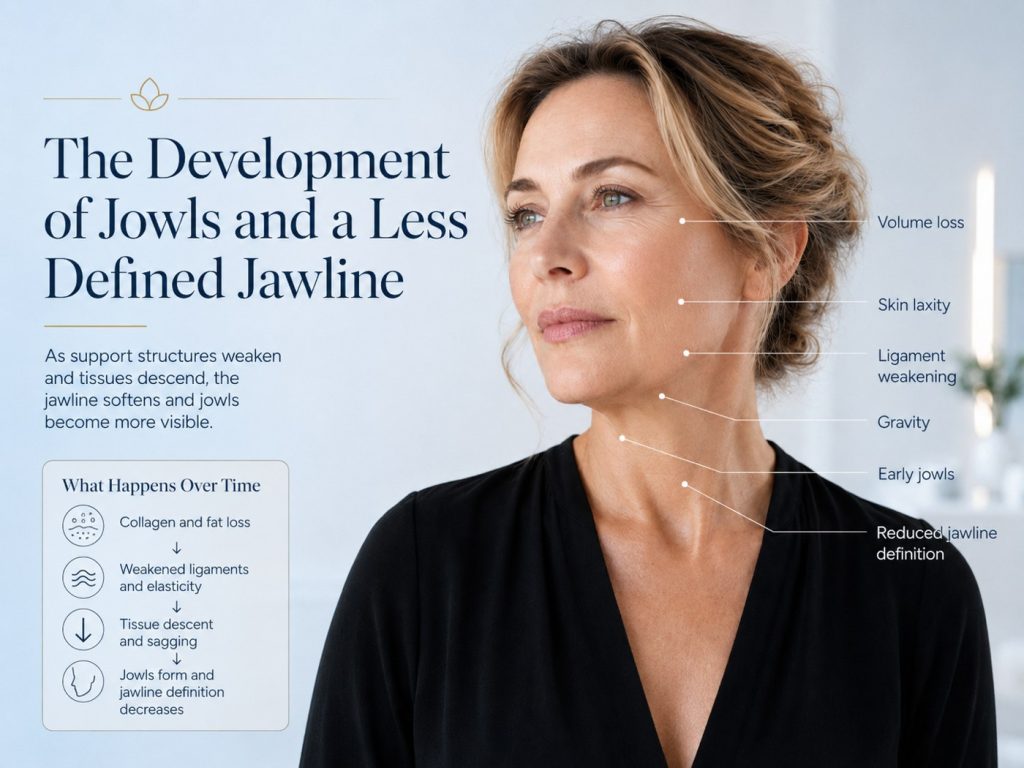
As facial support structures weaken and tissues gradually descend, changes begin to appear along the jawline.
The lower face may start to lose definition, and small pockets of tissue can develop along the jawline, commonly known as jowls.
This occurs due to a combination of:
- Volume loss
- Skin laxity
- Ligament weakening
- The effects of gravity
For many patients, changes in the jawline are among the most noticeable signs of facial ageing.
The Jawline Becomes Less Defined
A strong jawline is often associated with youth and facial structure.
Over time, facial contours around the jaw may soften due to changes in skin support and tissue position. The distinction between the face and neck may become less clear, resulting in a less sculpted appearance.
Patients often describe this change as looking less sharp or less defined in photographs.
How Facial Shape Changes Over Time
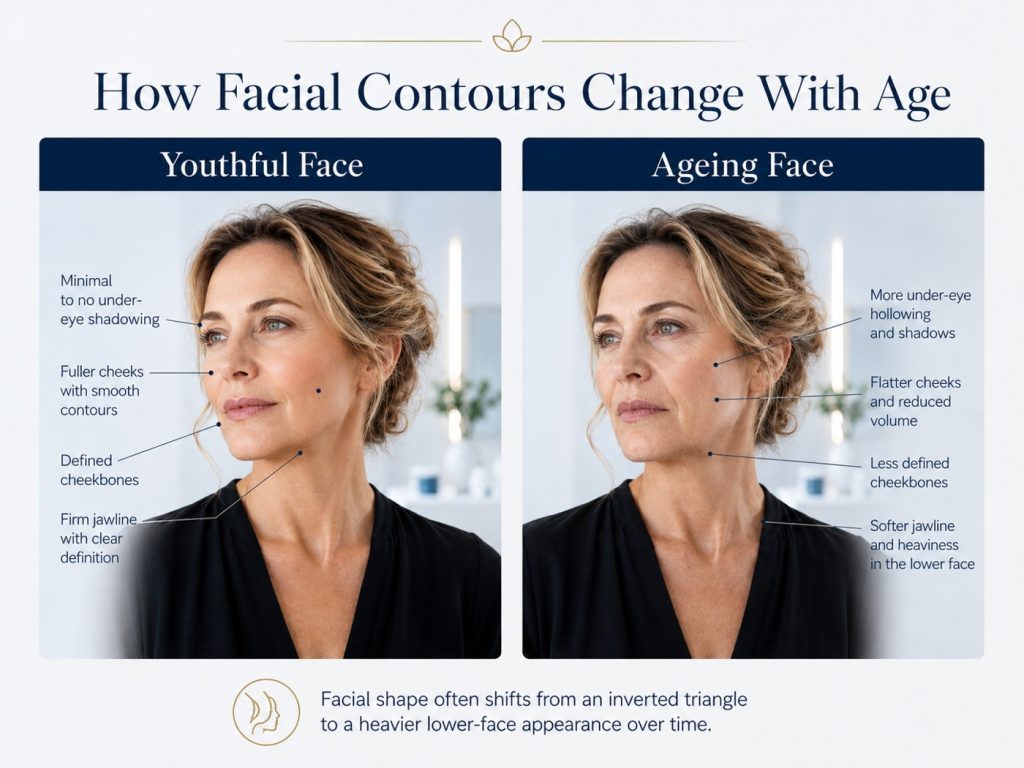
As volume decreases in the upper face and shifts towards the lower face, the overall shape of the face changes.
A youthful face tends to appear lifted and balanced. With age, volume loss and tissue descent can create a heavier appearance in the lower face, altering facial proportions.
This gradual transformation is one of the primary reasons people feel they look older, even when wrinkles remain relatively minimal.
Why Facial Contours Matter More Than Individual Wrinkles
Many people focus on lines and wrinkles when assessing facial ageing. However, facial contours can influence how facial balance and proportions are perceived.
Smooth contours and balanced proportions help create a refreshed appearance, while volume loss and structural changes can make the face appear tired regardless of skin quality.
This is why modern facial rejuvenation strategies often focus on improving overall facial harmony rather than targeting isolated concerns.
Maintaining Natural Facial Harmony
Every face ages differently. Genetics, lifestyle, sun exposure, and skin quality all influence how facial contours change over time.
The most effective approach to facial rejuvenation is one that considers the face as a whole. By assessing volume distribution, skin quality, facial proportions, and individual concerns, treatment plans can be tailored to support natural-looking results that complement each person’s unique features.
Why Choose Sky Beauty Clinic?
At Sky Beauty Clinic, we understand that facial ageing involves much more than wrinkles alone. Our approach focuses on evaluating the entire face, including facial contours, volume changes, skin quality, and overall balance.
We create personalised treatment plans based on individual facial features, concerns, and aesthetic preferences.
Patients from Sydney, Macquarie Park, North Ryde, Ryde, and surrounding areas trust our team for professional guidance, customised care, and a commitment to subtle, balanced results.
Frequently Asked Questions
At what age do facial contours start to change?
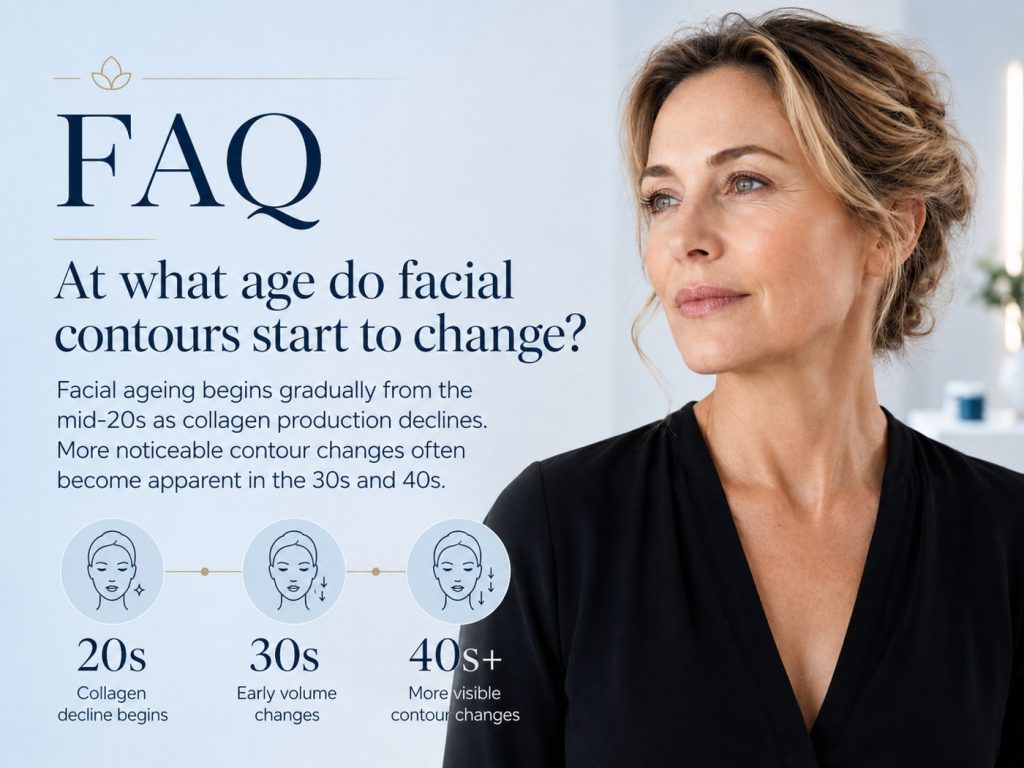
Facial ageing begins gradually from the mid-20s as collagen production declines, although noticeable contour changes often become more apparent during the 30s and 40s.
Why do my cheeks look flatter than they used to?
Age-related volume loss in the facial fat compartments and reduced collagen production can cause the cheeks to appear less full over time.
What causes jowls to develop?
Jowls typically develop due to a combination of volume loss, skin laxity, ligament weakening, and gravity.
Are facial contour changes a normal part of ageing?
Yes. Changes in facial contours are a natural consequence of ageing and affect everyone to varying degrees.
Book a Consultation
If you’ve noticed changes in your facial contours, jawline definition, or overall facial structure, a personalised assessment can help identify the factors contributing to these changes.
Book a consultation with Sky Beauty Clinic to discuss your concerns and discuss personalised options that consider facial harmony, skin health, and individual goals.