

How Does Sun Exposure Affect Pigmentation in Sydney?
Sydney’s sunny climate is one of the reasons so many people enjoy living here. From coastal walks and beach weekends to outdoor cafés and sports, spending time outside is a part of everyday life. However, regular exposure to ultraviolet (UV) radiation is also one of the most significant factors associated with changes in skin pigmentation.
Many people searching for Pigmentation Sydney begin to notice freckles becoming darker, new brown spots appearing or their complexion looking less even than it did a few years ago. While these changes often develop gradually, understanding how sunlight affects the skin can help explain why pigmentation becomes more noticeable over time.
At Sky Beauty Cosmetic Clinic Sydney, pigmentation is one of the most common concerns discussed during skin consultations. Because pigmentation can have several contributing factors, an individual assessment is an important first step before discussing cosmetic treatment options.
What Is Pigmentation?
Pigmentation refers to the natural colouring of the skin, which is created by a pigment called melanin. Melanin is produced by specialised cells known as melanocytes and is involved in the skin’s response to ultraviolet radiation.
When the skin is exposed to sunlight, melanocytes produce more melanin as part of the body’s normal protective response. While this process is part of the skin’s natural response, repeated UV exposure can sometimes contribute to uneven pigment production, leading to visible changes in skin colour.
Common types of pigmentation include freckles, sun spots, melasma, post-inflammatory hyperpigmentation and general uneven skin tone. Although these conditions all involve excess pigment, their causes are not always the same.
Why Does Sydney’s UV Exposure Matter?
Australia experiences some of the highest UV levels in the world, and Sydney residents are exposed to significant ultraviolet radiation throughout much of the year.
Even on cooler days or when the sky appears cloudy, UV radiation can still reach the skin. Over many years, repeated exposure may stimulate melanocytes to continue producing melanin, causing pigment to accumulate unevenly within the skin.
As a result, people may gradually notice:
- Existing freckles becoming darker
- New brown spots developing
- Uneven skin tone
- Pigmentation becoming more noticeable after summer
- Changes in overall skin brightness
Because these changes occur slowly, many people do not notice them until they compare older photographs or begin paying closer attention to their skin.
Which Areas Commonly Develop Pigmentation?
Pigmentation usually appears on areas that receive the greatest amount of cumulative sun exposure.
These commonly include:
- Forehead
- Cheeks
- Nose
- Upper lip
- Temples
- Neck
- Hands
- Décolletage
These areas are exposed not only during holidays but also during everyday activities such as driving, walking to work or exercising outdoors.
Is Sun Exposure the Only Cause?
No. Although UV exposure is one of the most common contributing factors, pigmentation often develops through a combination of influences.
These may include:
- Hormonal changes
- Genetics
- Natural ageing
- Previous acne or skin inflammation
- Certain medications
- Individual skin type
For example, melasma is often influenced by both hormones and UV exposure, while post-inflammatory hyperpigmentation usually develops after acne, injury or other skin inflammation.
Because different pigmentation concerns can look very similar, professional assessment is helpful before exploring cosmetic options.
Can Pigmentation Return?
One question commonly asked during consultations is whether pigmentation can come back.
Even when pigmentation appears less noticeable following cosmetic procedures or skincare, future UV exposure may contribute to pigmentation changes over time.
Daily habits to help manage UV exposure include applying broad-spectrum sunscreen, wearing a wide-brim hat, using sunglasses, seeking shade during peak UV periods and reapplying sunscreen when spending extended time outdoors.
Why Is a Personalised Assessment Important?
Not every brown spot represents the same type of pigmentation.
During a cosmetic consultation, practitioners may assess the location and pattern of pigmentation, overall skin tone, skin quality, medical history, previous cosmetic treatments, lifestyle factors and sun exposure habits.
This comprehensive assessment helps explore factors that may be associated with pigmentation and supports a personalised discussion about available cosmetic options.
How Can Sky Beauty Cosmetic Clinic Help?
At Sky Beauty Cosmetic Clinic Sydney, every pigmentation consultation begins with understanding the individual rather than focusing on a single treatment.
With clinics located in Sydney CBD (World Square) and Macquarie Park (Macquarie Centre), our experienced team reviews each person’s skin concerns, pigmentation pattern and aesthetic goals before discussing available cosmetic options.
Our approach focuses on education, personalised assessment and helping clients make informed decisions based on their individual skin characteristics.
Final Thoughts
Sydney’s outdoor lifestyle offers many benefits, but long-term UV exposure can contribute to pigmentation and uneven skin tone over time. Because pigmentation has multiple possible causes, understanding contributing factors is helpful before exploring cosmetic options.
If you are concerned about pigmentation or changes in your skin tone, a personalised consultation can provide insight into your skin characteristics and help you better understand the cosmetic options available for your individual needs.
Sydney’s sunny climate is one of the reasons so many people enjoy living here. From coastal walks and beach weekends to outdoor cafés and sports, spending time outside is a part of everyday life. However, regular exposure to ultraviolet (UV) radiation is also one of the most significant factors associated with changes in skin pigmentation.
Many people searching for Pigmentation Sydney begin to notice freckles becoming darker, new brown spots appearing or their complexion looking less even than it did a few years ago. While these changes often develop gradually, understanding how sunlight affects the skin can help explain why pigmentation becomes more noticeable over time.
At Sky Beauty Cosmetic Clinic Sydney, pigmentation is one of the most common concerns discussed during skin consultations. Because pigmentation can have several contributing factors, an individual assessment is an important first step before discussing cosmetic treatment options.
What Is Pigmentation?
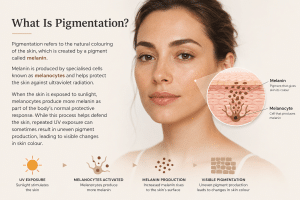
Pigmentation refers to the natural colouring of the skin, which is created by a pigment called melanin. Melanin is produced by specialised cells known as melanocytes and helps protect the skin against ultraviolet radiation.
When the skin is exposed to sunlight, melanocytes produce more melanin as part of the body’s normal protective response. While this process helps defend the skin, repeated UV exposure can sometimes result in uneven pigment production, leading to visible changes in skin colour.
Common types of pigmentation include freckles, sun spots, melasma, post-inflammatory hyperpigmentation and general uneven skin tone. Although these conditions all involve excess pigment, their causes are not always the same.
Why Does Sydney’s UV Exposure Matter?
Australia experiences some of the highest UV levels in the world, and Sydney residents are exposed to significant ultraviolet radiation throughout much of the year.
Even on cooler days or when the sky appears cloudy, UV radiation can still reach the skin. Over many years, repeated exposure may stimulate melanocytes to continue producing melanin, causing pigment to accumulate unevenly within the skin.
As a result, people may gradually notice:
- Existing freckles becoming darker
- New brown spots developing
- Uneven skin tone
- Pigmentation becoming more noticeable after summer
- Changes in overall skin brightness
Because these changes occur slowly, many people do not notice them until they compare older photographs or begin paying closer attention to their skin.
Which Areas Commonly Develop Pigmentation?
Pigmentation usually appears on areas that receive the greatest amount of cumulative sun exposure.
These commonly include:
- Forehead
- Cheeks
- Nose
- Upper lip
- Temples
- Neck
- Hands
- Décolletage
These areas are exposed not only during holidays but also during everyday activities such as driving, walking to work or exercising outdoors.
Is Sun Exposure the Only Cause?
No. Although UV exposure is one of the most common contributing factors, pigmentation often develops through a combination of influences.
These may include:
- Hormonal changes
- Genetics
- Natural ageing
- Previous acne or skin inflammation
- Certain medications
- Individual skin type
For example, melasma is often influenced by both hormones and UV exposure, while post-inflammatory hyperpigmentation usually develops after acne, injury or other skin inflammation.
Because different pigmentation conditions can look very similar, professional assessment is important before considering cosmetic treatments.
Can Pigmentation Return?
One question commonly asked during consultations is whether pigmentation can come back.
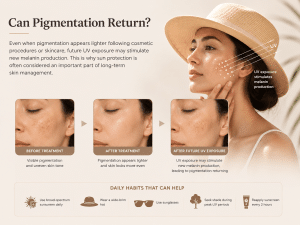
Even when pigmentation appears lighter following cosmetic procedures or skincare, future UV exposure may stimulate new melanin production. This is why sun protection is often considered an important part of long-term skin management.
Daily habits that may help reduce cumulative UV exposure include applying broad-spectrum sunscreen, wearing a wide-brim hat, using sunglasses, seeking shade during peak UV periods and reapplying sunscreen when spending extended time outdoors.
Why Is a Personalised Assessment Important?
Not every brown spot represents the same type of pigmentation.
During a cosmetic consultation, practitioners may assess the location and pattern of pigmentation, overall skin tone, skin quality, medical history, previous cosmetic treatments, lifestyle factors and sun exposure habits.
This comprehensive assessment helps identify factors that may be contributing to the pigmentation and supports a personalised discussion about appropriate cosmetic options.
How Can Sky Beauty Cosmetic Clinic Help?
At Sky Beauty Cosmetic Clinic Sydney, every pigmentation consultation begins with understanding the individual rather than focusing on a single treatment.
With clinics conveniently located in Sydney CBD (World Square) and Macquarie Park (Macquarie Centre), our experienced team evaluates each person’s skin concerns, pigmentation pattern and aesthetic goals before discussing suitable cosmetic treatment options.
Our approach focuses on education, personalised assessment and helping patients make informed decisions based on their individual skin characteristics.
Final Thoughts
Sydney’s outdoor lifestyle offers many benefits, but long-term UV exposure can contribute to pigmentation and uneven skin tone over time. Because pigmentation has multiple possible causes, understanding why it has developed is essential before exploring cosmetic treatments.
If you are concerned about pigmentation or changes in your skin tone, a personalised consultation can provide valuable insight into your skin condition and help you better understand the cosmetic options that may be suitable for your individual needs.