

HOW FACIAL SUPPORT CHANGES OVER THE DECADES
Facial ageing is often described as a gradual process, but many people are surprised to discover how early some of these changes actually begin. While wrinkles and skin laxity are commonly associated with ageing, the underlying support structures of the face also evolve over time.
Facial support is a complex system involving skin, collagen, connective tissues, fat compartments, ligaments, muscles, and bone structure. Together, these components help maintain facial contours, balance, and definition.
As we move through different stages of life, natural biological changes influence how these structures function and interact. Understanding how facial support changes over the decades can provide valuable insight into the ageing process and explain why facial appearance gradually evolves over time.
What Is Facial Support?
Facial support refers to the structural framework that helps maintain the shape and position of facial tissues.
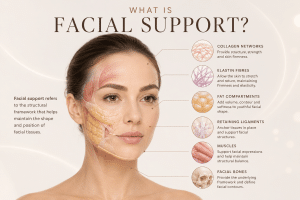
This framework includes:
- Collagen networks
- Elastin fibres
- Fat compartments
- Retaining ligaments
- Muscles
- Facial bones
When these structures are functioning optimally, the face typically appears balanced, supported, and well-defined.
As ageing occurs, gradual changes within these support systems can influence overall facial appearance.
Facial Support in Your 20s
For most individuals, the twenties represent a period when facial support structures are at their strongest.
During this stage:
- Collagen production remains relatively high
- Skin elasticity is typically well maintained
- Facial contours are naturally supported
- Tissue resilience is generally strong
- Facial proportions remain stable
Although ageing has already begun at a biological level, visible changes are usually minimal.
This decade is often considered the foundation for long-term skin and facial health.
Facial Support in Your 30s
The thirties are often when subtle structural changes begin to emerge.
Many people may not notice obvious signs of ageing, but biological processes are gradually evolving beneath the skin.
Changes may include:
- Slower collagen production
- Mild reductions in skin elasticity
- Early changes in tissue support
- Slight alterations in facial contours
Common observations include:
- Less cheek fullness compared with younger years
- Mild changes around the eyes
- Reduced skin radiance
- Early facial definition changes
These changes are often subtle and develop gradually over many years.
Facial Support in Your 40s
By the forties, structural ageing becomes more noticeable for many individuals.
At this stage, changes within multiple facial layers may begin to interact.
These may include:
- Continued collagen decline
- Reduced skin resilience
- Changes within fat compartments
- Altered tissue support
Some individuals may notice:
- Softer facial contours
- Reduced mid-face projection
- Early lower-face heaviness
- Less jawline definition
Because facial support involves multiple structures, these changes rarely occur in isolation.
Instead, they reflect the cumulative effects of ageing across several anatomical layers.
Facial Support in Your 50s
The fifties often bring more visible changes in facial structure and support.
Natural ageing processes continue to influence:
- Skin quality
- Collagen networks
- Tissue support
- Facial proportions
Common observations may include:
- Increased skin laxity
- Reduced facial definition
- Changes in cheek contours
- Lower-face volume redistribution
- More noticeable structural ageing
At this stage, many individuals become increasingly aware of changes in overall facial balance rather than isolated wrinkles alone.
This shift highlights the importance of understanding facial ageing as a structural process.
Facial Support in Your 60s and Beyond
In the sixties and later decades, structural ageing continues to progress as part of the natural ageing process.
Changes may involve:
- Ongoing collagen decline
- Reduced tissue support
- Altered facial contours
- Further skeletal ageing
These changes can contribute to:
- Softer facial architecture
- Reduced contour definition
- Changes in facial proportions
- Greater distinction between youthful and mature facial features
However, ageing patterns vary considerably between individuals.
Genetics, lifestyle, and environmental factors all play important roles in determining how facial support changes over time.
Why Collagen Matters Throughout Every Decade
Collagen is one of the most important components of facial support.
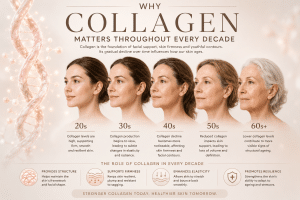
Throughout life, collagen contributes to:
- Skin firmness
- Structural integrity
- Tissue strength
- Facial resilience
Because collagen influences multiple anatomical layers, changes in collagen production affect facial support across every decade.
This is one reason collagen has become a major focus within discussions surrounding healthy ageing and facial rejuvenation.
The Role of Lifestyle Factors
Although ageing is inevitable, lifestyle choices may influence how facial support changes over time.
Factors commonly associated with skin and facial health include:
Sun Protection
Excessive ultraviolet exposure can contribute to collagen breakdown.
Nutrition
Balanced nutrition supports overall skin health and tissue maintenance.
Exercise
Regular physical activity contributes to overall wellbeing and healthy ageing.
Sleep
Quality sleep supports natural repair and recovery processes.
Smoking Avoidance
Smoking is associated with accelerated skin ageing and collagen degradation.
These factors work alongside genetics to influence long-term facial appearance.
Why Modern Healthy Skin Focuses on Structural Ageing
Historically, aesthetic treatments often focused on correcting visible signs of ageing after they appeared.
Today, there is greater recognition that facial ageing begins beneath the skin.
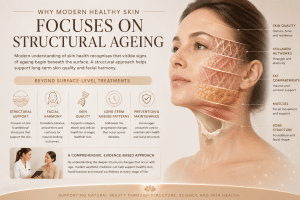
Modern facial assessments increasingly evaluate:
- Structural support
- Facial harmony
- Skin quality
- Tissue integrity
- Long-term ageing patterns
This broader perspective reflects growing understanding of how facial support evolves throughout life.
Healthy Ageing and Facial Support
Healthy ageing is not about preventing ageing altogether.
Instead, it involves understanding and supporting the natural biological processes that influence facial structure and skin quality over time.
Many individuals now take a proactive approach to maintaining:
- Facial balance
- Skin health
- Structural support
- Overall wellbeing
This approach aligns with contemporary views on healthy ageing and long-term facial maintenance.
How Facial Support Changes Over the Decades
Facial support evolves continuously throughout life. From the collagen-rich skin and strong tissue support of our twenties to the structural changes that become more apparent in later decades, ageing affects multiple layers of facial anatomy simultaneously.
Understanding how facial support changes over time helps explain why facial contours, definition, and overall appearance gradually evolve. Modern aesthetic medicine increasingly recognises the importance of these deeper structural changes, providing a more comprehensive understanding of facial ageing and healthy ageing strategies.
At Sky Beauty Cosmetic Clinic Sydney CBD (World Square) and Macquarie Park, our experienced medical team provides personalised consultations to assess facial ageing concerns and discuss treatment options tailored to individual facial anatomy, skin quality, and long-term aesthetic goals.