

Can Facial Structure Influence the Appearance of the Nasal Base?
The nasal base is a small but visually important part of the central face. Located around the lower portion of the nose, it sits close to the cheeks, upper lip and nasolabial region. Because these areas are closely connected, the appearance of the nasal base can be influenced by overall facial structure.
For people researching Nasal Base Sydney, Facial Structure Sydney or Facial Assessment Sydney, understanding these relationships can help explain why the nasal base may appear more projected, flatter or relatively recessed in different individuals.
There is no single nasal base shape that applies to everyone. Genetics, facial proportions, nose shape, cheek structure, upper lip position and other anatomical characteristics can all influence its appearance.
What Is the Nasal Base?
The nasal base generally refers to the lower part of the nose and its relationship with the surrounding central facial structures.
It forms part of the transition between the nose, cheeks and upper lip.
Some people naturally have greater projection in this area, while others may have a flatter or relatively recessed appearance.
These differences can simply represent normal variations in facial anatomy.
How Can Facial Structure Influence the Nasal Base?
Facial features are not viewed independently. Their appearance depends partly on how they relate to neighbouring structures.
For example, the nasal base may appear relatively recessed when compared with more projected surrounding features. In another person, the transition between the nasal base and nearby facial areas may appear softer.
This means that the same nasal base characteristic may look different depending on the person’s overall facial proportions.
A professional assessment therefore considers more than the nasal base alone.
Does Mid-Face Structure Matter?
Yes. The nasal base forms part of the broader mid-face.
The mid-face includes the cheeks, central facial structures and areas surrounding the nose. Differences in the shape and projection of these areas can influence how the nasal base is perceived.
A stronger transition between the central face and cheeks may make the nasal base appear more defined or relatively recessed.
A smoother transition may create a different appearance.
For this reason, a Nasal Base Sydney assessment may include the surrounding mid-face.
Can Cheek Structure Affect the Nasal Base?

The cheeks sit beside the nose and contribute significantly to overall mid-face contours.
Differences in cheek shape and projection can affect the visual relationship between the cheeks and nasal base.
For example, relatively prominent cheek contours may make the central nasal base appear different by comparison.
This does not mean there is necessarily a concern with either area. It simply reflects the way facial features influence one another visually.
Does Nose Shape Influence Nasal Base Appearance?
Yes. Nose shape can affect how the nasal base is perceived from both the front and side.
The projection and proportions of the nose may make the nasal base appear relatively more or less prominent.
When viewed from the side, the relationship between the nose and nasal base can become particularly noticeable.
This is why an assessment of the nasal base may also consider the overall shape and projection of the nose.
What Is the Relationship Between the Nasal Base and Upper Lip?
The nasal base sits directly above the upper lip.
The position and projection of these two areas can influence the appearance of the central facial profile.
If there is a stronger difference in projection between the nasal base and upper lip, the transition may appear more defined from certain angles.
In another person, the relationship may appear smoother.
These differences are part of normal facial variation and should be considered within the context of the entire face.
Can Genetics Influence Facial Structure?
Genetics can influence many aspects of facial anatomy.
These may include nose shape, cheek structure, facial proportions and the relationship between different areas of the mid-face.
As a result, a relatively flat or recessed nasal base may simply reflect inherited facial characteristics.
Similar features may sometimes be seen among family members.
This also explains why some people notice particular nasal base characteristics from a younger age rather than developing them later in life.
Can Someone Naturally Have a Recessed Nasal Base?
Yes.
A relatively recessed nasal base can be part of natural facial anatomy.
It does not automatically indicate a problem or an age-related change.
The appearance depends partly on how the nasal base relates to the nose, cheeks, upper lip and overall facial profile.
For this reason, terms such as “flat” or “recessed” are descriptive rather than a diagnosis.
Can Facial Structure Influence Nasolabial Folds Too?
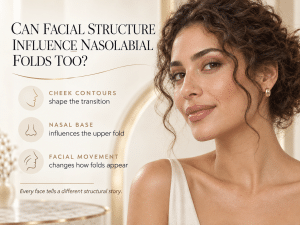
The nasal base is located near the upper portion of the nasolabial folds.
These natural creases extend from the sides of the nose toward the corners of the mouth.
Because the nasal base, cheeks and nasolabial region are closely connected, facial structure may influence how the transition between these areas appears.
However, nasolabial folds can also be influenced by skin characteristics, facial movement, genetics and natural changes over time.
A noticeable fold should therefore not automatically be attributed to nasal base structure alone.
Does Facial Symmetry Affect Nasal Base Appearance?
Natural facial asymmetry is common.
The left and right sides of the nose, cheeks and surrounding structures may differ slightly in shape or projection.
These differences can make one side of the nasal base appear slightly different from the other.
Lighting and camera angle may further exaggerate these variations.
A professional facial assessment can consider these differences rather than assuming that both sides should appear identical.
Can Age Change the Way Facial Structure Is Perceived?
The basic structure of the face is individual, but facial appearance can change throughout adulthood.
Changes in skin characteristics and surrounding facial contours may affect how different structures relate visually to one another.
As the mid-face changes, an existing nasal base characteristic may become more noticeable.
However, age alone does not determine whether the nasal base appears projected, flat or recessed.
Many of these characteristics may have been present for much of a person’s life.
Can Weight Changes Affect the Appearance?
Changes in body weight may influence facial contours in some individuals.
If the contours of the cheeks or surrounding mid-face change, the visual relationship with the nasal base may also change.
This may make an existing structural characteristic appear more or less noticeable.
The effect varies between individuals and depends on overall facial anatomy.
Why Does the Nasal Base Look Different From Different Angles?
Facial structure is three-dimensional.
A nasal base that appears relatively subtle from the front may look more recessed or projected from the side.
Similarly, differences in cheek structure may become more noticeable when the face is viewed at an angle.
For this reason, a facial assessment may involve examining frontal, oblique and profile views.
Looking at multiple angles provides more information than evaluating a single photograph.
Why Can Lighting Change Its Appearance?
Light and shadow can significantly affect how facial structure is perceived.
Strong side lighting may create deeper shadows around the nose and nasal base, making the area appear more recessed.
Frontal lighting may soften these transitions.
This is particularly important when comparing photographs because differences in lighting can create the impression that facial structure has changed when the underlying anatomy may be similar.
Is There an Ideal Nasal Base Structure?
There is no single nasal base shape or proportion that is appropriate for everyone.
Facial anatomy varies naturally, and the appearance of one feature depends on its relationship with the rest of the face.
A professional facial assessment should therefore focus on individual characteristics rather than applying one standard appearance to every person.
Personal concerns and expectations should also be considered.
Why Is a Whole-Face Assessment Useful?
The nasal base is closely connected to several surrounding structures.
When assessing this area, a practitioner may consider:
- Nasal base structure and projection
- Nose shape and proportions
- Cheek and mid-face contours
- Upper lip relationship
- Nasolabial region
- Overall facial proportions
- Facial symmetry
- Skin characteristics
- Front and side profile
- Natural facial movement
- Relevant medical and cosmetic history
Looking at these areas together can provide a more complete understanding of why the nasal base appears the way it does.
What Questions Can You Ask During a Nasal Base Assessment?
If you are concerned about the appearance of your nasal base, useful questions may include:
- Is my nasal base naturally relatively flat or recessed?
- How does my facial structure influence its appearance?
- Are my cheeks or mid-face affecting what I see?
- How does my nose shape influence the nasal base?
- What is the relationship between my nasal base and upper lip?
- Is natural asymmetry contributing to the appearance?
- Has the area changed over time?
- What should I understand before considering any cosmetic options?
A consultation can help answer these questions in the context of your individual facial anatomy.
Nasal Base Sydney: Why Individual Facial Structure Matters
Facial structure can have an important influence on the appearance of the nasal base.
Nose shape, cheek contours, mid-face structure, upper lip position, genetics, symmetry and overall facial proportions can all affect whether the nasal base appears relatively projected, flat or recessed.
For people researching Nasal Base Sydney, Facial Structure Sydney or Facial Assessment Sydney, understanding these relationships can provide more useful information than looking at the nasal base in isolation.
At Sky Beauty Cosmetic Clinic in Sydney, our approach begins with an individual consultation and facial assessment. Our practitioners consider your facial structure, proportions, surrounding contours, skin characteristics, relevant history and personal concerns before discussing whether any cosmetic management options may be appropriate for your individual circumstances.
If you would like to better understand your nasal base and how it relates to your overall facial structure, a consultation at Sky Beauty Cosmetic Clinic provides an opportunity to discuss your concerns and receive an individual facial assessment.