

How Facial Structure Influences Jawline Definition
A well-defined jawline is one aspect of overall facial anatomy and appearance. While many people associate jawline definition with body weight or skin quality, the appearance of the jawline is actually determined by a complex combination of anatomical structures working together beneath the skin.
Facial structure plays a central role in shaping the lower face. The jawbone, chin, facial fat compartments, ligaments, muscles, connective tissues, and skin all contribute to the way the jawline appears. As these structures naturally change throughout life, jawline definition may gradually evolve.
Understanding how facial structure influences the jawline provides valuable insight into the ageing process and highlights why every individual’s facial appearance is unique.
What Is Facial Structure?
Facial structure refers to the framework that supports the visible appearance of the face.
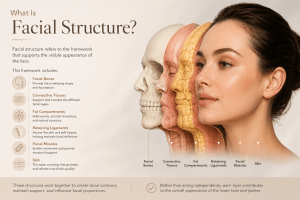
This framework includes:
- Facial bones
- Connective tissues
- Fat compartments
- Retaining ligaments
- Facial muscles
- Skin
These structures work together to create facial contours, maintain support, and influence facial proportions.
Rather than acting independently, each layer contributes to the overall appearance of the lower face and jawline.
The Jawbone Forms the Foundation
The jawbone is the primary structural foundation of the lower face.
Its size, shape, and projection largely determine the natural outline of the jawline.
Every individual has a unique skeletal structure, which explains why jawline shape varies considerably from person to person.
Genetics largely determine:
- Jaw width
- Chin projection
- Facial symmetry
- Overall facial proportions
Because bone provides the underlying framework, the appearance of the jawline begins with skeletal anatomy.
The Chin Influences Jawline Balance
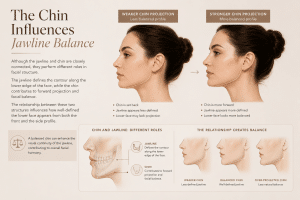
Although the jawline and chin are closely connected, they perform different roles in facial structure.
The jawline defines the contour along the lower edge of the face, while the chin contributes to forward projection and facial balance.
The relationship between these two structures influences how well-defined the lower face appears from both the front and the side profile.
The relationship between the chin and jawline contributes to overall facial proportions.
Facial Fat Supports Natural Contours
Facial fat is an essential structural component rather than simply stored body fat.
Multiple fat compartments sit beneath the skin and provide natural volume, support, and smooth transitions between different facial regions.
Within the lower face, these fat compartments help maintain:
- Jawline contours
- Lower facial volume
- Smooth facial transitions
- Overall facial balance
As these compartments naturally change over time, the appearance of the jawline may gradually evolve.
Retaining Ligaments Help Maintain Definition
Retaining ligaments are strong connective tissues that anchor the skin and soft tissues to deeper facial structures.
These ligaments provide stability and help maintain facial contours.
In younger faces, healthy ligament support contributes to clearer jawline definition.
As natural ageing occurs, gradual changes within collagen and connective tissues may reduce this support, allowing surrounding tissues to descend slightly.
This contributes to softer lower facial contours over time.
Facial Muscles Contribute to Lower Face Shape
The muscles of the lower face influence both facial movement and facial support.
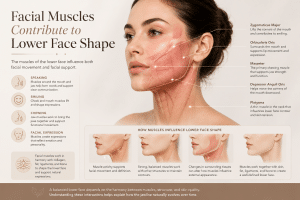
They are responsible for:
- Speaking
- Smiling
- Chewing
- Facial expression
Although muscle activity continues throughout life, age-related changes in surrounding tissues can alter how these muscles influence external facial appearance.
Together with changes in collagen, fat, and ligaments, facial muscles contribute to the evolving shape of the jawline.
Skin Quality Completes the Facial Structure
Healthy skin acts as the outer covering for the underlying facial framework.
Collagen and elastin provide strength, elasticity, and resilience.
As collagen production naturally declines with age, the skin may become:
- Less firm
- Less elastic
- More susceptible to laxity
Even when the underlying facial structure remains relatively stable, changes in skin quality may influence the appearance of jawline definition.
This demonstrates how multiple anatomical layers contribute to the visible contours of the lower face.
Facial Structure Changes Throughout Life
Facial structure is not completely fixed after adulthood.
Natural ageing gradually influences every anatomical layer, including:
- Bone
- Skin
- Fat compartments
- Ligaments
- Connective tissue
- Muscles
Because these structures change together, the lower face may appear progressively softer over time.
Modern research increasingly describes facial ageing as a structural process rather than simply a surface skin concern.
Genetics Shape Individual Jawline Appearance
No two faces are identical.
Genetics influence numerous characteristics that contribute to jawline definition, including:
- Bone shape
- Skin thickness
- Fat distribution
- Collagen production
- Facial proportions
Some individuals naturally have a broader or more angular jawline, while others have softer facial contours throughout life.
These differences are a normal part of human anatomical variation.
Facial Balance Is More Important Than a Single Feature
Facial assessment often considers the relationship between multiple facial structures.
A well-balanced lower face depends on the relationship between:
- The cheeks
- The jawline
- The chin
- The neck
- Mid-face proportions
Changes in one region often influence how another area is perceived.
For example, alterations in cheek volume or chin projection may affect the visual definition of the jawline, even when the jaw itself has not changed.
This highlights the importance of assessing the face as a complete anatomical structure.
Understanding Structural Ageing
Current understanding of facial ageing recognises that jawline definition is influenced by multiple interconnected anatomical layers.
Structural ageing involves gradual changes within:
- Skin
- Collagen
- Connective tissue
- Fat compartments
- Ligaments
- Muscles
- Bone
Rather than a single cause, changes in jawline definition reflect the combined effects of these natural biological processes.
Understanding facial structure provides a more complete explanation of why the lower face changes over time.
Conclusion
Facial structure plays a fundamental role in determining jawline definition. The jawbone provides the framework, while the chin, fat compartments, ligaments, muscles, connective tissues, and skin work together to create balanced facial contours. As these structures naturally change with age, the appearance of the jawline gradually evolves.
Because every individual has unique facial anatomy, there is no single ideal jawline or universal pattern of ageing. Understanding the structural factors that influence jawline definition provides valuable insight into facial anatomy, healthy ageing, and the importance of overall facial harmony.
At Sky Beauty Cosmetic Clinic Sydney CBD (World Square) and Macquarie Park, our experienced medical team provides personalised consultations to assess facial anatomy and discuss individual concerns.We take an individualised approach to understanding facial anatomy and discuss treatment options tailored to each person’s unique facial features, skin condition, and aesthetic goals.