

Can You Have a Double Chin Without Being Overweight?

Yes. A double chin can be visible in people of any body type, including those who are slim or within a healthy weight range.
The area beneath the chin is influenced by genetics, facial structure, skin quality, soft-tissue distribution and neck anatomy. Body weight is only one possible factor.
For people researching double-chin concerns in Sydney, understanding the cause is important before considering any cosmetic procedure.
Genetics Can Influence the Area
Genetics affect where soft tissue is naturally distributed across the face and body.
Some people are more likely to carry fullness beneath the chin, regardless of their overall size. This may be a long-standing family feature and may remain even after weight loss.
A double chin should therefore not automatically be interpreted as a sign of being overweight.
Chin Projection Affects the Profile
Chin position can significantly influence how the area beneath the jaw appears.
A smaller or less projected chin may create a shorter-looking jawline and reduce the visible separation between the face and neck. Even a limited amount of soft tissue may appear more noticeable when chin projection is reduced.
Chin height, width and shape also contribute to the balance of the lower face.
Natural Jaw and Neck Anatomy
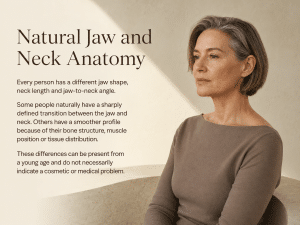
Every person has a different jaw shape, neck length and jaw-to-neck angle.
Some people naturally have a sharply defined transition between the jaw and neck. Others have a smoother profile because of their bone structure, muscle position or tissue distribution.
These differences can be present from a young age and do not necessarily indicate a cosmetic or medical problem.
Skin Quality Can Change the Appearance
Skin elasticity and structural support affect how closely the skin sits around the jaw and upper neck.
Genetics, sun exposure, smoking, health factors and natural changes over time may influence skin quality. As support changes, the area beneath the chin may appear softer even when body weight remains stable.
Skin should be assessed together with deeper facial structures rather than assumed to be the only cause.
Soft-Tissue Position May Change
The position of facial soft tissue can change gradually.
Changes around the lower cheeks, jawline and upper neck may make the profile look heavier or less defined. This can happen without significant weight gain.
A person may therefore notice a double chin becoming more visible even though their clothing size and general body shape remain unchanged.
Posture Can Affect Visibility
Forward-head posture or looking down can make existing fullness beneath the chin more noticeable.
This is often seen when using a phone, working at a computer or being photographed from below. Posture can influence how the area looks in a particular position, although it may not be the only reason for persistent fullness.
Temporary Puffiness

Temporary fluid retention may affect the lower face and upper neck.
Possible influences include:
- Salt intake
- Alcohol consumption
- Sleep quality
- Hormonal changes
- Dehydration
- Allergies
- Certain medications
Persistent, painful, rapidly changing or one-sided swelling should be assessed by a healthcare professional rather than treated as a cosmetic issue.
Why Further Weight Loss May Not Help
If someone is already slim, losing more weight may not significantly change the area beneath the chin.
When the appearance is mainly related to genetics, chin projection, skin quality or neck anatomy, further weight loss may have limited effect and may not be appropriate.
A professional assessment can help identify the likely contributing factors without making assumptions based on body size.
What Is Assessed During a Consultation?
A double-chin consultation may consider:
- Chin projection and position
- Jaw length and angle
- Skin quality and elasticity
- Soft-tissue distribution
- Fullness beneath the chin
- Neck shape and anatomy
- Facial symmetry
- Posture
- Medical and previous treatment history
The lower face should be viewed from the front, side and three-quarter angles to understand how the chin, jaw and neck relate to one another.
Is Cosmetic Treatment Always Necessary?
No. A softer jaw-to-neck transition may simply be part of someone’s natural facial anatomy.
If a professional procedure is being considered, the practitioner should explain its intended purpose, potential risks, limitations, possible downtime and alternatives. Choosing not to proceed is also a valid outcome.
Double-Chin Consultations at Sky Beauty
At Sky Beauty Cosmetic Clinic, double-chin and lower-face consultations are available at our Sydney CBD and Macquarie Park clinics.
Each consultation begins with an individual assessment of the chin, jawline, skin, soft tissue and neck profile. The practitioner can explain which factors may be contributing to the appearance and discuss suitable professional options, alternatives or referrals where appropriate.
You can have a double chin without being overweight because body weight is only one influence on the lower face. Any cosmetic procedure carries potential risks and limitations, and suitability should be assessed by an appropriately qualified health professional before treatment.