

Why Does a Double Chin Sometimes Look More Noticeable in Photos?

A double chin can appear more noticeable in photographs than it does in the mirror or during everyday interactions. This does not necessarily mean that the area has changed.
Camera angle, lens distortion, lighting, posture and facial movement can all affect the appearance of the chin, jawline and neck. A photograph captures one brief, two-dimensional view of a three-dimensional area.
Camera Angle
The height of the camera can significantly change the lower-face profile.
A camera positioned below eye level may make the underside of the chin more visible. A camera held slightly above eye level may create a different perspective and make the same area appear less prominent.
Even a small change in camera height can alter the apparent relationship between the chin and neck.
Close-Range Lens Distortion
Phone cameras often use wide-angle lenses, particularly for selfies.
When the camera is held close to the face, features may appear wider, shorter or differently proportioned. The chin may look less projected, while the lower face and neck can appear fuller.
Photographs taken from a greater distance and then cropped generally produce less perspective distortion than close-range selfies.
Looking Down
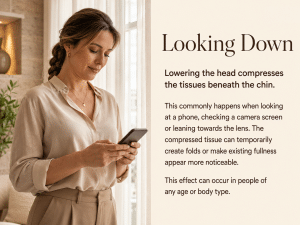
Lowering the head compresses the tissues beneath the chin.
This commonly happens when looking at a phone, checking a camera screen or leaning towards the lens. The compressed tissue can temporarily create folds or make existing fullness appear more noticeable.
This effect can occur in people of any age or body type.
Forward-Head Posture
Forward-head posture changes the angle between the jaw and neck.
When the head moves forward, the visible separation between these areas may be reduced. This can create a softer profile even when the amount of tissue beneath the chin has not changed.
A more reliable comparison uses a relaxed, neutral head and neck position.
Lighting and Shadows
Lighting can either emphasise or minimise under-chin fullness.
Strong overhead lighting may create shadows around the lower face, while flat lighting can reduce the natural shadow beneath the jaw and make its border appear less distinct.
Side lighting may make one jawline look sharper than the other. Differences in lighting can therefore affect both definition and facial symmetry.
Photographs Flatten the Face
In person, the chin, jaw and neck are viewed in three dimensions and from constantly changing angles.
A photograph converts these features into a flat image. Depth, projection and subtle contours may not be represented accurately, causing the jawline to appear shorter or the area beneath the chin to look fuller.
Video may sometimes provide a more representative view because it captures movement and multiple angles.
Facial Expression and Movement
Talking, smiling or pressing the lips together can temporarily change the lower face.
A strong smile may shift the cheeks and chin, while jaw tension can alter muscle activity. Photographs taken mid-expression may therefore show folds or fullness that are less visible when the face is relaxed.
Chin Projection
Natural chin position influences how the area appears in photographs.
A smaller or less projected chin may create a shorter-looking jawline from the side. Certain camera angles can exaggerate this relationship, making existing under-chin tissue appear more prominent.
This may be a matter of facial structure rather than additional fat.
Filters and Edited Images
Beauty filters may reshape the jawline, narrow the lower face or alter chin projection. Comparing an unfiltered photograph with edited images can create unrealistic expectations.
Photographs used during a professional consultation should ideally be clear, unedited and taken under consistent conditions.
How to Take More Consistent Photos
For a more reliable comparison:
- Position the camera at eye level
- Avoid close-range selfies
- Use even, neutral lighting
- Keep the head and neck relaxed
- Maintain a neutral facial expression
- Use the same camera and distance
- Take front, side and three-quarter views
- Avoid filters and reshaping tools
Even with these steps, photographs cannot fully reproduce how the area appears in person.
Why an In-Person Assessment Matters
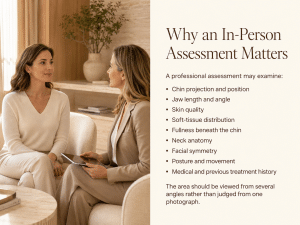
A professional assessment may examine:
- Chin projection and position
- Jaw length and angle
- Skin quality
- Soft-tissue distribution
- Fullness beneath the chin
- Neck anatomy
- Facial symmetry
- Posture and movement
- Medical and previous treatment history
The area should be viewed from several angles rather than judged from one photograph.
Double-Chin Consultations at Sky Beauty
At Sky Beauty Cosmetic Clinic, double-chin and lower-face consultations are available at our Sydney CBD and Macquarie Park clinics.
Each consultation begins with an individual, multi-angle assessment of the chin, jawline, skin, soft tissue and neck profile. The practitioner can help distinguish camera-related effects from features related to anatomy and discuss suitable professional options, alternatives or referrals where appropriate.
Any cosmetic procedure carries potential risks and limitations. Individual suitability should be assessed by an appropriately qualified health professional before treatment.