

WHAT CAUSES FACIAL REDNESS AND FLUSHING?
Facial redness and flushing are among the most common skin concerns discussed in cosmetic and dermatology clinics. While occasional redness is often a normal physiological response, persistent or recurring facial redness can sometimes become more noticeable and may affect overall skin appearance.
Many people experience facial redness at some point in their lives. For some, redness appears temporarily after exercise or exposure to heat. For others, it may occur more frequently or remain visible for longer periods.
Understanding what causes facial redness and flushing begins with understanding how the skin and blood vessels naturally respond to internal and external influences. By recognising the factors that contribute to redness, individuals can gain a better understanding of their skin and make informed decisions about skin health and management.
What Is Facial Redness?
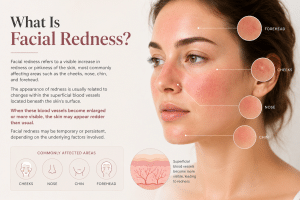
Facial redness refers to a visible increase in redness or pinkness of the skin, most commonly affecting areas such as:
- Cheeks
- Nose
- Chin
- Forehead
The appearance of redness is usually related to changes within the superficial blood vessels located beneath the skin’s surface.
When these blood vessels become enlarged or more visible, the skin may appear redder than usual.
Facial redness may be temporary or persistent, depending on the underlying factors involved.
What Is Flushing?
Flushing is a temporary episode of facial redness caused by increased blood flow to the skin.
During a flushing episode, blood vessels widen, allowing more blood to reach the skin’s surface.

This process can result in:
- Redness
- Warmth
- Mild skin sensitivity
- A flushed appearance
Flushing is a normal physiological response and can occur in healthy individuals under certain circumstances.
In many cases, flushing resolves naturally once the triggering factor is removed.
Why Do Blood Vessels Affect Skin Colour?
The skin contains an extensive network of tiny blood vessels known as capillaries.
These vessels help regulate:
- Body temperature
- Circulation
- Nutrient delivery
- Skin health
When blood vessels dilate, or widen, increased blood flow becomes visible through the skin.
This creates the appearance of redness.
Individuals with fairer skin tones may notice redness more easily because blood vessels are often more visible through lighter skin.
Common Causes of Facial Redness and Flushing
A wide range of factors can contribute to facial redness and flushing.
Some of the most commonly recognised triggers include:
Heat Exposure
Heat is one of the most common causes of facial flushing.
Examples include:
- Hot weather
- Saunas
- Hot showers
- Heated indoor environments
As body temperature rises, blood vessels naturally expand to help release excess heat.
This response can lead to temporary facial redness.
Physical Exercise
Exercise increases circulation and body temperature.
As a result, many people notice:
- Red cheeks
- Facial warmth
- Temporary flushing
This is generally considered a normal response to physical activity and usually resolves after the body cools down.
Emotional Responses
Strong emotions can trigger facial flushing.
Examples include:
- Stress
- Anxiety
- Embarrassment
- Excitement
These reactions occur because emotional responses can influence the nervous system and blood vessel activity.
Sun Exposure and Facial Redness
Australia has one of the highest levels of ultraviolet (UV) exposure in the world.
Excessive sun exposure may contribute to:
- Skin sensitivity
- Increased redness
- Visible blood vessels
- Changes in skin barrier function
Repeated UV exposure can influence how blood vessels behave within the skin and may contribute to long-term changes in skin appearance.
Sun protection is therefore an important component of maintaining healthy skin.
The Role of Sensitive Skin
Individuals with sensitive skin often report increased facial redness.
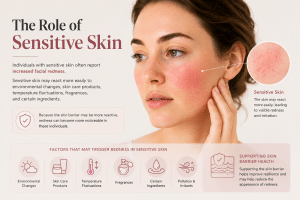
Sensitive skin may react more easily to:
- Environmental changes
- Skin care products
- Temperature fluctuations
- Fragrances
- Certain ingredients
Because the skin barrier may be more reactive, redness can become more noticeable in these individuals.
Understanding Skin Barrier Function
The skin barrier serves as the body’s first line of defence against external irritants and environmental stressors.
A healthy skin barrier helps maintain:
- Hydration
- Protection
- Skin comfort
- Overall skin resilience
When the skin barrier becomes compromised, the skin may become more susceptible to:
- Irritation
- Sensitivity
- Visible redness
This is one reason skin barrier health has become an increasingly important topic in modern skin care discussions.
Environmental Factors That May Influence Redness
Environmental conditions can have a significant impact on skin appearance.
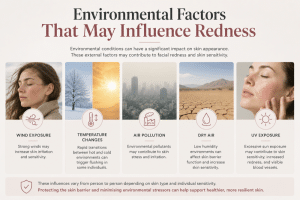
Factors that may contribute to facial redness include:
Wind Exposure
Strong winds may increase skin irritation and sensitivity.
Temperature Changes
Rapid transitions between hot and cold environments can trigger flushing in some individuals.
Air Pollution
Environmental pollutants may contribute to skin stress and irritation.
Dry Air
Low humidity environments can affect skin barrier function and increase skin sensitivity.
These influences vary from person to person depending on skin type and individual sensitivity.
Why Some People Experience More Redness Than Others
Facial redness affects individuals differently.
Several factors may influence a person’s tendency to develop redness, including:
- Genetics
- Skin type
- Skin tone
- Environmental exposure
- Lifestyle factors
- Skin barrier health
For example, people with fair skin often report redness more frequently because superficial blood vessels are more visible through the skin.
Individual differences in vascular responsiveness may also play a role.
When Facial Redness Becomes Persistent
While occasional flushing is common, some individuals experience redness that appears more regularly or remains visible for extended periods.
Persistent redness may prompt individuals to seek professional assessment to better understand contributing factors and discuss appropriate management options.
Because multiple factors can contribute to redness, professional assessment often involves evaluating:
- Skin type
- Medical history
- Lifestyle influences
- Environmental exposures
- Skin care habits
This comprehensive approach helps provide a clearer understanding of individual skin concerns.
The Growing Interest in Redness Management
As awareness of skin health continues to grow, more people are seeking information about facial redness and flushing.
Modern skin care discussions increasingly focus on:
- Skin barrier support
- Sensitive skin management
- Environmental influences
- Healthy skin maintenance
- Long-term skin health
Understanding the underlying causes of redness is an important first step towards supporting overall skin wellbeing.
What Causes Facial Redness and Flushing?
Facial redness and flushing can occur for many different reasons, including heat exposure, exercise, emotional responses, environmental influences, sensitive skin, and changes in skin barrier function. In most cases, redness is related to increased blood flow within superficial blood vessels beneath the skin.
Because redness can be influenced by multiple factors, understanding individual triggers and skin characteristics is often key to maintaining healthy skin. As scientific understanding of skin health continues to evolve, greater attention is being placed on skin barrier function, environmental influences, and overall skin resilience when discussing facial redness and flushing.
At Sky Beauty Cosmetic Clinic Sydney CBD (World Square) and Macquarie Park, our experienced medical team provides personalised consultations to assess skin concerns and discuss treatment options tailored to individual skin types, concerns, and aesthetic goals.