

Can Hormones Contribute to Pigmentation?
Hormonal changes affect many aspects of the body, including the skin. While sun exposure is one of the most recognised causes of pigmentation, hormones can also play an important role in the development of certain types of dark patches and uneven skin tone.
Many people searching for Pigmentation Sydney notice that pigmentation appears or becomes more noticeable during pregnancy, while taking hormonal medications, or around menopause. In many cases, these changes occur even when daily sun exposure has not significantly increased.
At Sky Beauty Cosmetic Clinic Sydney, hormonal pigmentation is one of the concerns frequently discussed during skin consultations. Because pigmentation can have multiple contributing factors, understanding the possible causes is an important first step before exploring cosmetic options.
What Is Hormonal Pigmentation?
Hormonal pigmentation refers to changes in skin colour that are influenced by fluctuations in hormone levels. These hormonal changes may influence melanocyte activity, the cells involved in producing melanin, resulting in increased pigmentation in certain areas of the skin.
One of the most common forms of hormonal pigmentation is melasma. It often appears as symmetrical brown or grey-brown patches on the cheeks, forehead, upper lip or chin. Unlike freckles or sun spots, melasma usually develops in larger areas and may become darker over time.
Although hormones can trigger pigmentation, ultraviolet (UV) exposure often makes it more noticeable. This is why many people find that pigmentation becomes darker after spending time outdoors.
When Can Hormonal Changes Affect Pigmentation?
Hormonal pigmentation may develop during different stages of life.
Some common situations include:
- Pregnancy
- Use of oral contraceptive pills
- Hormone replacement therapy
- Menopause
- Certain hormonal conditions
Not everyone experiencing hormonal changes will develop pigmentation. Genetics, skin type and sun exposure can all influence whether pigmentation becomes visible.
Why Is Melasma So Common?
Melasma is one of the most frequently discussed pigmentation concerns in cosmetic practice.
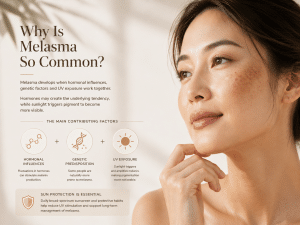
It is thought to develop through a combination of hormonal influences, genetic predisposition and UV exposure. For many people, hormones may contribute to the development of melasma, while sunlight may influence how visible pigmentation appears.
Because these factors often work together, melasma may require consideration of ongoing UV exposure as part of a long-term skincare routine.
How Is Hormonal Pigmentation Different From Sun Spots?
Although both conditions involve excess melanin, they usually develop differently.
Sun spots, also known as solar lentigines, are primarily associated with cumulative UV exposure over many years. They often appear as individual, well-defined brown spots on areas frequently exposed to the sun.
Hormonal pigmentation, particularly melasma, usually appears as larger, more diffuse patches with less defined borders. It commonly affects both sides of the face and may fluctuate depending on hormonal changes.
Because different pigmentation concerns can appear similar, an assessment is helpful before discussing available cosmetic options.
Can Hormonal Pigmentation Return?
Many people ask whether hormonal pigmentation can recur after it has improved.
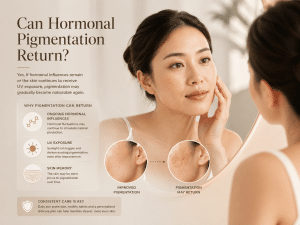
Yes, hormonal influences and ongoing UV exposure may contribute to pigmentation becoming noticeable again over time.
For this reason, daily sun protection is often recommended as part of ongoing skin management. Broad-spectrum sunscreen, protective clothing and minimising unnecessary UV exposure are commonly recommended parts of maintaining skin health.
Why Is a Personalised Assessment Important?
Not every dark patch is caused by hormones.
During a cosmetic consultation, practitioners may assess:
- The pattern and location of pigmentation
- Medical history
- Hormonal history
- Previous cosmetic treatments
- Sun exposure habits
- Skin type and overall skin quality
This comprehensive assessment helps explore factors that may be associated with pigmentation and supports an individualised discussion about available cosmetic options.
How Can Sky Beauty Cosmetic Clinic Help?
At Sky Beauty Cosmetic Clinic Sydney, every pigmentation consultation begins with understanding the individual rather than focusing on a single treatment.
With clinics located in Sydney CBD (World Square) and Macquarie Park (Macquarie Centre), our experienced team carefully reviews each person’s pigmentation pattern, skin condition and cosmetic goals before discussing available cosmetic options.
Our approach focuses on education, personalised assessment and helping clients make informed decisions based on their individual skin concerns.
Final Thoughts
Hormonal changes can be an important contributing factor to pigmentation, particularly melasma. However, hormones rarely act alone. Genetics, sun exposure, skin type and lifestyle factors often work together to influence how pigmentation develops.
If you have noticed persistent dark patches or uneven skin tone, a personalised consultation can help explore factors associated with your pigmentation and provide a better understanding of the cosmetic options available for your individual circumstances.