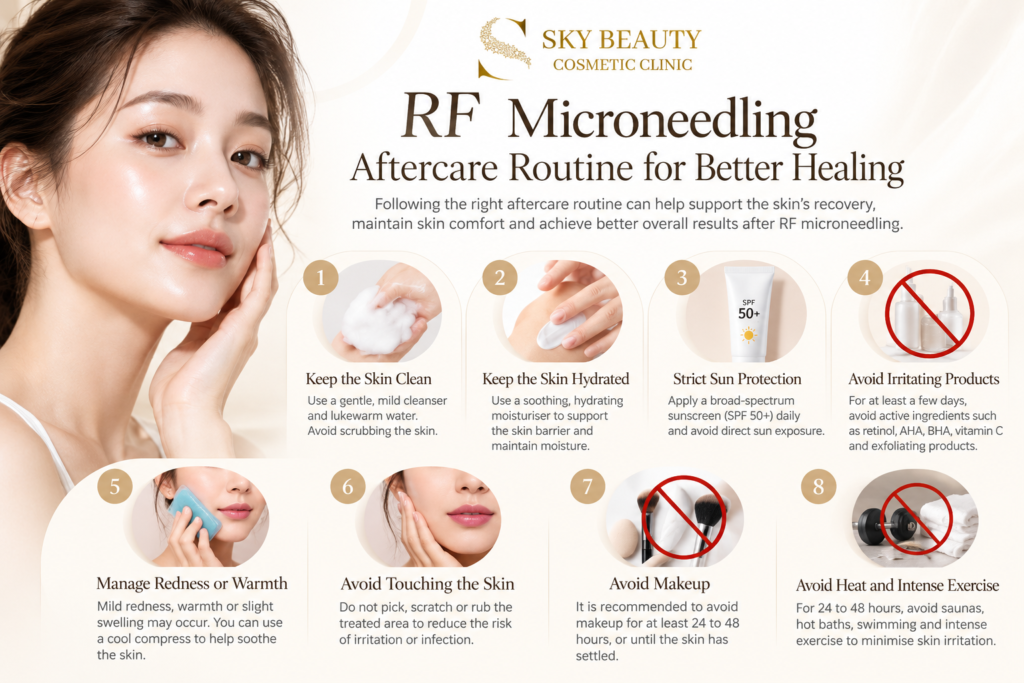
 Your skin may look flushed, feel warm, and have a lightly textured or pinpoint-speckled appearance immediately after treatment. That response is expected: RF microneedling creates controlled microchannels while delivering radiofrequency energy beneath the surface to support collagen renewal. A considered RF microneedling aftercare routine can support skin recovery and help maintain a consistent skincare routine.
Treatment depth, the area treated, your skin sensitivity, and whether RF microneedling was combined with another service can all influence the recommended recovery plan.
The First 24 Hours: Protect the Skin Barrier
For the rest of treatment day, treat your skin as temporarily delicate. Avoid touching the area unless your hands are freshly washed, and do not pick at any tiny crusts or pinpoint marks that may develop. Your skin is actively beginning its repair process, and unnecessary friction can introduce irritation or bacteria.
Most clients can rinse with cool to lukewarm water later that day if their provider approves it. Pat dry with a clean, soft towel rather than rubbing. Use only the gentle recovery products recommended for you, typically a fragrance-free hydrating serum or barrier-supporting moisturizer. The goal is comfort and hydration, not an elaborate skincare routine.
Makeup is best avoided for at least 24 hours, and sometimes longer if your skin remains open, irritated, or noticeably sensitive. Even premium cosmetics and clean brushes can create avoidable congestion during this early healing window. Plan your appointment accordingly if you have an event, photo session, or work commitment that requires full makeup.
You should also avoid sweating and heat exposure for the first day. Skip intense workouts, hot yoga, saunas, steam rooms, hot baths, and very hot showers. Heat can prolong redness and swelling, particularly around the cheeks and under-eye area.
Days 2 Through 3: Keep It Gentle and Hydrated
Redness often begins to settle within 24 to 48 hours, although mild swelling, dryness, tightness, or a sandpaper-like texture can last several days. This is not the moment to exfoliate it away. Let the skin shed naturally.
Cleanse morning and evening with a mild, non-exfoliating cleanser and lukewarm water. Follow with a simple hydrating product and moisturizer as advised by your provider. If your skin feels dry, apply another light layer of moisturizer rather than introducing new active ingredients.
Broad-spectrum sunscreen becomes essential once your clinician confirms it is appropriate to apply, often from the next day. Choose SPF 30 or higher and reapply when you are outdoors. Freshly treated skin is more vulnerable to UV-related pigmentation, so a wide-brimmed hat, sunglasses, and shade are valuable additions to your aftercare.
During this stage, avoid retinoids, retinol, tretinoin, exfoliating acids, scrubs, benzoyl peroxide, and other potentially irritating actives. This includes many brightening and acne products. Vitamin C may also need a brief pause, depending on its formulation and how reactive your skin is. Your provider can advise when each product belongs back in your routine.
Days 4 Through 7: Return to Your Routine Thoughtfully
The timing for returning to your usual skincare routine varies depending on your skin’s recovery and your clinician’s advice. Some dryness or light flaking can still occur, especially after deeper treatments or in areas with thinner skin. Continue to prioritize hydration, sunscreen, and a gentle approach.
If your skin has fully calmed, your provider may allow you to gradually reintroduce selected products. Do not restart every active on the same evening. Begin with one product, use it sparingly, and observe how your skin responds. A personalized plan is particularly worthwhile if you use prescription skincare or are prone to acne, rosacea, eczema, hyperpigmentation, or post-inflammatory marks.
You may usually resume moderate exercise once heat and flushing have settled, but it depends on your recovery and treatment intensity. If a workout leaves your face hot, red, or irritated, give your skin another day. A little patience here can make the healing period feel more elegant and controlled.
What to Avoid After RF Microneedling
For the first week, avoid treatments and habits that create friction, heat, inflammation, or excess bacterial exposure. This includes facial waxing, threading, depilatory creams, exfoliating facials, facial massage, and at-home microneedling devices. Do not schedule chemical peels, laser treatments, or other energy-based procedures unless your aesthetic provider has planned them as part of a medically guided treatment sequence.
Swimming pools, ocean water, hot tubs, and communal steam rooms should also wait until the skin has recovered. Chlorine, salt, heat, and bacteria can all be irritating when the skin barrier is still repairing.
Alcohol can increase flushing for some people, so consider avoiding it for the first 24 to 48 hours, especially if you are prone to redness or swelling. Smoking and vaping may also interfere with healthy healing and collagen support. If you are investing in skin renewal, this is an ideal time to give your skin the most supportive conditions possible.
Managing Redness, Swelling, and Dryness
A cool compress can be soothing if your provider has approved it. Place a clean cloth between your skin and the compress, and use light pressure only. Avoid applying ice directly to the treated area.
Sleep with your head slightly elevated on the first night if swelling is a concern, particularly after treatment around the eyes, cheeks, or jawline. Change your pillowcase and keep hair, phones, eyewear, and makeup brushes clean to limit unnecessary contact with the skin.
Mild redness, tenderness, and temporary texture changes are commonly part of recovery. Contact your provider promptly, however, if you experience increasing pain, significant swelling, spreading redness, blistering, pus, fever, or any reaction that feels distinctly different from the guidance you were given. Following aftercare instructions and seeking clinical advice when needed are important parts of the recovery process.
When Will You See Results?
RF microneedling is designed for progressive improvement rather than an overnight change. You may notice an early glow once initial redness fades, but collagen remodeling takes time. The timing and extent of visible changes in texture, pores, fine lines, acne scarring and firmness vary between individuals and depend on the treatment approach and skin response.
Consistency between appointments matters. Daily sun protection, strategic skincare, and the right interval between treatments help preserve a polished, luminous complexion. For concerns such as acne scars or more established laxity, a more intensive course may be recommended. For prevention and ongoing radiance, maintenance treatments can be spaced differently.
Make Your Aftercare Part of the Result
A premium treatment experience does not end when you leave the clinic. It continues in the quiet choices you make over the next few days: protecting your skin from heat, wearing sunscreen with intention, resisting the urge to exfoliate, and allowing the renewal process to unfold at its own pace.
If you are unsure whether a product, workout, event, or upcoming treatment fits within your recovery window, ask before proceeding. Personalised Aesthetic Care means your aftercare should reflect your treatment plan and individual recovery needs, with guidance from your treating clinician.