

How Can Genetics Influence the Appearance of a Double Chin?

A double chin is not always caused by weight gain. Genetics can influence facial structure, chin projection, skin characteristics and where soft tissue is naturally distributed.
This means that people who are slim or maintain a stable weight may still have visible fullness beneath the chin. Understanding these inherited features is important before considering any cosmetic procedure.
Genetics and Tissue Distribution
Genes can influence where the body naturally stores soft tissue.
Some people are more likely to carry fullness beneath the chin, while others store tissue in different areas. This pattern may be noticeable from adolescence and may also appear in parents, siblings or other relatives.
When under-chin fullness is strongly influenced by genetics, weight loss may have a limited effect on the area.
Inherited Chin Projection
The position and shape of the chin are also influenced by genetics.
A smaller or less projected chin may create a shorter-looking jawline and reduce the visible separation between the face and neck. As a result, even a limited amount of tissue beneath the chin may appear more prominent.
Chin width and height can also influence how balanced the lower face looks from the front and side.
Natural Jaw Structure 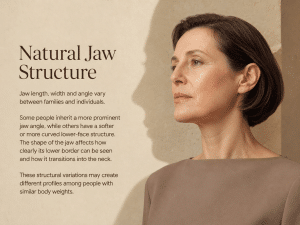
Jaw length, width and angle vary between families and individuals.
Some people inherit a more prominent jaw angle, while others have a softer or more curved lower-face structure. The shape of the jaw affects how clearly its lower border can be seen and how it transitions into the neck.
These structural variations may create different profiles among people with similar body weights.
Neck Shape and Anatomy
Genetics can influence neck length, tissue position and the natural angle between the jaw and neck.
A longer neck with a more visible jaw-to-neck angle may make the jawline appear sharper. A shorter neck or smoother transition may make under-chin fullness more noticeable.
Neither appearance is abnormal. They represent natural anatomical variation.
Skin Characteristics
Skin thickness, elasticity and the way skin changes over time can have inherited components.
Some people may notice changes in skin support earlier than others. When the skin around the jaw and upper neck sits less firmly, existing fullness beneath the chin may appear more visible.
Sun exposure, smoking, general health and skincare habits can also influence skin quality, so genetics is not the only factor.
Family Patterns
People sometimes notice that their chin, jawline or neck profile resembles that of a parent or grandparent.
Shared family features may include:
- A smaller or less projected chin
- A softer jaw angle
- Fullness beneath the chin
- A particular neck shape
- Similar skin characteristics
- A tendency to store tissue around the lower face
These similarities may help explain why the area remains visible despite stable weight and healthy lifestyle habits.
Genetics and Changes Over Time
A genetically influenced double chin may become more noticeable gradually.
Natural changes in skin support and soft-tissue position can make an existing family feature more visible. Someone who had mild under-chin fullness when younger may notice a softer jaw-to-neck transition later, even without significant weight gain.
The appearance may therefore involve both inherited anatomy and changes that develop over time.
Can Lifestyle Change a Genetic Double Chin?
Lifestyle can influence overall health, body composition, skin quality and temporary puffiness. However, it cannot completely change inherited bone structure, chin position or natural tissue distribution.
Maintaining a stable weight may help prevent additional fullness, but further weight loss is not guaranteed to change a genetically influenced profile. Unnecessary weight loss may also be inappropriate for someone who is already within a healthy weight range.
Why Assessment Matters
It is not possible to determine the cause of under-chin fullness from body weight alone.
During a lower-face consultation, the practitioner may assess:
- Chin projection and shape
- Jaw length and angle
- Soft-tissue distribution
- Skin quality and elasticity
- Neck anatomy
- Facial symmetry
- Changes noticed over time
- Family patterns
- Medical and previous treatment history
The area should be viewed from the front, side and three-quarter angles to understand how these features relate.
Is Treatment Always Necessary?
No. A double chin may simply reflect natural family anatomy and does not automatically require treatment.
If a cosmetic procedure is being considered, the practitioner should explain what it may aim to address, what features are unlikely to change, potential risks, limitations, possible downtime and alternatives.
Choosing not to proceed is also a valid outcome of a consultation.
Double-Chin Consultations at Sky Beauty
At Sky Beauty Cosmetic Clinic, double-chin and lower-face consultations are available at our Sydney CBD and Macquarie Park clinics.
Each consultation begins with an individual assessment of the chin, jawline, skin, soft tissue and neck profile. The practitioner can explain how genetic and non-genetic factors may be contributing and discuss suitable professional options, alternatives or referrals where appropriate.
Genetics can strongly influence the appearance of a double chin, regardless of age or body weight. Any cosmetic procedure carries potential risks and limitations, and suitability should be assessed by an appropriately qualified health professional before treatment.