

DPL vs Pico Laser for Pigmentation: What Is the Difference?
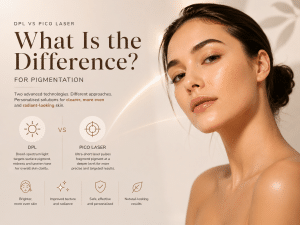
Pigmentation rarely has one simple cause. Sun exposure, hormonal shifts, acne inflammation, and skin irritation can all leave behind uneven tone that requires a more considered approach. When comparing DPL vs Pico Laser for Pigmentation: What Is the Difference?, the answer comes down to the type of pigment, its depth, your skin tone, and the result you want to achieve.
Both technologies can help create a clearer, more luminous complexion. They do so in distinctly different ways, which is why a personalised skin assessment is the most refined place to begin.
DPL vs Pico Laser for Pigmentation
DPL, or Dynamic Pulsed Light, is a light-based treatment that may be used to address the appearance of certain pigmentation and redness concerns. Light energy is absorbed by targeted chromophores in the skin, depending on the device and treatment settings.
DPL is often an elegant choice for surface-level concerns, including sun spots, freckles, diffuse redness, and overall dullness.
It may be considered for clients who want to improve the appearance of uneven skin tone, visible pigmentation or redness associated with photoaged skin.
Pico laser technology works differently. It delivers laser energy in extremely short picosecond pulses. Pico laser delivers laser energy in very short picosecond pulses. Depending on the wavelength, device and treatment settings, this approach can be used to target selected pigmentation while limiting thermal exposure to surrounding tissue.
Depending on the type and cause of pigmentation, Pico laser may be considered for selected pigmentation concerns. Treatment suitability varies between individuals and should be assessed during a consultation. It may also be considered where improving the overall appearance and texture of the skin is part of the treatment plan.
The Key Difference: Light-Based Rejuvenation vs Targeted Pigment Fragmentation
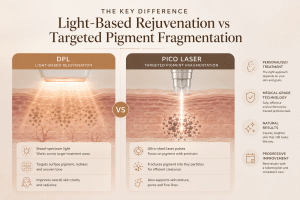
DPL is a broad-spectrum light treatment that may be considered for certain pigmentation and redness concerns across areas such as the face, neck, chest or hands. A course of treatments can improve the look of overall tone rather than focusing only on isolated spots.
Pico is a laser, meaning it uses a more precise wavelength of light. Its ultrafast pulse duration allows treatment to be tailored to specific pigmentation concerns, depending on the wavelength, device and treatment settings. Depending on the device settings and clinical assessment, Pico can be used to address pigment while also improving texture, enlarged pores, and fine lines.
Neither treatment is automatically “better.” The right choice depends on what is causing the discoloration. For example, someone with freckles and visible facial redness may be an excellent candidate for DPL. Someone with persistent pigmentation following acne or other pigmentation concerns may be assessed for Pico laser treatment, depending on their skin type and individual circumstances.
What Does Treatment Feel Like and What Is the Downtime?

Most clients describe DPL as a brief snapping or warming sensation. After treatment, the skin may look mildly pink, and targeted brown spots can temporarily darken before they flake or fade. This is a normal part of the renewal process. Downtime varies depending on the treatment area, settings and individual skin response. Mild redness or temporary changes in pigmentation may occur, and appropriate aftercare and sun protection are important.
Pico laser can feel like tiny, quick flicks against the skin. A topical numbing cream may be used for added comfort, depending on the treatment area and intensity. Mild redness or temporary swelling can occur, and some pigment may darken initially. Recovery is generally manageable, but the appropriate settings and aftercare plan are especially important for skin prone to post-inflammatory pigmentation.
The visible changes with either treatment are progressive. Visible changes vary between individuals. Some pigmentation concerns may require a series of treatments, depending on the type and extent of pigmentation. Depending on your individual skin concerns, your clinician may discuss additional skincare or treatment options as part of a personalised treatment plan.
Safety Matters, Especially With Melasma and Deeper Skin Tones
Pigmentation treatment should never be approached as one-size-fits-all. Melasma can be complex and may be influenced by factors including UV exposure and hormonal changes. People with melasma or a history of pigmentation should receive an individual assessment before undergoing light- or laser-based treatment.
Skin tone also influences treatment planning. Individual skin characteristics can influence the risk of temporary or unwanted pigmentation changes following energy-based treatments. A qualified practitioner can assess factors such as skin type, pigmentation pattern, skincare routine, relevant medications and recent sun exposure when determining whether an energy-based treatment is appropriate.
At Sky Beauty Cosmetic Clinic, treatment planning is centered on precision, comfort, and natural-looking skin refinement. Our approach is focused on personalised treatment planning and supporting the appearance of clearer and more even-looking skin.
If pigment is affecting the way you feel about your complexion, a professional consultation can clarify whether DPL, Pico laser, or a carefully staged combination approach is the most suitable next step.