

Can DPL Help Improve the Appearance of Sun Damage?

Living in Australia means our skin is frequently exposed to strong UV radiation. Over time, repeated sun exposure can contribute to visible changes such as brown spots, freckles, uneven pigmentation, redness and an overall less even complexion.
For people researching DPL Macquarie Park or treatments for sun damaged skin in Sydney, DPL is one light-based treatment option that may be discussed during a professional skin consultation.
But what exactly is sun damage, and how can DPL help improve its appearance?
At Sky Beauty Cosmetic Clinic Macquarie Park, DPL treatments are tailored to the individual after assessing the skin type, pigmentation pattern and overall skin condition.
What Does Sun Damage Look Like?
Sun damage does not always appear as one obvious dark spot.
Years of repeated UV exposure can gradually change the appearance of the skin. Common signs may include:
Freckles Brown spots Solar lentigines, commonly called sun spots Uneven pigmentation Patchy skin tone Areas of redness Changes in overall skin texture
Clinical research into photodamaged skin has identified hyperpigmentation, visible blood vessels, changes in texture and other signs as common features associated with chronic sun exposure.
For many people, these changes become more noticeable across areas that receive regular sun exposure, particularly the face.
What Is DPL?
DPL stands for Delicate Pulsed Light.
It is a light based technology related to IPL, or Intense Pulsed Light. While traditional IPL generally delivers light across a broader spectrum, DPL uses more selective wavelength ranges depending on the system and treatment indication.
The aim is to direct controlled light energy toward particular chromophores in the skin, such as melanin associated with areas of pigmentation.
Because many visible signs of sun damage involve uneven concentrations of pigment, this makes light based technology particularly relevant when discussing sun spots and uneven skin tone.
How Can DPL Target Sun Spots?
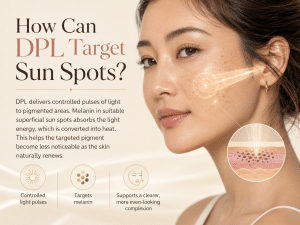
Sun spots contain increased concentrations of melanin.
During DPL treatment, controlled pulses of light are delivered to the treatment area. Melanin within suitable superficial pigmented areas absorbs light energy, which is converted into heat.
This process may help improve the appearance of targeted pigment as the skin naturally processes the treated area.
Research into DPL for facial pigmentation has included conditions such as solar lentigines, freckles and other forms of hyperpigmentation, with encouraging results reported. However, further clinical research is still required.
Research into related short wavelength IPL technology has also demonstrated improvement in solar lentigines on sun exposed skin.
Can DPL Help With Overall Uneven Skin Tone?
For some people, sun damage is not limited to a few individual spots.
Instead, the entire complexion may start to look uneven.
There may be small freckles across the cheeks, scattered brown pigmentation and areas where the skin appears less clear than it once did.
In suitable candidates, light based treatments may help improve the appearance of irregular pigmentation and create a more even looking complexion.
Clinical studies of IPL photorejuvenation have found improvements in irregular pigmentation following a course of treatment.
However, the response depends on the type of pigmentation present, which is why assessment before treatment is important.
Is Every Brown Spot Caused by Sun Damage?
No.
This is one of the most important things to understand before having any pigmentation treatment.
A brown mark may look like sun damage but could represent a different type of pigmentation.
For example, pigmentation may be associated with:
Previous acne or inflammation Hormonal influences Melasma Genetics Previous skin injury Other skin conditions
These concerns do not necessarily respond to light based treatment in the same way.
Melasma, in particular, requires careful assessment because some light or heat-based treatments may not be suitable for every individual. One clinical study of IPL photorejuvenation reported exacerbation of latent epidermal melasma in one participant.
This is why treating pigmentation should begin with understanding what the pigmentation actually is.
What Happens During a DPL Treatment?
Before treatment, your practitioner will assess your skin and discuss the areas you would like to improve.
During the procedure, a DPL handpiece delivers controlled pulses of light across the selected treatment area.
The treatment parameters should be adjusted according to factors such as skin type, pigmentation and the area being treated.
After treatment, some people may experience temporary warmth or redness. Superficial pigmented spots can sometimes temporarily appear darker before gradually changing as the skin goes through its normal renewal process.
Your practitioner will explain what to expect based on your individual treatment.
How Many DPL Treatments Might Be Needed?
Sun damage develops gradually, often over many years, so it is important to have realistic expectations.
Some people may notice changes following treatment, while others may require a course of sessions depending on the extent and type of pigmentation.
Studies examining light based photorejuvenation have commonly used a series of treatments rather than assuming that one session will address every sign of photodamage.
The appropriate number and interval should therefore be determined individually.
Why Is Sunscreen Important After DPL?
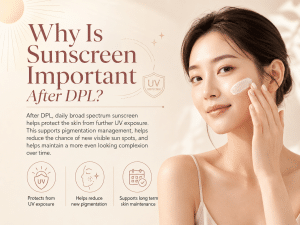
Treating visible sun damage while protecting the skin from further UV exposure is an important part of a long-term skin management strategy.
Sun exposure can stimulate melanin production and contribute to new pigmentation.
For this reason, daily broad spectrum sunscreen is an important part of ongoing pigmentation management.
Sun protective clothing, avoiding unnecessary prolonged sun exposure and following an appropriate skincare routine can also help support your overall skin management plan.
DPL can address certain existing visible concerns, but it cannot stop future sun damage from developing.
Is DPL Suitable for Everyone?
Not necessarily.
Skin tone, tanning, the depth and type of pigmentation, recent sun exposure and previous skin treatments may all influence whether DPL is appropriate.
Research on IPL has also demonstrated that skin pigmentation and treatment energy can influence the risk of side effects, reinforcing the importance of appropriate patient selection and treatment settings.
A professional skin assessment should therefore come before deciding on treatment.