

What Causes Loss of Jawline Definition?
A well-defined jawline is often associated with facial balance and facial structure. However, many people notice that their jawline appears less defined over time, even if their weight remains relatively stable.
One of the most common concerns discussed during cosmetic consultations is the gradual loss of jawline definition. Understanding the factors that contribute to jawline ageing can help individuals make informed decisions when exploring treatment options.
If you have ever wondered why your jawline looks different than it did a few years ago, several natural factors may be involved.
What Is Jawline Definition?
Jawline definition refers to the visible separation between the lower face and the neck.
A defined jawline often appears:
- Structured
- Balanced
- Well-supported
- Clearly visible from the front and side profile
The appearance of the jawline is influenced by several factors, including:
- Skin quality
- Facial anatomy
- Bone structure
- Soft tissue support
- Age-related changes
Because every face is different, jawline appearance naturally varies between individuals.
Why Does Jawline Definition Change Over Time?
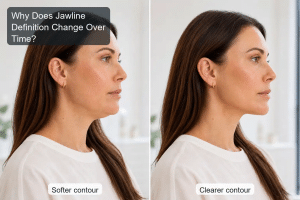
Many people associate jawline changes with ageing alone, but multiple factors can contribute.
Natural Ageing Processes
As we age, the face undergoes gradual structural changes.
These changes may affect:
- Skin support
- Facial contours
- Tissue positioning
- Overall facial balance
Because these changes occur gradually, jawline ageing often develops slowly over many years.
Collagen Decline and Jawline Ageing
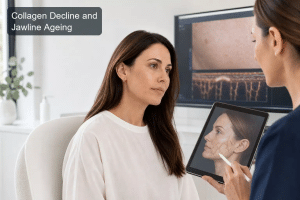
Collagen is one of the most important structural proteins within the skin.
Over time, natural collagen production decreases.
Changes in collagen levels may influence:
- Skin firmness
- Skin support
- Overall skin appearance
This is one reason why jawline definition may gradually become less noticeable with age.
Collagen decline is a normal part of the ageing process and affects everyone differently.
Skin Laxity and Jawline Definition
Skin laxity is another common factor associated with jawline ageing.
As skin support changes over time, the transition between the jawline and neck may become less distinct.
Many individuals seek consultation when they notice changes such as:
- Softening around the lower face
- Changes in jawline appearance
- Changes beneath the chin
The degree of skin laxity varies significantly between individuals.
Changes in Facial Support
The face is supported by a combination of skin, soft tissue, fat, muscle, and bone structure.
Over time, age-related changes may influence how these structures interact.
This can contribute to changes in:
- Facial contours
- Lower face appearance
- Jawline definition
- Neck profile
These changes are often discussed during consultations involving jawline concerns.
Weight Fluctuations
Weight changes may also affect jawline appearance.
Some individuals notice changes in:
- Facial fullness
- Lower face contours
- Jawline visibility
Even relatively modest weight fluctuations can influence how defined the jawline appears.
However, not all jawline ageing is related to weight changes.
Genetics and Jawline Appearance
Genetics play a significant role in facial structure.
Some people naturally have:
- Stronger jawline definition
- More prominent bone structure
- Different patterns of facial ageing
Because genetics influence facial anatomy, individuals may experience jawline ageing differently.
Changes Beneath the Chin
The area beneath the chin is closely connected to overall jawline appearance.
Changes in this region may affect:
- Jawline visibility
- Side profile appearance
- Neck definition
For this reason, practitioners often assess the jawline and neck together during consultation.
Lower Face Ageing and the Jawline
The jawline does not age in isolation.
Changes affecting the lower face may also contribute to reduced jawline definition.
Common concerns discussed during consultation include:
- Lower face softening
- Skin laxity
- Age-related facial changes
- Reduced facial support
A comprehensive assessment helps determine which factors may be contributing to the individual’s concerns.
Can Lifestyle Affect Jawline Ageing?
Lifestyle factors may influence overall skin quality and facial appearance.
Examples include:
- Sun exposure
- Smoking
- Sleep quality
- Nutrition
- Stress levels
Although these factors do not affect everyone in the same way, they are often discussed as part of overall skin and facial health.
What Are Non-Surgical Options Commonly Discussed?
Many individuals researching jawline concerns are interested in non-surgical options.
Depending on the individual’s concerns, consultations may include discussions regarding:
- Ultherapy PRIME
- Thermage FLX
- HarmonyCa
- Sculptra
- Skin quality treatments
- Other non-surgical treatment options
The treatment approach depends on individual anatomy, personal goals, and practitioner assessment.
Why Consultation Matters
Loss of jawline definition can occur for many reasons.
In some individuals, skin laxity may be the primary concern.
In others, changes in facial support, skin quality, or overall facial ageing may play a larger role.
Because every face is unique, treatment recommendations should always be based on an individual assessment rather than a general article.
A qualified practitioner can assess individual concerns and discuss available treatment options.
Jawline Consultations at Sky Beauty

At Sky Beauty, consultations are available at both our Sydney CBD (World Square) and Macquarie Park clinics.
Our team provides personalised consultations based on facial anatomy, skin characteristics, age-related changes, and individual goals.
Whether you are concerned about jawline definition, jawline ageing, lower face appearance, or overall facial concerns, a consultation can help explore suitable treatment approaches.
Learn more about Ultherapy PRIME, HarmonyCa, Sculptra, Thermage FLX, and other non-surgical options available at Sky Beauty Sydney CBD and Macquarie Park.