

Filler: What to Know Before Treatment

A well-placed filler treatment should not make you look like someone else. It should make you look fresher, more balanced, and subtly refined. That is why the real question is not whether filler works. It is whether the treatment is planned properly for your face, your skin, and your long-term aesthetic goals.
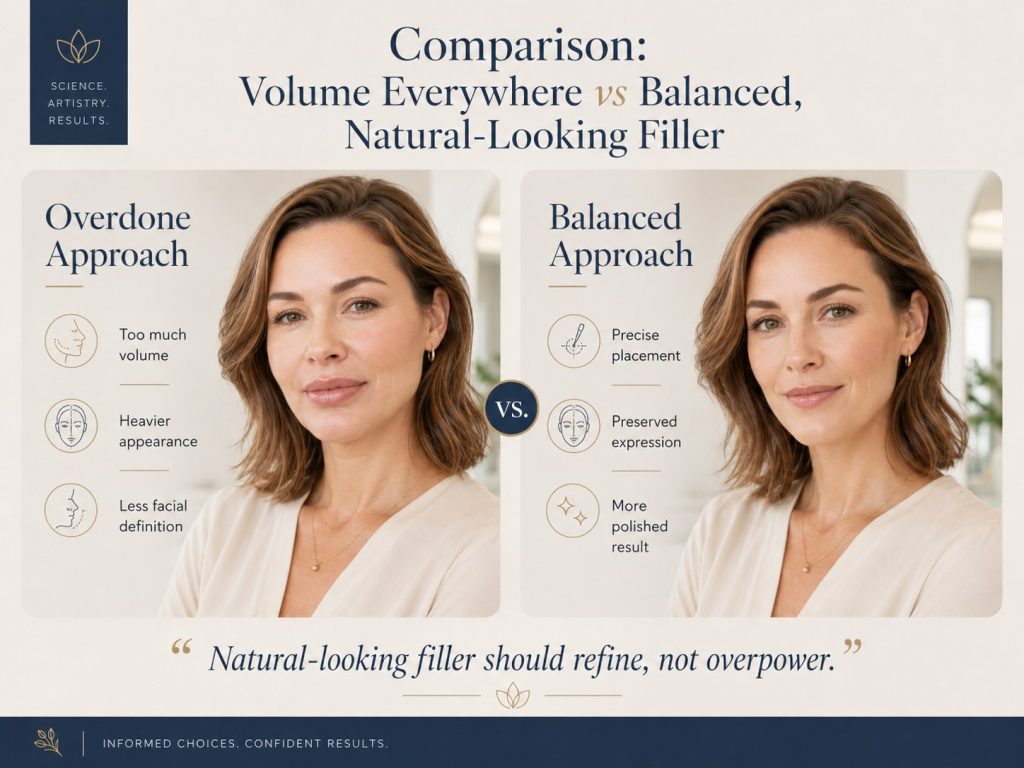
For many clients, filler is one of the most effective non-surgical options for restoring volume, softening lines, and improving facial contour. It can be used to enhance lips, define the chin and jawline, support the cheeks, and reduce the appearance of under-eye hollows or deep folds around the mouth. The best results are not about adding volume everywhere. They come from precise placement, clinical judgment, and restraint.
What filler is designed to do

Most filler treatments use gel-like injectable products to replace lost volume or improve facial structure. As we age, the face gradually loses fat, collagen, and elasticity. That shift can make the features look flatter, heavier, or less defined, even when the skin is otherwise healthy.
Filler helps correct that change by supporting areas that have started to hollow, sink, or fold. In younger clients, it may be used more for enhancement than restoration, such as adding lip shape or creating a more sculpted profile. In mature clients, the focus is often on facial balance and soft rejuvenation.
The difference matters. Treating a 28-year-old for lip definition is not the same as treating a 48-year-old for mid-face volume loss. A credible provider will assess the whole face rather than recommend the same amount or placement for everyone.
Where filler works best

The most popular filler areas are lips, cheeks, nasolabial folds, chin, jawline, temples, and tear troughs. Each area behaves differently, and each requires a different technique.
Lips need careful shaping as much as volume. Cheeks often benefit from structural support that lifts the face indirectly. Chin and jawline treatments can improve side profile and facial proportions. Under-eye filler can be effective in selected clients, but it is also one of the areas where poor assessment leads to puffiness or an unnatural result.
That is why consultation matters. The right plan depends on your anatomy, skin quality, movement, and whether volume loss is actually the main issue. In some cases, skin tightening, collagen stimulation, or anti-wrinkle treatment may be a better fit than filler alone.
How long filler lasts
This depends on the product used, the treatment area, your metabolism, and how much movement the area has. Lip filler usually fades faster than cheek or jawline filler because the mouth is highly mobile. Some results may last around 6 to 12 months, while other areas can hold shape longer.
Longevity should not be the only priority. A filler that lasts longer is not automatically better if it is too heavy for the tissue or does not suit the treatment goal. Natural-looking outcomes usually come from choosing the right product for the right area, not the longest-lasting option on the menu.
What natural-looking filler really means
Natural-looking filler is not invisible. You should still see an improvement. What you want is refinement without obvious overcorrection.
In practice, that means preserving facial expression, respecting proportion, and avoiding the swollen or overfilled look that many clients want to avoid. It also means understanding when not to inject. More product does not always mean a better result. In fact, too much filler can make the face look heavier, especially in areas already affected by fluid retention or skin laxity.
At Sky Beauty Cosmetic Clinic, the most successful outcomes are usually the ones that look elegant rather than exaggerated. Friends may notice that you look rested or more polished, but not immediately identify why.
Safety and provider choice matter

Filler is a medical treatment, not a casual beauty add-on. The quality of the product matters, but the expertise of the injector matters just as much. Anatomy knowledge, sterile technique, product selection, and complication management are all part of safe practice.
Before treatment, you should expect a proper consultation, discussion of risks, and a tailored plan based on your features. You should also be told if you are not a suitable candidate on the day. That may be because of swelling, active skin irritation, unrealistic expectations, or a treatment history that needs review first.
Mild swelling, tenderness, and bruising can happen after treatment. That is normal. What should never feel normal is pressure to do more than you need or a one-size-fits-all approach.
Is filler right for you?

Filler can be an excellent option if you want visible improvement without surgery and with minimal downtime. It suits clients who want to restore volume, enhance facial definition, or refresh tired features in a controlled, customizable way.
It may not be the first step if your main concern is loose skin, pigmentation, texture, or significant facial heaviness. In those cases, combining treatments often gives a better result than relying on filler alone.
The best place to start is with a specialist-led consultation that looks at your face as a whole. Good filler should fit your features, your age, and your goals. When it is done well, the result is not a different face. It is your face, at its most balanced and confident.
Contact Sky Beauty to book a consultation and learn more about the options available to you.