

Why Does the Jawline Lose Definition Over Time?
A well-defined jawline is often associated with youthfulness, facial balance, and strong facial contours. However, many people notice that as they get older, the jawline gradually becomes less sharp and less defined.
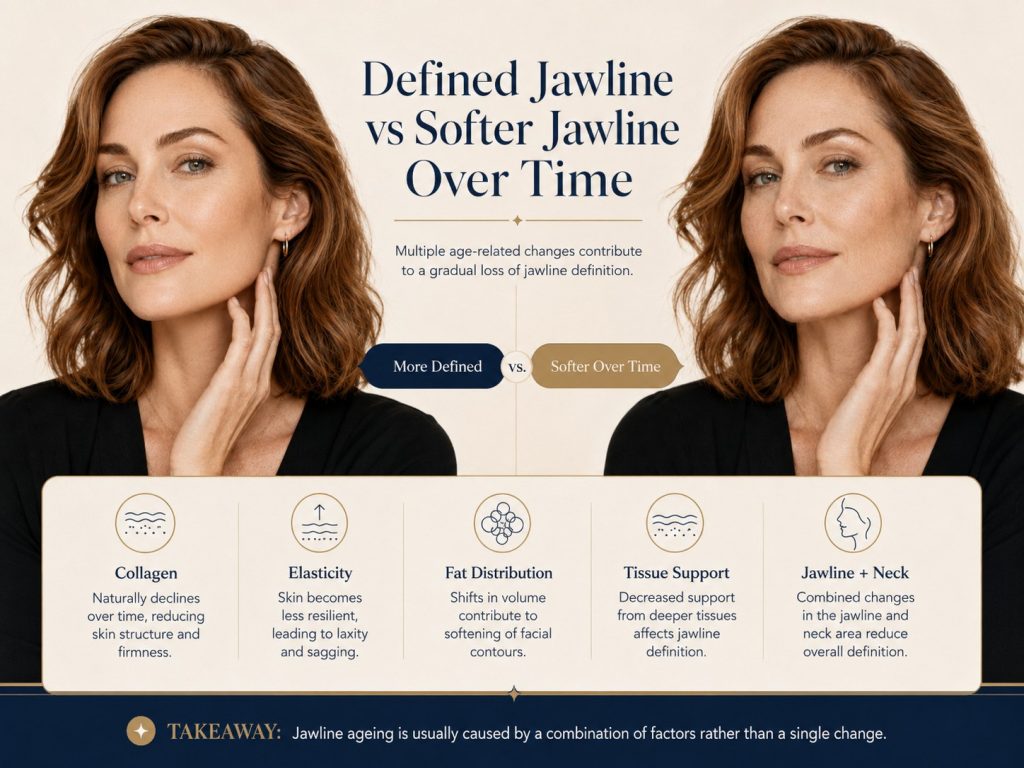
This change can occur even in individuals who maintain a healthy lifestyle and stable body weight. The reason is that jawline ageing is influenced by multiple factors, including changes in skin quality, facial structure, collagen levels, and soft tissue support.
Understanding why the jawline loses definition over time can help explain why different treatment approaches may be considered depending on the underlying cause.
Ageing Is Not Just About Wrinkles
When people think about facial ageing, wrinkles are often the first concern that comes to mind.
However, facial ageing is a much more complex process.
Over time, changes occur beneath the skin that may affect facial shape and contour. These changes can influence how the jawline appears long before deep wrinkles become noticeable.
For many individuals, a softer jawline is one of the earliest visible signs of facial ageing.
Collagen Naturally Declines
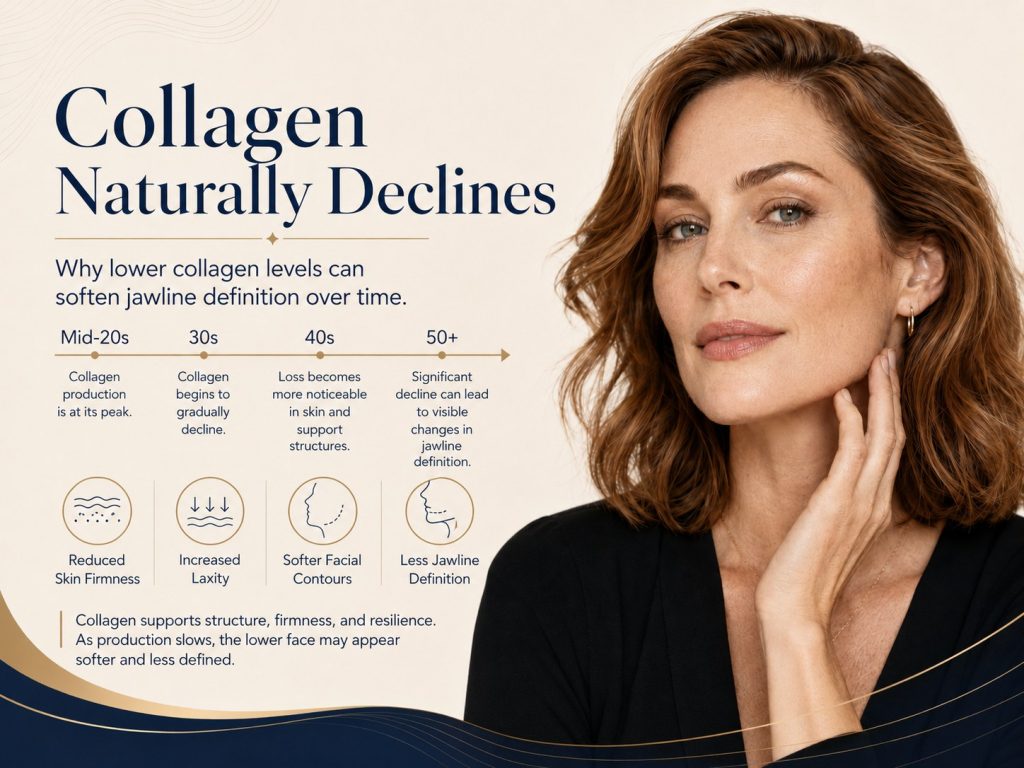
Collagen is one of the most important structural proteins in the skin.
It helps provide support, firmness, and resilience.
As we age, natural collagen production gradually slows. This process begins in early adulthood and continues over time.
Lower collagen levels may contribute to:
- Reduced skin firmness
- Increased skin laxity
- Softer facial contours
- Less definition along the jawline
Because collagen plays such an important role in structural support, treatments that focus on collagen stimulation have become increasingly popular in aesthetic medicine.
Changes in Skin Elasticity
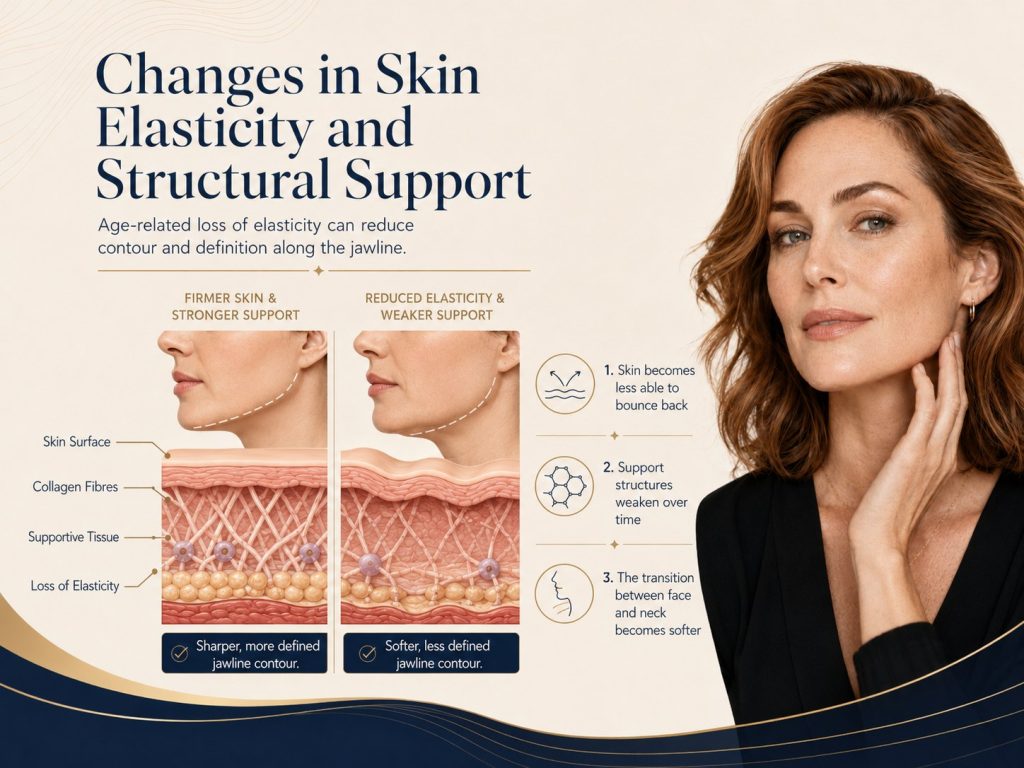
In addition to collagen loss, the skin also experiences changes in elasticity.
Elastic fibres help skin maintain its ability to return to its original position after movement.
As elasticity decreases, skin may appear less firm and more prone to laxity.
Around the jawline, these changes can contribute to a gradual loss of contour and definition.
The result is often a softer transition between the face and neck.
Facial Fat Distribution Changes
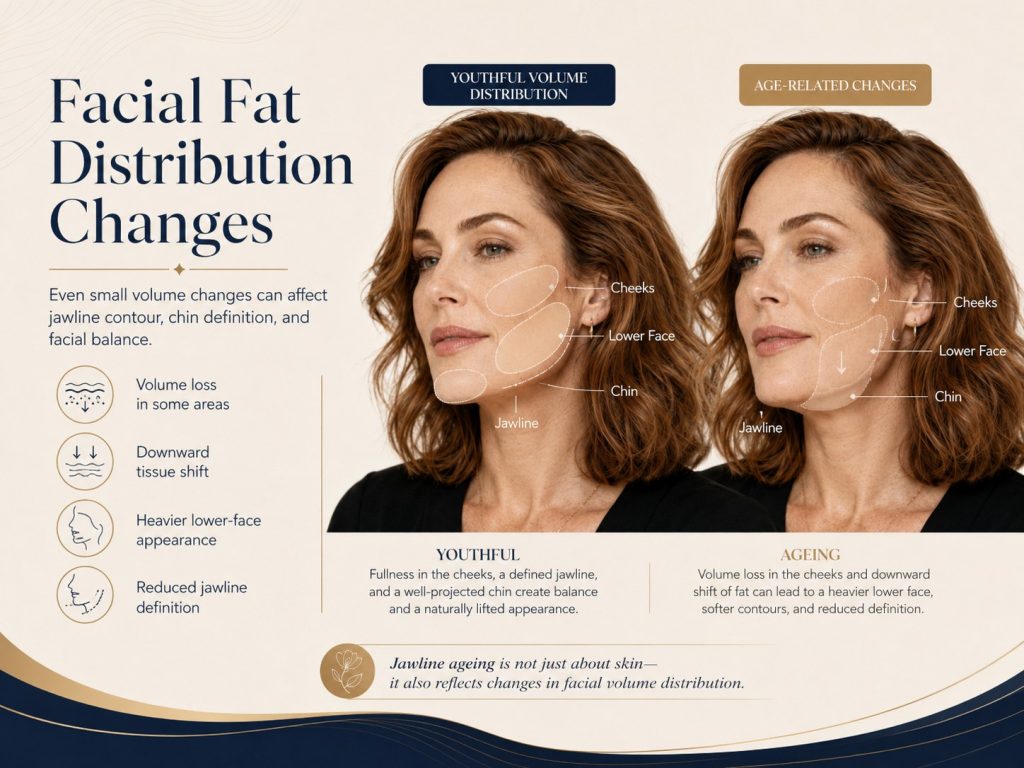
Facial fat is not distributed evenly throughout the face.
Over time, some fat compartments may reduce in volume, while others may shift due to gravity and natural ageing processes.
These changes can affect:
- Lower face shape
- Jawline contour
- Chin definition
- Overall facial balance
Even small changes in facial volume distribution can have a noticeable impact on how defined the jawline appears.
Structural Support Changes
Facial support structures also change with age.
The tissues that help maintain facial contours gradually lose strength and support.
As these structures change, the lower face may appear heavier or less lifted.
This is one reason why jawline concerns are often related to overall facial support rather than simply skin quality alone.
A personalised assessment helps determine which factors are contributing most significantly to the concern.
Lifestyle Factors Can Contribute
While ageing is the primary cause of jawline changes, certain lifestyle factors may also influence skin quality and facial appearance.
These may include:
- Sun exposure
- Smoking
- Poor sleep habits
- Stress
- Weight fluctuations
- Environmental factors
Although these factors cannot completely prevent ageing, maintaining healthy lifestyle habits may help support overall skin health.
Why the Jawline and Neck Are Connected
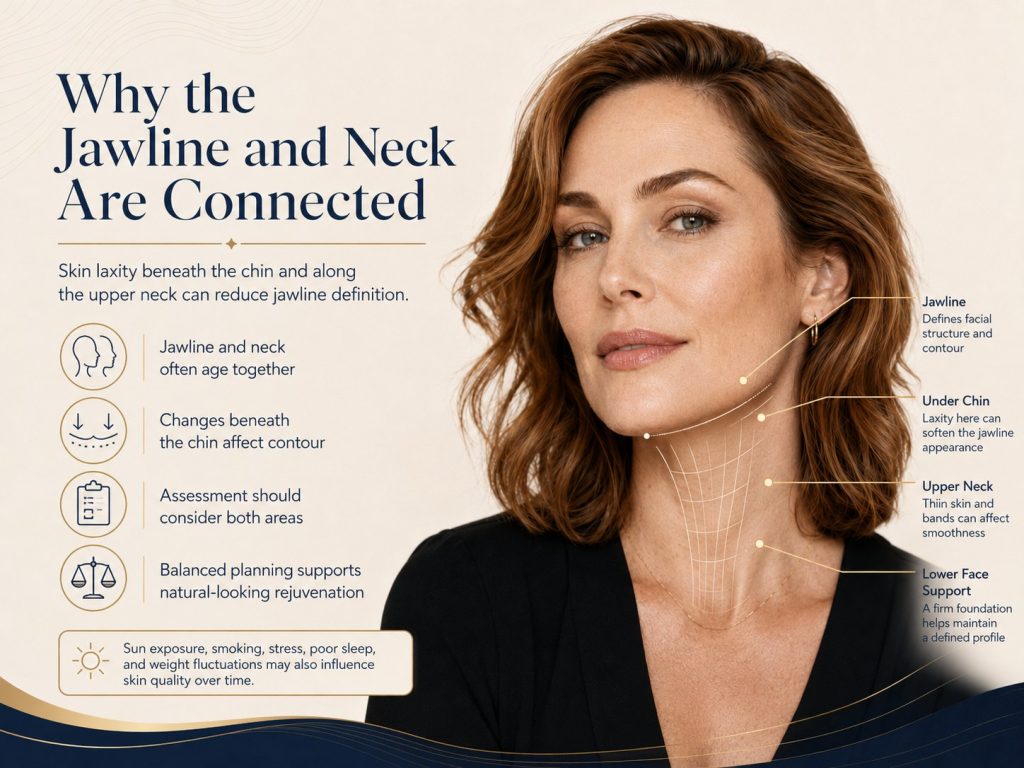
The jawline and neck often age together.
As skin laxity develops beneath the chin or along the upper neck, jawline definition may become less distinct.
This is why treatment planning often considers both areas rather than focusing on the jawline alone.
A comprehensive assessment allows practitioners to evaluate facial proportions, skin quality, and overall structural support.
Natural-Looking Rejuvenation
Modern aesthetic medicine increasingly focuses on natural-looking rejuvenation rather than dramatic changes.
Many people are not seeking a completely different appearance. Instead, they want to maintain facial definition and support while preserving their natural features.
Depending on individual anatomy and concerns, treatment plans may focus on:
- Skin quality
- Collagen support
- Facial structure
- Tissue support
- Skin tightening technologies
The most appropriate approach varies from person to person.
Understanding the Cause Before Choosing a Treatment
There is no single reason why the jawline loses definition over time.
For some individuals, the primary factor may be collagen decline.
For others, it may be skin laxity, volume changes, or a combination of several ageing processes.
Understanding the underlying cause is often the first step in developing a personalised treatment plan.
A defined jawline is often associated with youthfulness, confidence, and facial structure. However, the gradual changes that occur over time are rarely caused by a single factor. Skin quality, collagen production, facial volume, and tissue support all contribute to the way the lower face ages.
By recognising these changes early and taking a personalised approach, individuals can better understand their options and develop realistic expectations about facial rejuvenation.
Discover more educational resources and treatment insights at Sky Beauty Sydney CBD (World Square) and Macquarie.