

Understanding Ultrasound Technology in Aesthetic Medicine
Advances in aesthetic medicine have created more treatment options than ever before for individuals seeking non-surgical approaches to skin rejuvenation and age-related concerns. Among these technologies, ultrasound-based treatments have become increasingly popular due to their ability to target deeper tissue layers without disrupting the surface of the skin.
While many people have heard of ultrasound technology in medical imaging, fewer understand how ultrasound is used in aesthetic medicine and why it has become an important part of modern facial rejuvenation treatments.
This guide explores the role of ultrasound technology in aesthetic medicine, how it works, and why it is commonly used in skin tightening and collagen-supporting treatments.
What Is Ultrasound Technology?
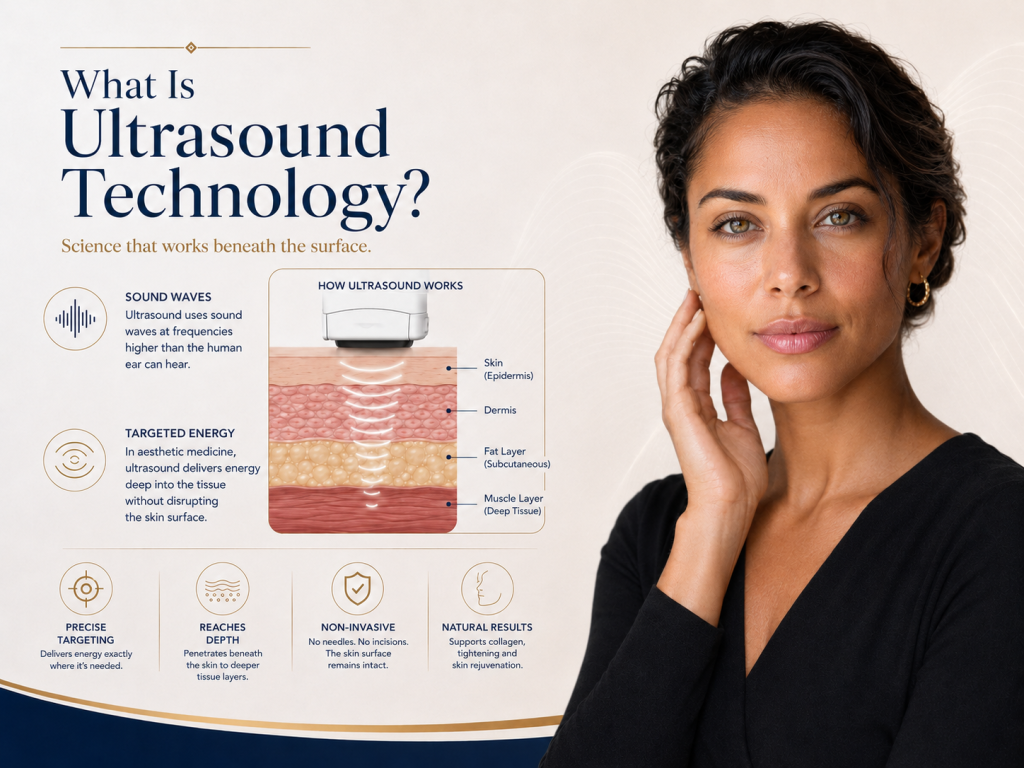
Ultrasound technology uses sound waves that travel at frequencies higher than those audible to the human ear.
For decades, ultrasound has been widely used in healthcare for diagnostic imaging, allowing medical professionals to visualise structures beneath the skin without surgery or invasive procedures.
In aesthetic medicine, specialised ultrasound technology can be used not only for imaging but also for delivering energy to targeted tissue layers beneath the skin.
This ability to reach specific depths without affecting the skin surface has made ultrasound a valuable tool in non-surgical facial rejuvenation.
How Is Ultrasound Used in Aesthetic Treatments?
Unlike lasers, which primarily target the skin’s surface, ultrasound energy can be delivered deeper beneath the skin.
The technology works by focusing ultrasound energy at specific depths, creating precise thermal points within targeted tissue layers.
This process is designed to stimulate the body’s natural healing response and support collagen production over time.
Because the treatment occurs beneath the skin, the outer layer remains intact throughout the procedure.
This characteristic distinguishes ultrasound-based treatments from many other aesthetic technologies.
Why Is Collagen Important?
To understand why ultrasound technology is used in aesthetic medicine, it is important to understand the role of collagen.
Collagen is one of the most abundant proteins in the body and plays a key role in maintaining:
- Skin firmness
- Elasticity
- Structural support
- Overall skin quality
From our mid-twenties onwards, collagen production gradually declines as part of the natural ageing process.
As collagen levels decrease, the skin may begin to show signs such as:
- Reduced firmness
- Skin laxity
- Changes in facial contours
- Loss of skin elasticity
Many aesthetic treatments aim to support collagen production as part of a broader skin rejuvenation strategy.
Ultrasound vs Other Energy-Based Technologies
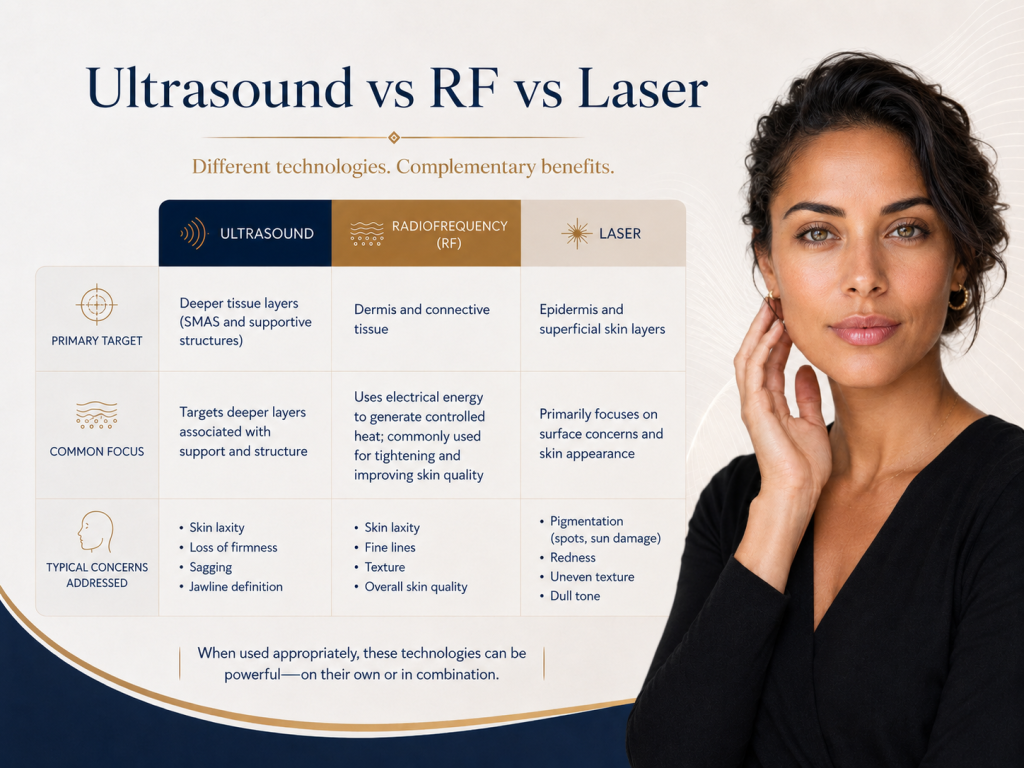
Aesthetic medicine incorporates a variety of technologies, each designed to address different concerns.
Ultrasound Technology
Ultrasound treatments are generally designed to target deeper tissue layers associated with skin support and structure.
Radiofrequency (RF)
Radiofrequency treatments use electrical energy to generate controlled heat within tissue.
These treatments are commonly used for skin tightening and skin quality concerns.
Laser Technology
Laser treatments primarily focus on skin surface concerns such as pigmentation, redness, texture, and overall skin appearance.
Because each technology works differently, treatment recommendations depend on the individual’s concerns, goals, and clinical assessment.
The Importance of Treatment Depth
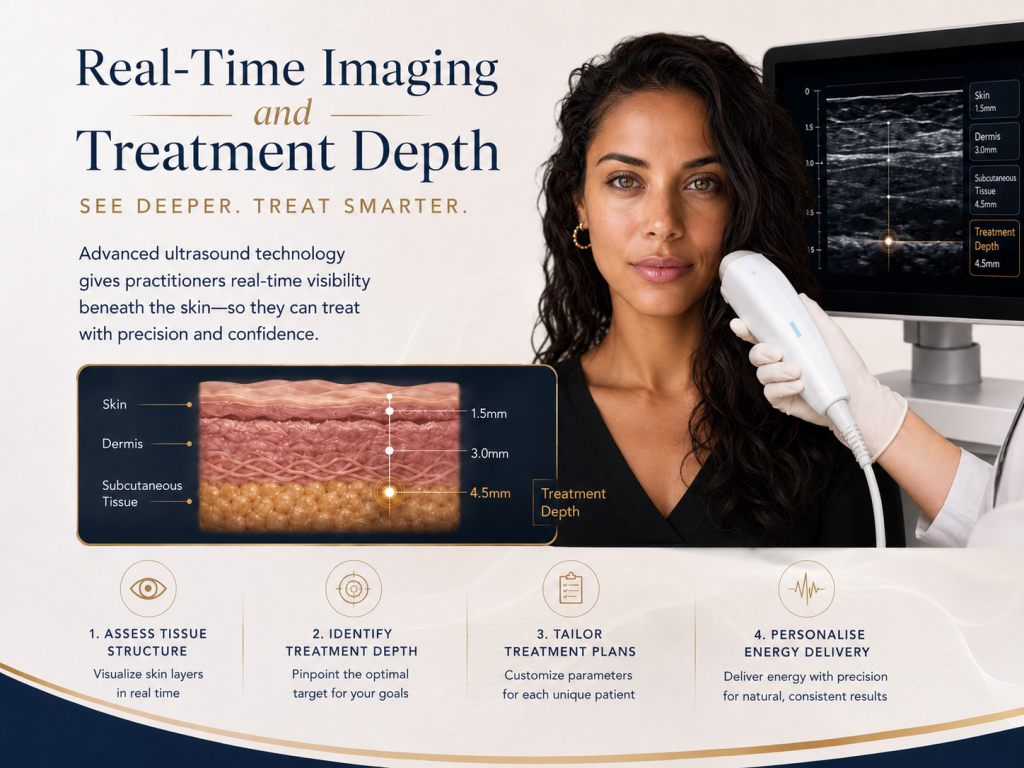
One of the key advantages of ultrasound technology is its ability to reach specific tissue depths beneath the skin.
Different layers of the face play different roles in maintaining facial structure and support.
By targeting deeper tissue layers, ultrasound-based treatments can be incorporated into treatment plans focused on age-related skin changes and facial rejuvenation.
The appropriate treatment depth varies depending on the treatment area and the individual’s anatomy.
Ultrasound Imaging in Aesthetic Medicine
One of the most significant developments in modern ultrasound-based treatments is the integration of real-time imaging technology.
Certain advanced platforms allow practitioners to visualise tissue layers beneath the skin before delivering energy.
This enables practitioners to:
- Assess tissue structures
- Identify treatment depths
- Tailor treatment plans
- Personalise energy delivery
Because every patient’s anatomy is unique, visualisation technology can support a more individualised treatment approach.
Common Areas Treated with Ultrasound Technology
Ultrasound-based treatments may be considered for several areas commonly affected by age-related changes.
These include:
Jawline
Loss of jawline definition is a common concern as skin support structures change over time.
Neck
The neck is often one of the first areas where visible signs of ageing appear.
Lower Face
Many patients seek treatment for concerns related to facial contours and skin laxity.
Brow Area
Some ultrasound-based treatments may be incorporated into broader facial rejuvenation plans.
Treatment suitability depends on individual assessment and treatment goals.
Who May Consider Ultrasound-Based Treatments?
Individuals commonly explore ultrasound-based technologies when they are looking for non-surgical options to support skin firmness and address age-related concerns.
Patients may be interested in learning more about ultrasound treatments if they:
- Prefer non-surgical approaches
- Are concerned about skin laxity
- Notice changes in facial contours
- Want to support long-term skin health
- Are exploring collagen-focused treatment options
A consultation is essential to determine whether a particular treatment is appropriate for your needs.
Frequently Asked Questions
Is ultrasound technology safe in aesthetic medicine?
Ultrasound technology has been used in medical settings for many years. Treatment suitability should always be assessed by a qualified practitioner.
Does ultrasound treatment affect the surface of the skin?
Ultrasound-based treatments are designed to target tissue beneath the skin while leaving the outer surface intact.
Is ultrasound the same as laser treatment?
No. Ultrasound and laser technologies work differently and target different tissue structures.
Which treatment is best for me?
The most suitable treatment depends on your concerns, anatomy, skin quality, and treatment goals. A professional consultation can help determine the most appropriate approach.
Final Thoughts
Ultrasound technology has become an important part of modern aesthetic medicine, offering a non-surgical approach to addressing age-related skin concerns and supporting collagen production.
By delivering focused energy to targeted tissue layers beneath the skin, ultrasound-based treatments provide practitioners with another tool for personalised facial rejuvenation and skin management.
If you would like personalised advice regarding skin tightening, facial rejuvenation, or ultrasound-based treatment options, the team at Sky Beauty Cosmetic Clinic is here to help.
We welcome clients at both our Sydney CBD (World Square) and Macquarie Centre locations, where our experienced practitioners provide professional assessments and tailored treatment recommendations.
Contact Sky Beauty to book a consultation and learn more about the options available to you.