

What Contributes to a Tired-Looking Appearance?
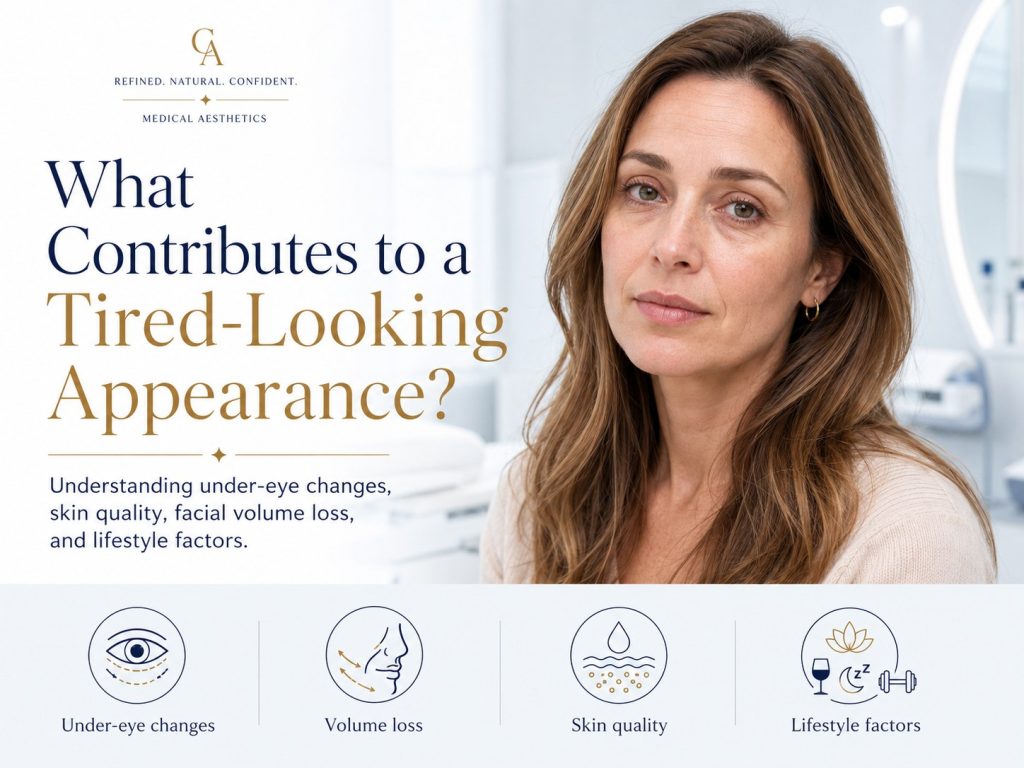
Have you ever looked in the mirror after a good night’s sleep and still felt like you looked tired?
You’re not alone. Many people notice that as they get older, they appear fatigued even when they feel well-rested. While lack of sleep can certainly affect the way we look, a tired appearance is often influenced by a combination of factors beyond simply getting enough rest.
From changes in skin quality and facial volume to lifestyle habits and environmental influences, several factors can contribute to a face that appears less refreshed over time.
Understanding these causes is the first step towards making informed decisions about your skin health and overall appearance.
The Difference Between Feeling Tired and Looking Tired
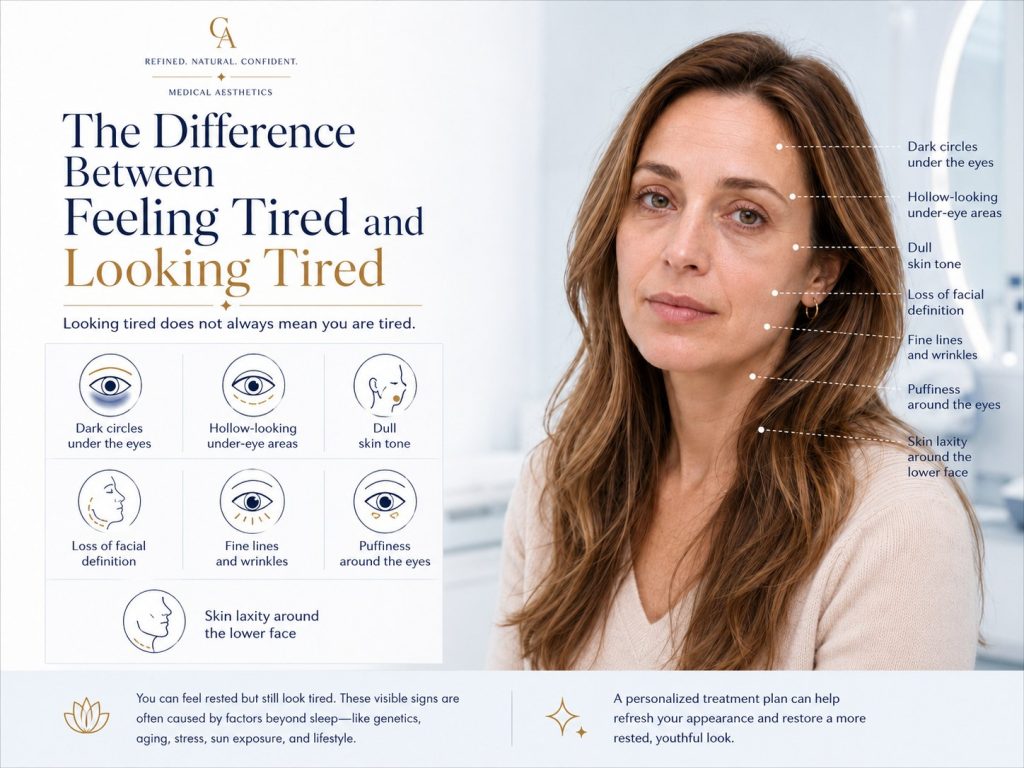
Looking tired does not always mean you are tired.
Many of the features commonly associated with fatigue are actually linked to natural ageing processes and changes in facial anatomy.
Some of the most common signs of a tired-looking appearance include:
- Dark circles under the eyes
- Hollow-looking under-eye areas
- Dull skin tone
- Loss of facial definition
- Fine lines and wrinkles
- Puffiness around the eyes
- Skin laxity around the lower face
These changes often develop gradually and can become more noticeable over time.
Under-Eye Changes
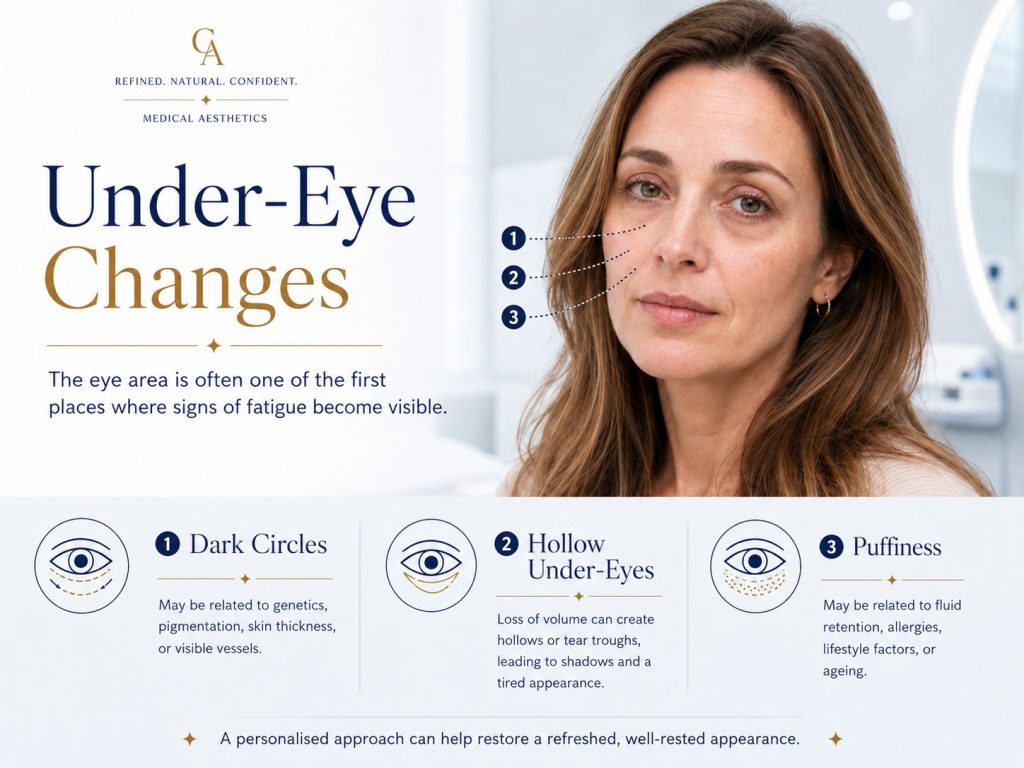
The eye area is often one of the first places where signs of fatigue become visible.
Dark Circles
Dark circles can develop for several reasons, including genetics, skin thickness, pigmentation, and visible blood vessels beneath the skin.
In many cases, dark circles are not solely caused by lack of sleep.
Hollow Under-Eyes
As facial structures change with age, volume loss beneath the eyes may create shadows that contribute to a tired appearance.
Even in individuals who feel energetic and healthy, these shadows can make the face appear fatigued.
Puffiness
Fluid retention, allergies, lifestyle factors, and ageing-related changes can all contribute to puffiness around the eyes.
The combination of puffiness and shadows often enhances the appearance of tiredness.
Facial Volume Loss
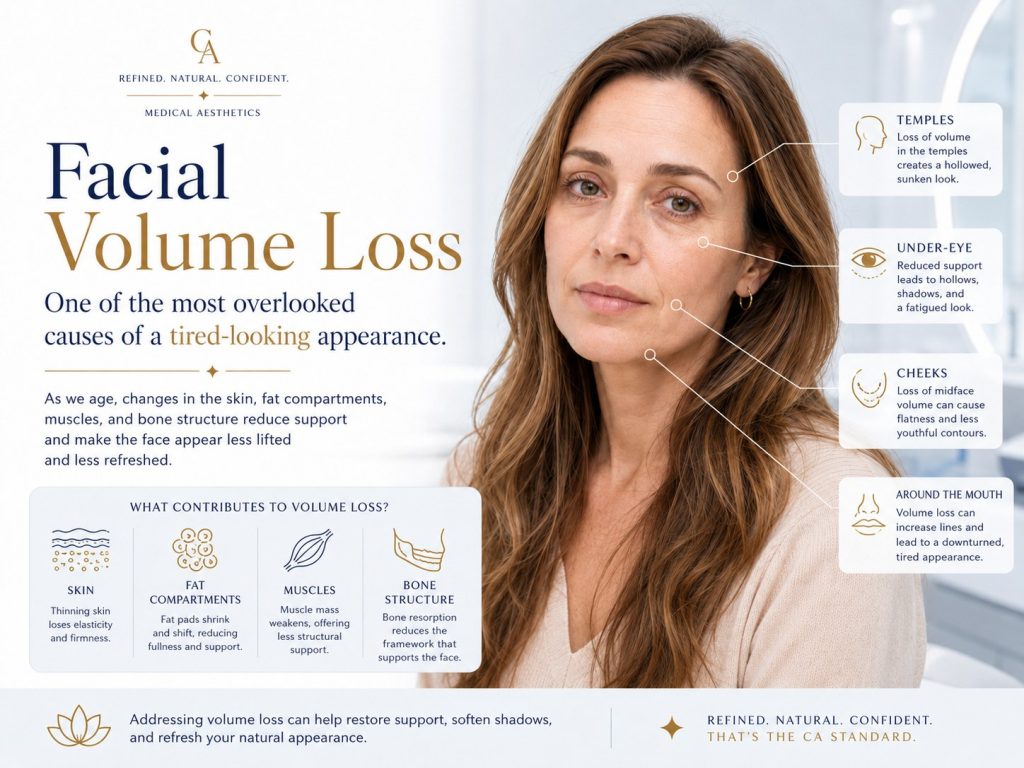
One of the most overlooked causes of a tired-looking appearance is facial volume loss.
As we age, natural changes occur in the skin, fat compartments, muscles, and underlying bone structure.
Areas that commonly lose volume include:
- Cheeks
- Temples
- Under-eye region
- Around the mouth
When facial support structures diminish, the face may appear less lifted and less refreshed than it once did.
This process is a normal part of ageing and affects everyone differently.
Skin Quality and Texture
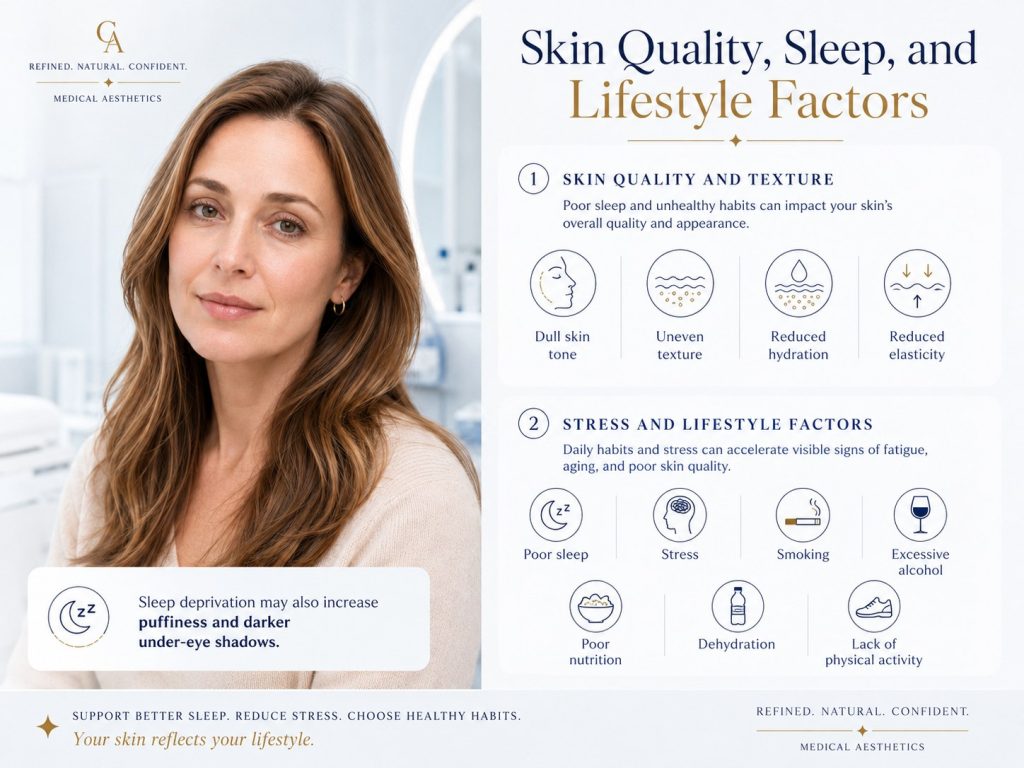
Healthy, well-hydrated skin often reflects light more evenly, contributing to a brighter appearance.
Over time, changes in collagen production and skin renewal can affect:
- Skin texture
- Hydration levels
- Skin brightness
- Elasticity
As a result, the skin may appear dull, uneven, or less radiant.
Environmental factors such as UV exposure can further contribute to these changes.
Poor Sleep Habits
While tired-looking features are not always caused by sleep deprivation, inadequate sleep can certainly play a role.
Poor sleep may contribute to:
- Increased puffiness
- Darker under-eye shadows
- Dull skin
- Reduced skin recovery
Consistently prioritising quality sleep is an important part of maintaining overall wellbeing and skin health.
Stress and Lifestyle Factors
Modern lifestyles can place significant demands on both physical and mental wellbeing.
Chronic stress may influence skin health through hormonal and inflammatory pathways, potentially contributing to changes in appearance.
Other lifestyle factors that may affect how refreshed you look include:
- Smoking
- Excessive alcohol consumption
- Poor nutrition
- Dehydration
- Lack of physical activity
These factors can affect both skin quality and overall facial appearance over time.
Skin Laxity and Facial Ageing
As collagen and elastin production decline with age, the skin gradually becomes less firm.
This can contribute to:
- Softer facial contours
- Reduced jawline definition
- Changes around the cheeks
- Mild sagging
When combined with volume loss and skin quality changes, these factors may create an appearance that is often described as tired or aged.
Can Looking Tired Be Prevented?
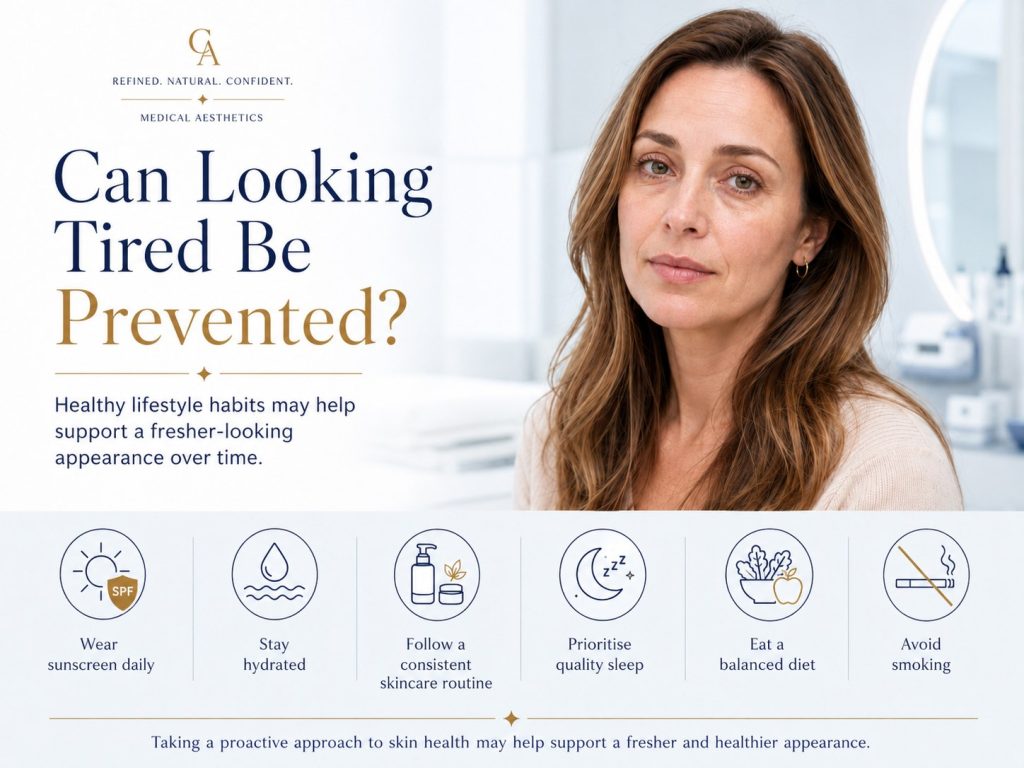
Ageing is a natural process, and it is not possible to prevent every change that occurs over time.
However, maintaining healthy lifestyle habits may help support long-term skin health.
Helpful strategies include:
- Wearing sunscreen daily
- Staying hydrated
- Following a consistent skincare routine
- Prioritising quality sleep
- Eating a balanced diet
- Avoiding smoking
Taking a proactive approach to skin health may help support a fresher and healthier appearance over time.
When Should You Seek Professional Advice?
If you are concerned about persistent under-eye shadows, skin quality changes, facial volume loss, or age-related skin concerns, a professional consultation can help identify the factors contributing to your appearance.
Every face is unique, and understanding the underlying causes is often the first step towards developing a personalised treatment plan.
Frequently Asked Questions
Why do I look tired even when I get enough sleep?
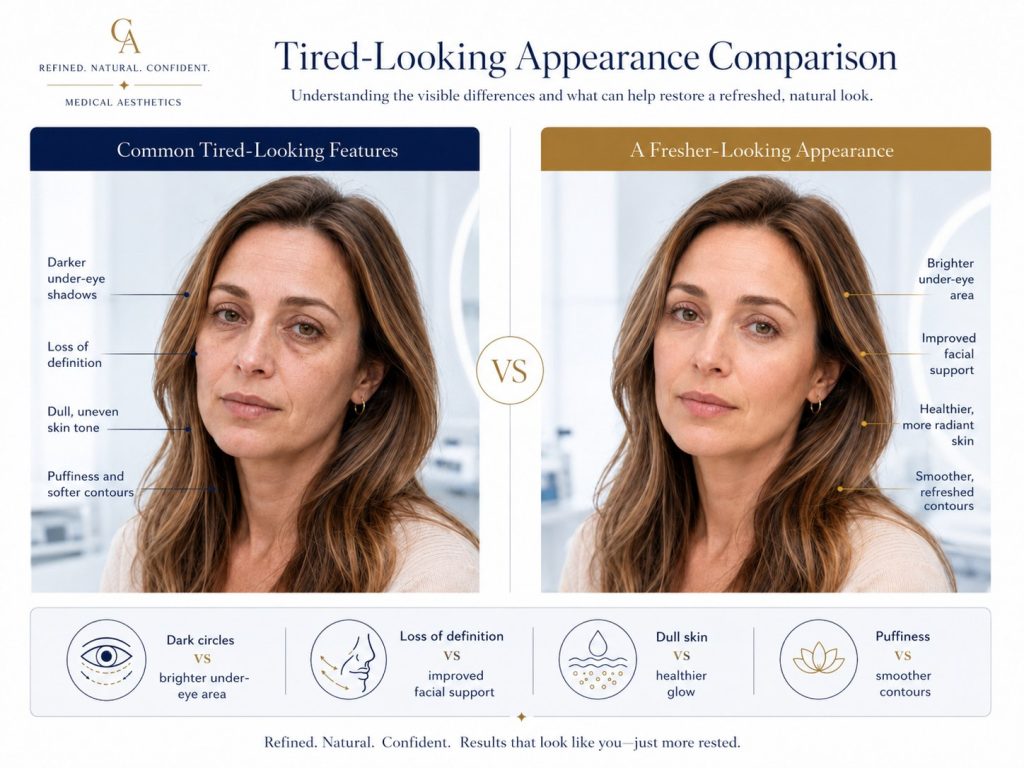
A tired appearance can be influenced by factors such as facial volume loss, under-eye shadows, skin quality changes, genetics, and age-related changes in facial structure.
Are dark circles always caused by lack of sleep?
No. Genetics, pigmentation, skin thickness, and visible blood vessels can all contribute to dark circles.
Does ageing make you look more tired?
Natural ageing processes can affect facial volume, skin firmness, and skin quality, which may contribute to a less refreshed appearance over time.
Can skincare alone improve a tired-looking appearance?
Skincare plays an important role in supporting skin health, although factors beneath the skin surface may also influence overall facial appearance.
Final Thoughts
A tired-looking appearance is often influenced by a combination of factors, including under-eye changes, skin quality, facial volume loss, lifestyle habits, and natural ageing processes.
Understanding the causes behind these changes can help you make informed decisions about your skin health and aesthetic goals.
If you would like personalised advice regarding your skin concerns and aesthetic goals, the team at Sky Beauty Cosmetic Clinic is here to help.
We welcome clients at both our Sydney CBD (World Square) and Macquarie Centre locations, where our experienced practitioners provide professional assessments and tailored treatment recommendations.
Contact Sky Beauty to book a consultation and learn more about the options available to you.