

Common Signs of Age-Related Volume Loss
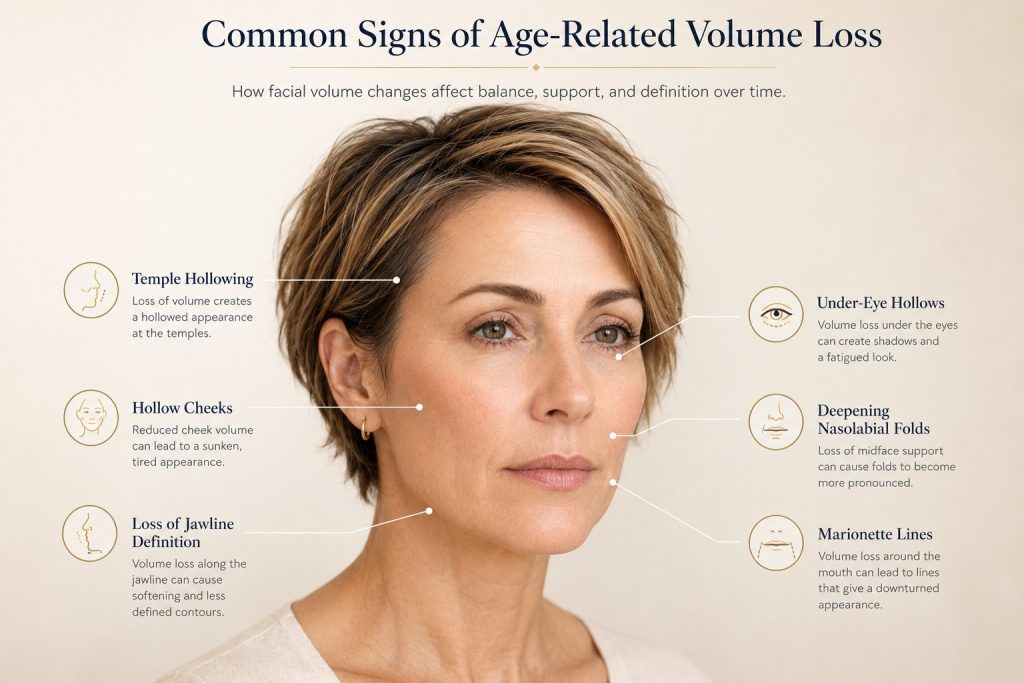
Meta Title: Common Signs of Age-Related Facial Volume Loss | Sky Beauty Clinic Sydney
Meta Description: Learn the common signs of age-related facial volume loss, including hollow cheeks, under-eye hollows, temple hollowing, and jawline changes. Discover how facial ageing affects appearance over time.
Common Signs of Age-Related Volume Loss
When most people think about facial ageing, they focus on wrinkles and fine lines. However, one of the most significant contributors to an ageing appearance is often facial volume loss.
As we age, the face undergoes gradual structural changes involving the skin, fat compartments, muscles, ligaments, and underlying bone. These changes can alter facial contours, reduce definition, and create a tired or sunken appearance.
Understanding the common signs of age-related volume loss can help individuals recognise early changes and make informed decisions about maintaining facial harmony and skin health.
What Is Facial Volume Loss?
Facial volume loss refers to the reduction and redistribution of the natural support structures that help maintain youthful facial contours.
These changes occur due to several factors, including:
- Decreased collagen production
- Loss of facial fat
- Changes in bone structure
- Reduced skin elasticity
- Natural ageing processes
Over time, volume loss can affect multiple areas of the face, often creating a less youthful appearance even before significant wrinkles develop.
Why Does Facial Volume Loss Occur?
Facial ageing is a multi-layered process.
The face contains specialised fat compartments that provide support and shape. As we age, these fat pads may shrink and descend due to gravity and tissue changes.
At the same time:
- Collagen production declines
- Skin becomes thinner
- Facial ligaments weaken
- Bone support gradually decreases
The combined effect of these changes contributes to the visible signs of facial ageing.
Hollow Cheeks
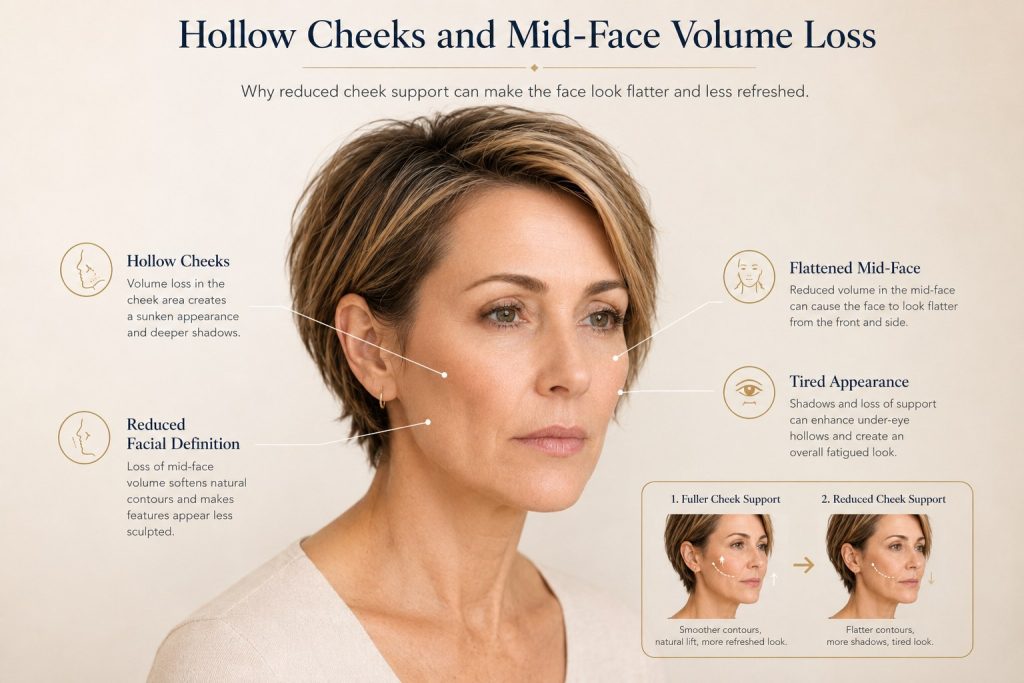
One of the most common signs of age-related volume loss is hollowing in the cheeks.
In younger faces, the cheeks are naturally fuller and help support surrounding facial structures. As cheek volume decreases, the mid-face may appear flatter and less defined.
Signs of Cheek Volume Loss
- Flattened cheek contours
- Reduced facial definition
- Increased prominence of smile lines
- A tired or gaunt appearance
Cheek volume loss can significantly impact overall facial balance and is often one of the earliest noticeable signs of ageing.
Under-Eye Hollows
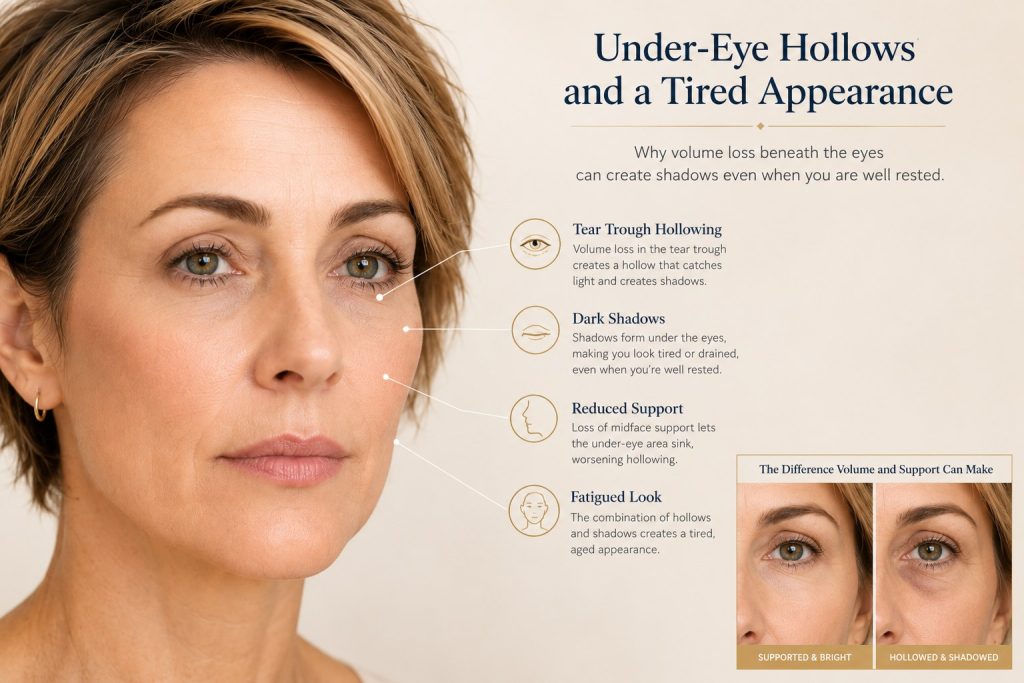
The delicate under-eye area is particularly susceptible to volume loss.
As support beneath the eyes decreases, individuals may develop tear trough hollows that create shadows and contribute to a fatigued appearance.
Common Symptoms
- Dark shadows beneath the eyes
- Hollow appearance
- Increased visibility of under-eye bags
- Tired-looking eyes despite adequate rest
Many patients find that under-eye volume loss makes them appear older or more fatigued than they feel.
Temple Hollowing
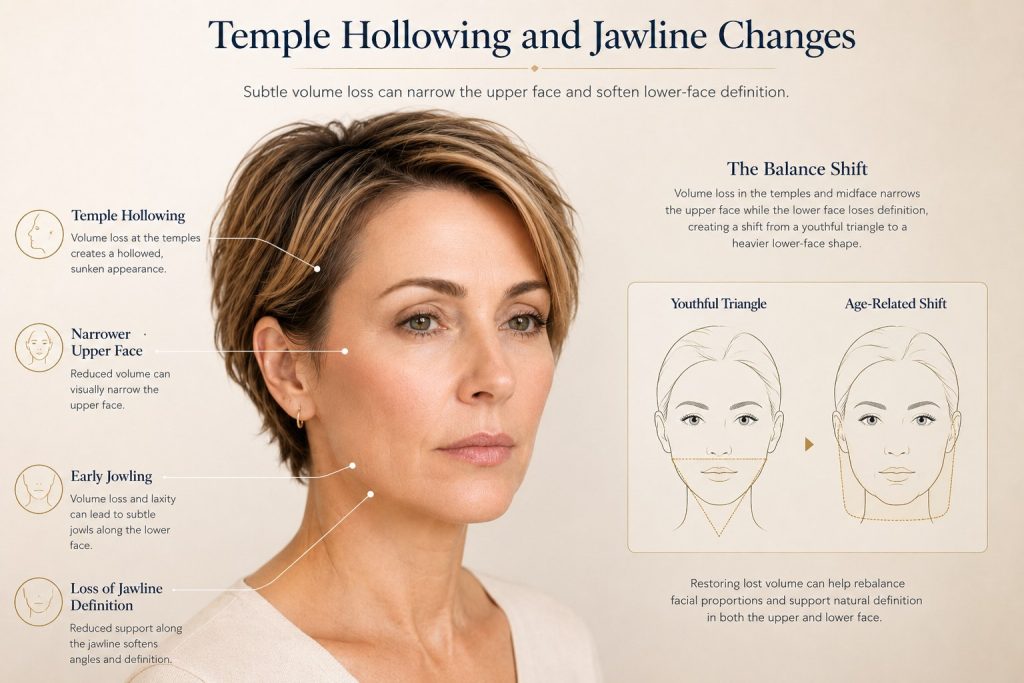
The temples are frequently overlooked but play an important role in maintaining facial harmony.
As volume decreases in this area, the upper face can appear narrower and less balanced.
Signs of Temple Hollowing
- Indentations in the temple region
- Reduced fullness in the upper face
- More prominent bony contours
- A less youthful facial shape
Temple volume loss often develops gradually and may become noticeable when comparing current photos with older images.
Deepening Nasolabial Folds
Nasolabial folds are the lines that extend from the sides of the nose to the corners of the mouth.
While these folds are a normal facial feature, volume loss in the cheeks can cause them to become more prominent over time.
Contributing Factors
- Mid-face volume depletion
- Skin laxity
- Tissue descent
- Collagen loss
Many people assume nasolabial folds are caused solely by wrinkles, but underlying volume loss often plays a significant role.
Marionette Lines
Marionette lines extend downward from the corners of the mouth toward the chin.
These lines can become more noticeable as facial support structures weaken and soft tissues descend.
Associated Changes
- Loss of lower-face support
- Sagging around the mouth
- Reduced jawline definition
- A downturned facial appearance
Volume loss in the mid-face and lower face frequently contributes to the development of marionette lines.
Loss of Jawline Definition
A well-defined jawline is often associated with youth and facial structure.
As ageing progresses, volume loss and tissue descent can reduce jawline definition and contribute to a softer facial contour.
Common Signs
- Early jowling
- Reduced jawline sharpness
- Sagging skin along the lower face
- Less distinction between the jawline and neck
These changes can significantly affect facial proportions and perceived age.
Changes in Facial Shape
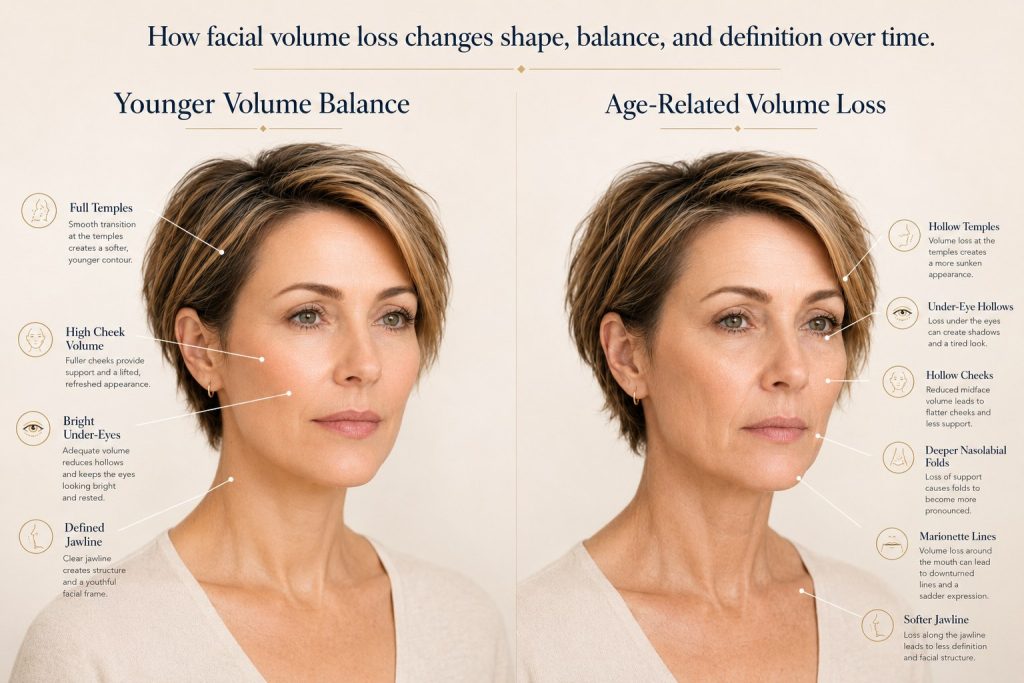
One of the most noticeable effects of age-related volume loss is the gradual change in overall facial shape.
The Youthful Face
A youthful face is often characterised by:
- Full cheeks
- Smooth contours
- Balanced proportions
- Strong mid-face support
The Ageing Face
As volume shifts downward, the face may develop:
- Flattened cheeks
- Increased lower-face heaviness
- Jowling
- Reduced facial definition
This transformation contributes to the ageing process and can alter how facial features are perceived.
Skin Laxity and Volume Loss
Although volume loss and skin laxity are separate concerns, they often occur together.
When facial support structures diminish, the skin may appear looser because there is less underlying volume to support it.
This combination can lead to:
- Sagging cheeks
- Loose jawline skin
- Neck ageing
- Reduced facial firmness
Understanding the relationship between volume and skin quality is important when assessing facial ageing.
Why Early Signs Are Often Overlooked
Age-related volume loss usually develops gradually over many years.
Because changes occur slowly, many people do not notice them until photographs reveal differences in facial contours or they begin receiving comments that they look tired.
Early signs can be subtle, making professional assessment valuable when considering facial rejuvenation options.
How Modern Aesthetic Treatments Address Volume Loss
Contemporary facial rejuvenation focuses on understanding the underlying causes of ageing rather than simply treating surface wrinkles.
Depending on individual concerns, treatment plans may focus on:
- Supporting collagen production
- Improving skin quality
- Enhancing facial contours
- Restoring facial balance
- Maintaining natural facial harmony
The goal is to achieve refreshed, natural-looking results that complement the patient’s unique facial structure.
Why Choose Sky Beauty Clinic?
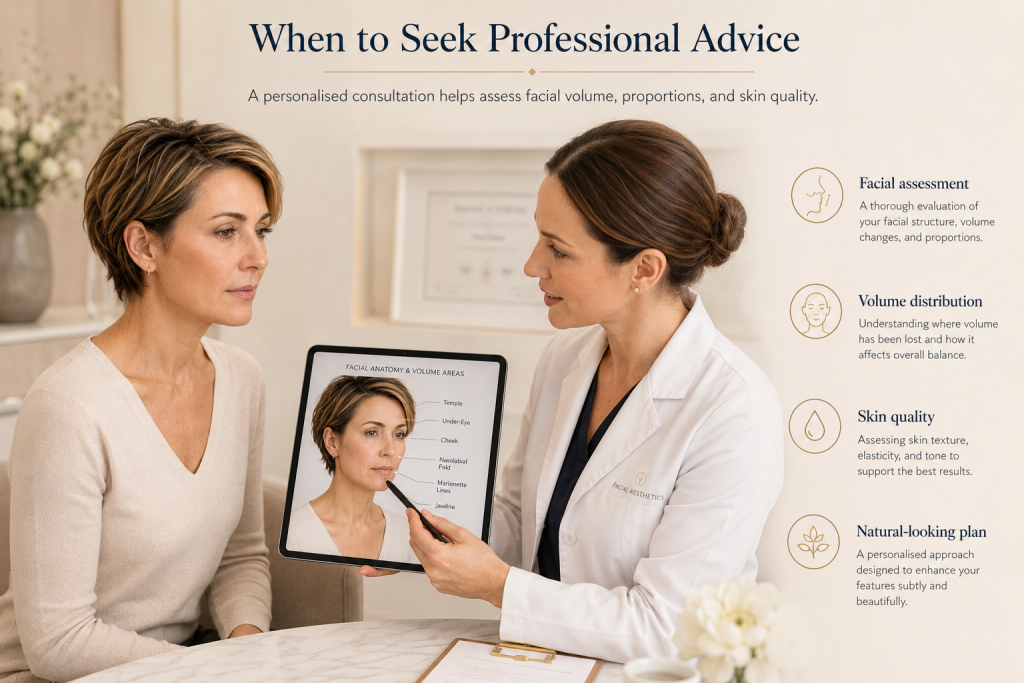
At Sky Beauty Clinic, we take a comprehensive approach to facial ageing assessment. Rather than focusing on a single area, we evaluate facial proportions, volume distribution, skin quality, and overall facial harmony.
Our personalised consultations allow us to develop tailored treatment plans designed to support natural-looking rejuvenation and healthy ageing.
Conveniently serving patients from Sydney, Macquarie Park, North Ryde, Ryde, Chatswood, and surrounding areas, Sky Beauty Clinic is committed to helping patients look refreshed while maintaining their natural features.
Frequently Asked Questions
What is the earliest sign of facial volume loss?
Many people first notice subtle hollowing in the cheeks or under-eye area before other signs of ageing become apparent.
Does facial volume loss cause wrinkles?
Volume loss can contribute to the appearance of wrinkles and folds by reducing support beneath the skin.
Why do I look tired even when I’m well rested?
Under-eye hollows, cheek volume loss, and facial contour changes can create a tired appearance regardless of sleep quality.
Is facial volume loss a normal part of ageing?
Yes. Volume loss is a natural component of the ageing process and affects most individuals to varying degrees.
Can facial volume loss be addressed without surgery?
Many modern aesthetic treatments focus on supporting facial structure, collagen production, and skin quality without surgical intervention.
Book a Personalised Consultation
If you’ve noticed signs of facial volume loss and would like professional advice on maintaining a refreshed, natural appearance, Sky Beauty Clinic can help.
Book a personalised consultation today to discuss your concerns and explore treatment options tailored to your facial anatomy, skin condition, and long-term aesthetic goals.