

Why Does My Face Look Different After 30? Understanding the First Signs of Facial Ageing
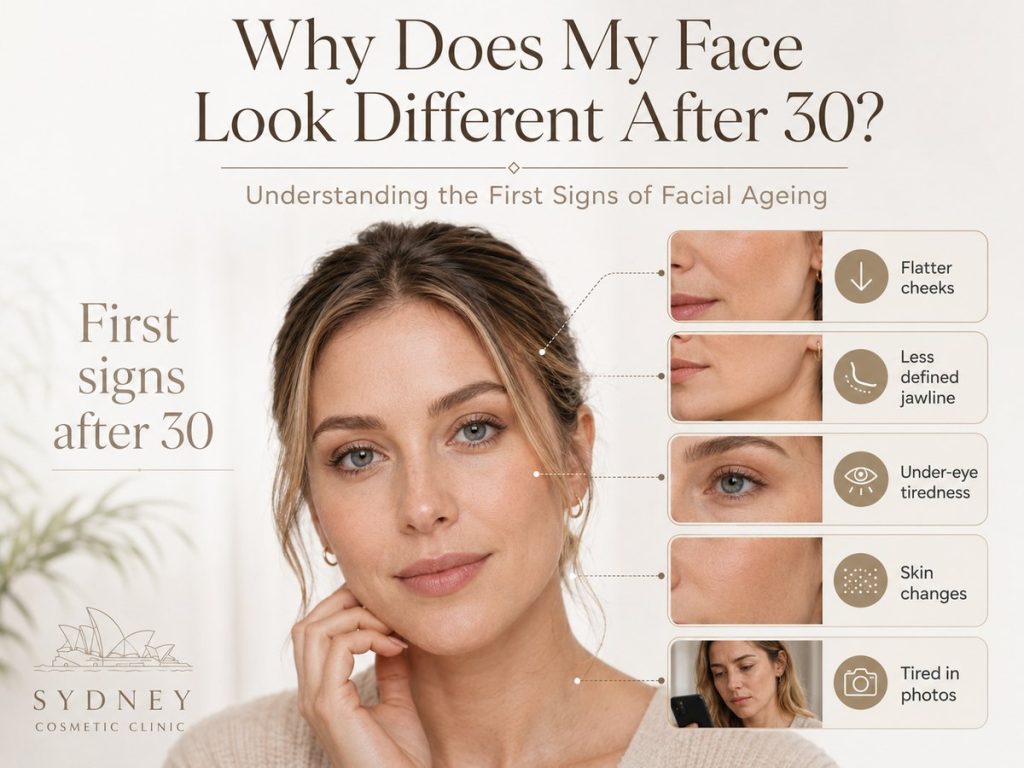
Many people reach their early or mid-30s and notice something has changed about their appearance.
Often, they cannot identify exactly what is different.
They may simply feel that:
- Their face looks less youthful
- They appear more tired in photos
- Their cheeks seem flatter
- Their jawline is less defined
- Their skin looks different
- They no longer look the same as they did in their 20s
Interestingly, these changes often occur before deep wrinkles develop.
For many people, the 30s are the decade when the earliest signs of facial ageing become noticeable. Understanding why these changes occur can help explain why your face may look different even when you feel healthy and energetic.
For individuals in Sydney CBD, Macquarie Park, Chatswood, North Ryde, and surrounding suburbs, this guide explores the most common reasons faces change after 30.
The Ageing Process Starts Earlier Than Most People Think
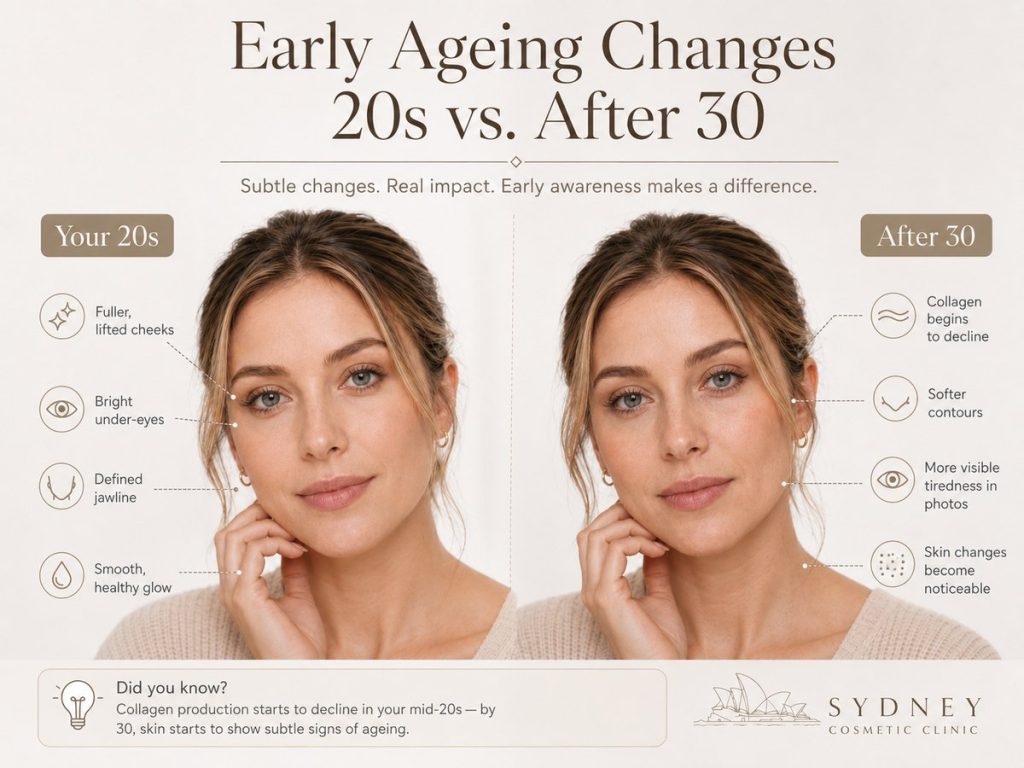
One of the biggest misconceptions about ageing is that it begins in your 40s or 50s.
In reality, subtle biological changes begin much earlier.
From our mid-20s onward, gradual changes occur within:
- Skin
- Collagen
- Fat compartments
- Connective tissues
- Bone structure
These changes are usually very slow and difficult to notice at first.
By the time many people reach their 30s, the cumulative effects may start becoming visible.
Collagen Production Begins to Decline
Collagen is one of the most important proteins responsible for skin support and structure.
It helps maintain:
- Skin firmness
- Elasticity
- Smooth texture
- Structural integrity
Collagen production naturally decreases with age.
Over time, this may contribute to:
- Fine lines
- Reduced skin firmness
- Changes in skin texture
- Less resilient skin
For many people, the first noticeable signs of collagen decline appear during their 30s.
Facial Volume Changes Begin
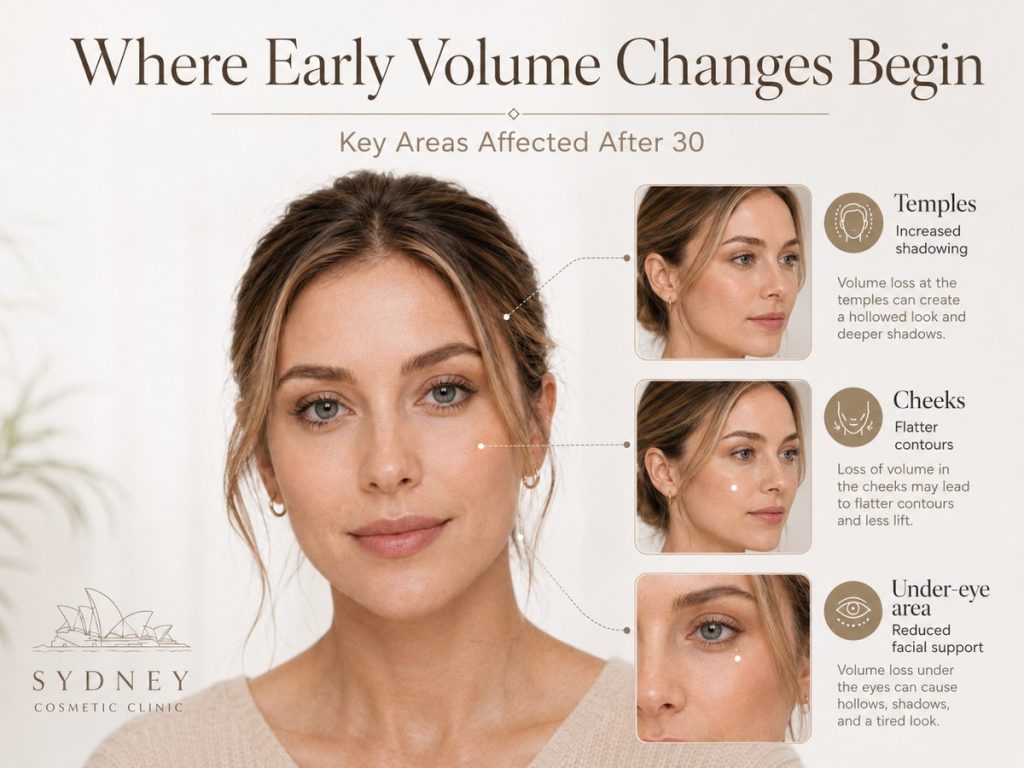
One of the most important yet least recognised causes of facial ageing is facial volume loss.
When people think about ageing, they often think about wrinkles.
However, changes in facial volume frequently occur before significant wrinkles develop.
Age-related changes may affect:
Cheeks
The cheeks provide support and structure to the midface.
Subtle volume changes may contribute to:
- Flatter facial contours
- Reduced facial fullness
- Less youthful appearance
Temples
Temple volume contributes to facial framing and balance.
Changes in this area may create:
- Increased shadowing
- Narrower facial appearance
- Reduced facial harmony
Under-Eye Area
Even small changes beneath the eyes may make a person appear:
- More tired
- Less refreshed
- Older than they feel
Why You Look More Tired
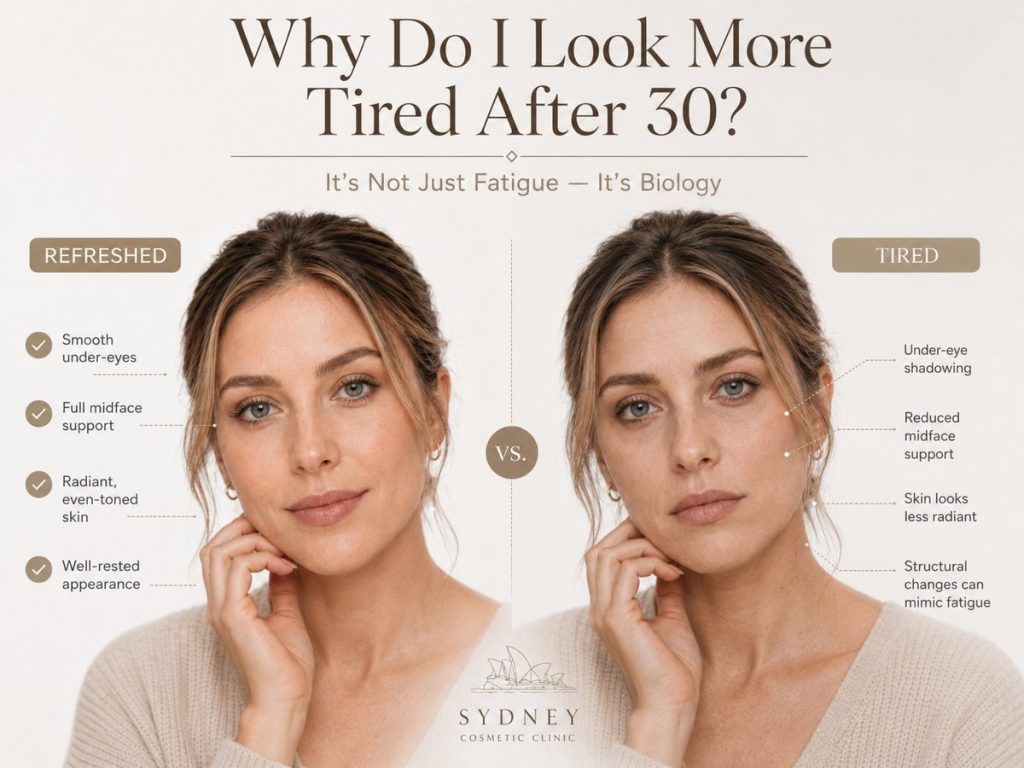
One of the most common complaints after 30 is:
> “I feel fine, but I look tired.”
This often occurs because age-related structural changes create subtle visual cues associated with fatigue.
Common contributors include:
- Under-eye shadowing
- Reduced midface support
- Changes in skin quality
- Facial volume changes
Many people assume they need more sleep when the real cause may be natural facial ageing.
Skin Doesn’t Recover as Quickly
Many patients notice that their skin behaves differently after 30.
Examples include:
- Slower recovery from late nights
- Increased dryness
- Reduced radiance
- More visible signs of stress
This occurs because natural skin renewal processes gradually slow with age.
Environmental factors such as sun exposure can further influence these changes.
Facial Definition May Start to Change
Your 20s are often characterised by strong facial support and youthful contours.
During your 30s, subtle changes may begin affecting:
- Jawline definition
- Cheek contours
- Facial proportions
Many people describe this as:
> “My face looks softer.”
> “My face looks less sculpted.”
> “I don’t look as sharp as I used to.”
These changes are often related to structural ageing rather than wrinkles.
Why Photos Suddenly Look Different
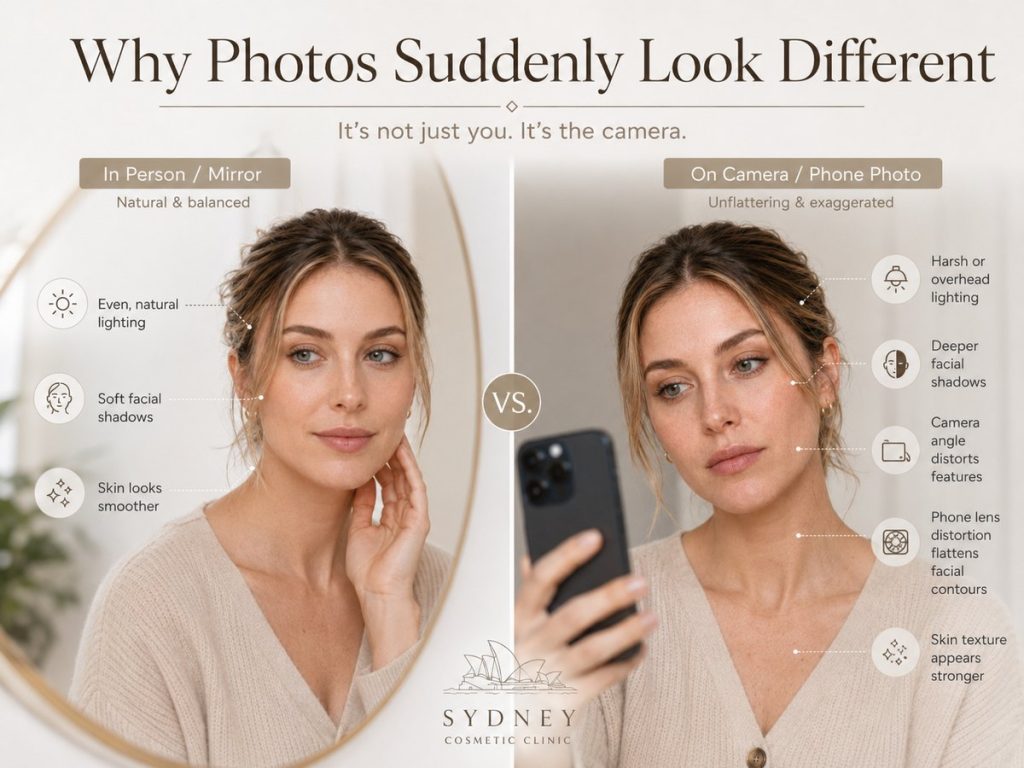
Many individuals first notice ageing changes through photographs.
Common comments include:
> “I look older in photos.”
> “My face looks flatter.”
> “I don’t photograph as well as I used to.”
Photographs often exaggerate:
- Facial shadows
- Volume changes
- Skin texture
- Under-eye concerns
As a result, age-related changes may appear more noticeable in pictures than in the mirror.
Stress and Lifestyle Begin to Show
For many people, their 30s involve:
- Career growth
- Family responsibilities
- Increased stress
- Less sleep
- More screen time
These factors may influence:
- Skin quality
- Overall wellbeing
- Facial appearance
While ageing itself is natural, lifestyle factors can affect how ageing becomes visible.
Why Asian Faces Often Change Differently After 30
Asian facial ageing often differs from ageing patterns commonly described in Western populations.
Many Asian patients notice:
- Midface volume changes
- Temple hollowing
- Reduced facial support
- Changes in facial contours
before developing significant wrinkles.
Common concerns include:
> “My face looks flatter.”
> “I look tired in photos.”
> “My face has lost some of its shape.”
Understanding these differences is important when discussing facial ageing and facial harmony.
Facial Harmony Changes Over Time
Facial harmony refers to the balance between different facial features.
As structural ageing occurs, changes in one area may influence the appearance of the entire face.
Facial harmony involves the relationship between:
- Forehead
- Temples
- Eyes
- Cheeks
- Nose
- Lips
- Chin
- Jawline
This is why many people feel their face looks different even when they cannot identify a single obvious problem.
Healthy Habits That Support Healthy Ageing
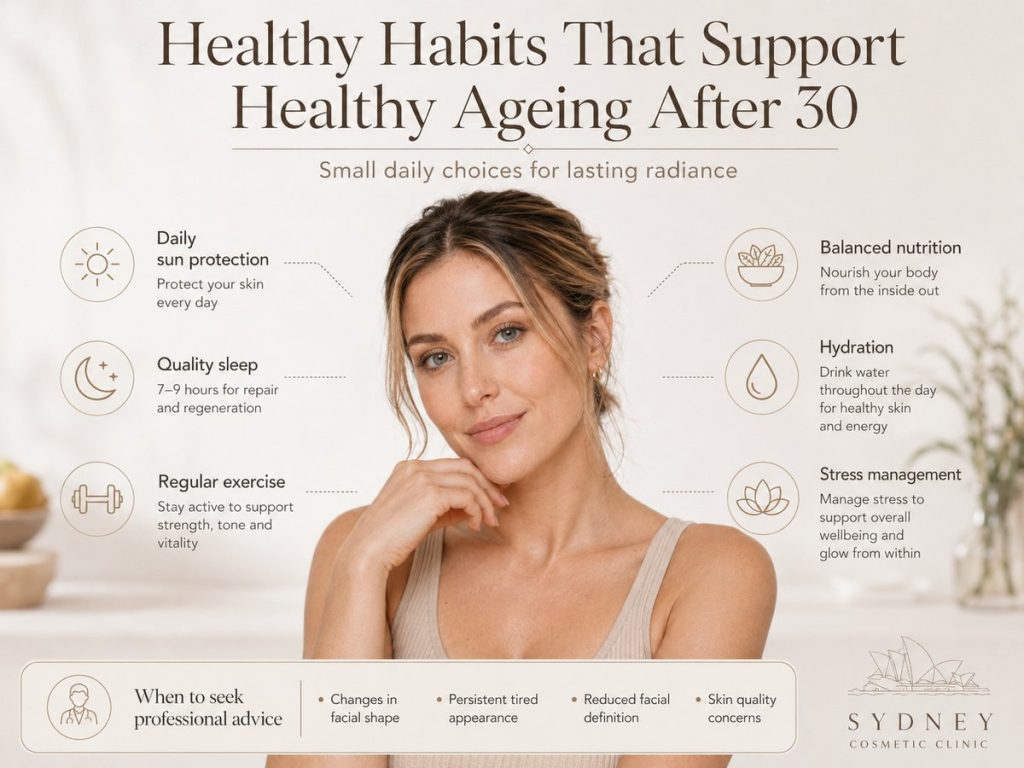
Although ageing cannot be stopped, healthy habits may support long-term skin health and overall wellbeing.
Daily Sun Protection
Sydney’s high UV exposure contributes significantly to visible skin ageing.
Quality Sleep
Sleep supports recovery and skin health.
Regular Exercise
Physical activity promotes circulation and overall wellbeing.
Balanced Nutrition
Healthy eating supports skin function and general health.
Hydration
Adequate hydration supports healthy skin.
Stress Management
Managing stress may support both physical and emotional wellbeing.
When Should You Seek Professional Advice?
You may wish to seek professional advice if you notice:
- Changes in facial shape
- Persistent tired appearance
- Reduced facial definition
- Skin quality concerns
- Questions regarding healthy ageing
A consultation with an appropriately qualified healthcare professional can help assess individual concerns and provide personalised guidance.
Final Thoughts
If your face looks different after 30, you are not imagining it. Subtle changes in collagen production, facial volume, skin quality, and facial support often begin during this decade and gradually influence how the face appears.
For many people, the first signs of ageing are not wrinkles but rather a tired appearance, flatter facial contours, reduced facial definition, and changes in facial harmony.
Understanding these changes can help you develop realistic expectations about ageing and take a proactive approach to maintaining healthy skin, confidence, and overall wellbeing.