

What Causes Temple Hollowing? Understanding One of the Earliest Signs of Facial Ageing
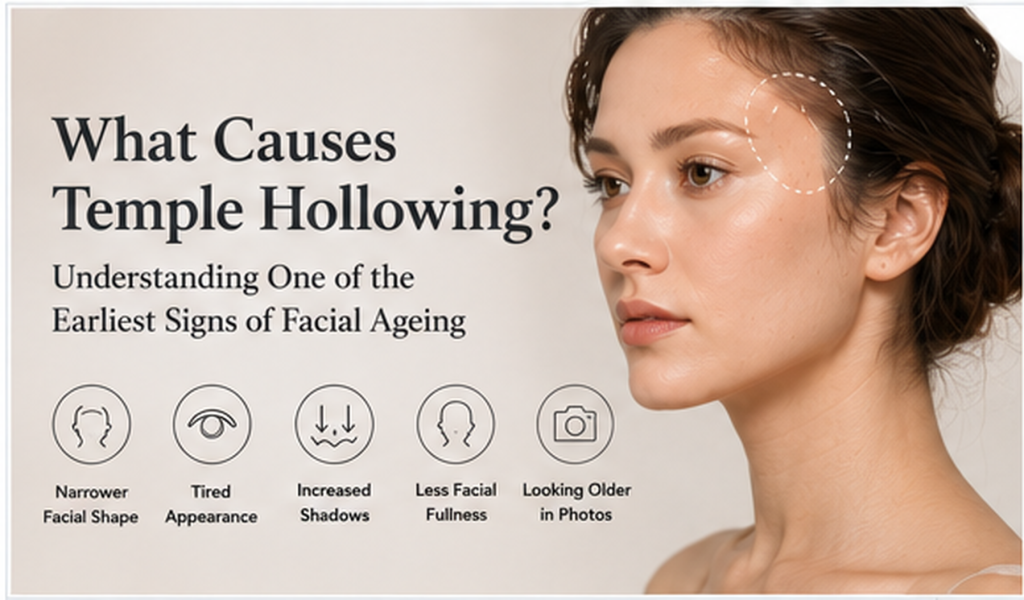
Temple hollowing is one of the most overlooked yet important signs of facial ageing. While many people focus on wrinkles, cheeks, or jawline changes, subtle volume loss in the temples can significantly affect facial balance and overall appearance.
Patients often notice:
- A narrower facial shape
- A more tired appearance
- Increased facial shadows
- Less facial fullness
- Looking older in photographs
In many cases, temple hollowing contributes to these concerns.
For patients in Sydney CBD, Macquarie Park, Chatswood, North Ryde, and surrounding suburbs, understanding why temple hollowing occurs can help explain changes in facial appearance and support informed discussions during cosmetic consultations.
What Are the Temples?
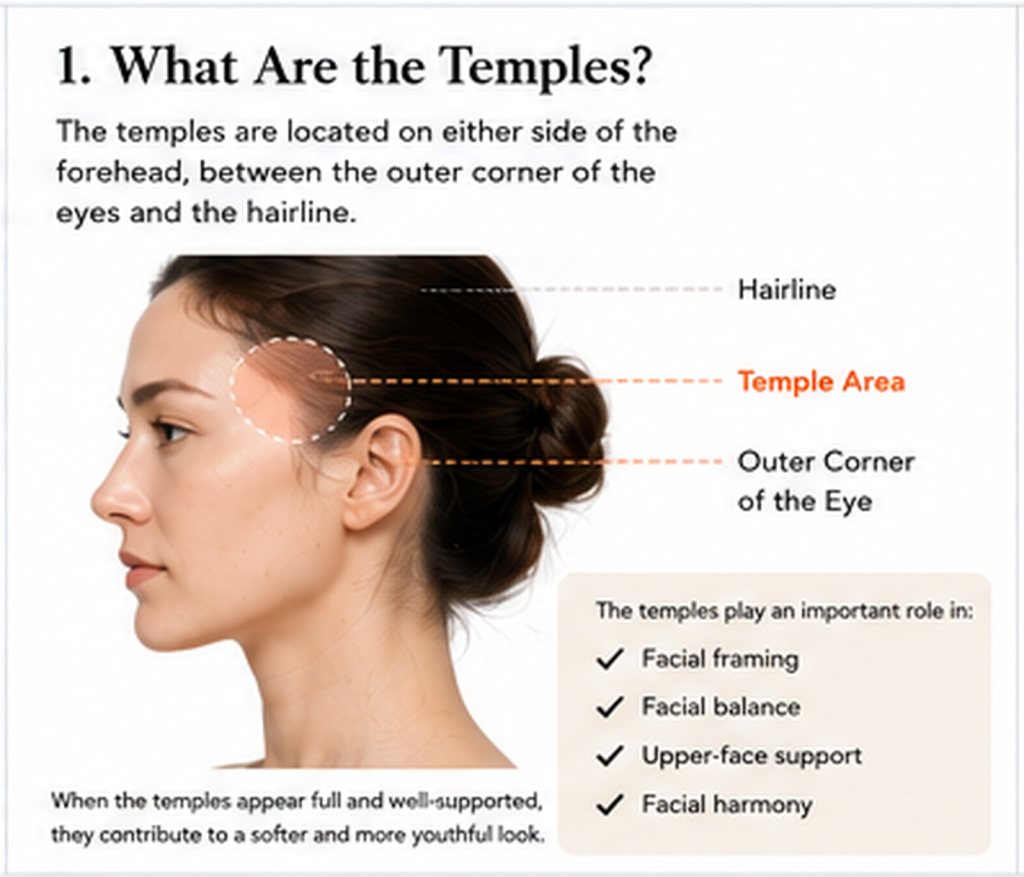
The temples are located on either side of the forehead, between the outer corner of the eyes and the hairline.
Although often overlooked, the temples play an important role in:
- Facial framing
- Facial balance
- Upper-face support
- Facial harmony
When the temples appear full and well-supported, they contribute to a softer and more youthful facial appearance.
When volume decreases, the face may appear narrower, more angular, or more fatigued.
What Is Temple Hollowing?
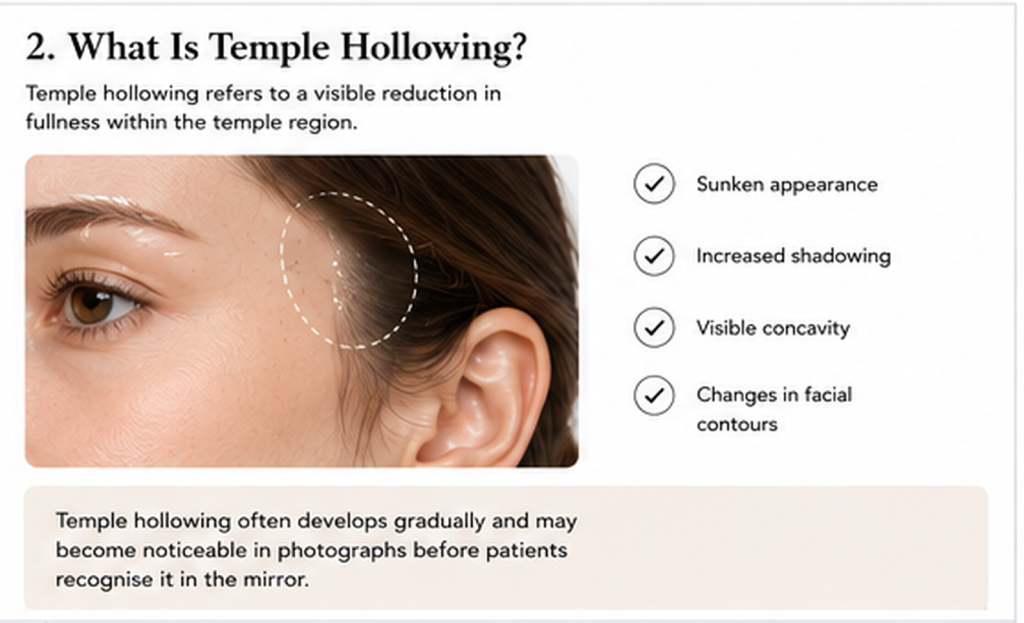
Temple hollowing refers to a visible reduction in fullness within the temple region.
This may create:
- A sunken appearance
- Increased shadowing
- Visible concavity
- Changes in facial contours
Temple hollowing often develops gradually and may become noticeable in photographs before patients recognise it in the mirror.
Why Does Temple Hollowing Occur?
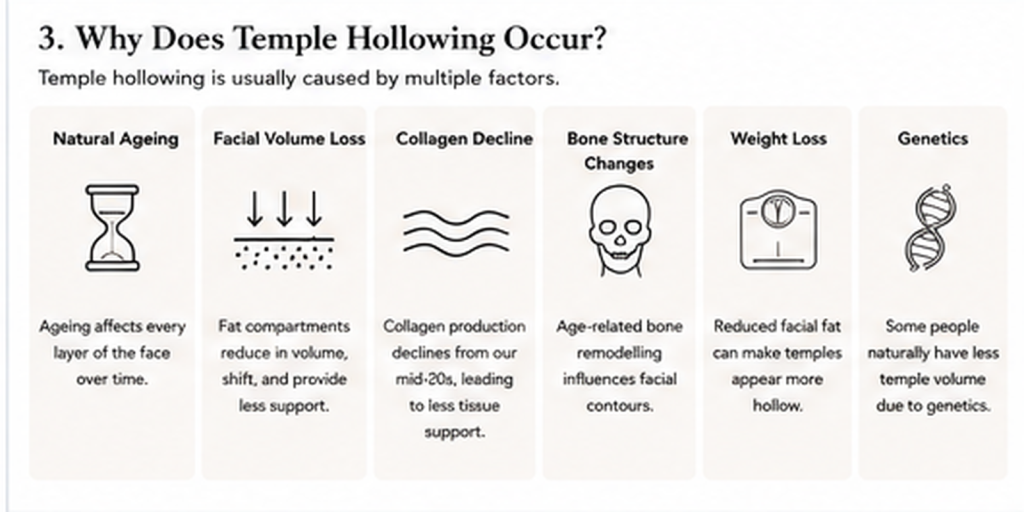
Temple hollowing is usually caused by multiple factors rather than a single reason.
Natural Ageing
Ageing affects every layer of the face.
Over time, changes occur within:
- Skin
- Fat compartments
- Connective tissues
- Muscles
- Bone structure
These combined changes may reduce fullness in the temple region.
Facial Volume Loss
One of the most important causes of temple hollowing is facial volume loss.
When we are younger, the temples contain soft tissue that contributes to facial support and balance.
As we age, these tissues may:
- Reduce in volume
- Shift position
- Provide less structural support
This can create a hollow appearance in the upper face.
Collagen Decline
Collagen is a structural protein that helps support skin and soft tissues.
From our mid-20s onward, collagen production gradually declines.
Over time, reduced collagen support may contribute to:
- Changes in skin firmness
- Reduced tissue support
- Less fullness in certain facial regions
including the temples.
Bone Structure Changes
Many people are surprised to learn that facial bones change with age.
The facial skeleton provides the foundation that supports:
- Skin
- Fat compartments
- Muscles
- Connective tissues
Natural age-related bone remodelling can influence facial contours and contribute to temple hollowing over time.
Weight Loss
Significant weight loss may make temple hollowing more noticeable.
Because the temple region contains relatively little soft tissue, reductions in facial fat can affect this area quickly.
Patients who experience major weight fluctuations may notice increased hollowing around the temples.
Genetics
Some people naturally have less volume in the temple region.
In these individuals, temple hollowing may be visible even at a younger age.
Genetics influence:
- Facial structure
- Bone shape
- Fat distribution
- Ageing patterns
As a result, some individuals are more likely to develop noticeable temple hollowing than others.
Why Temple Hollowing Makes People Look Older
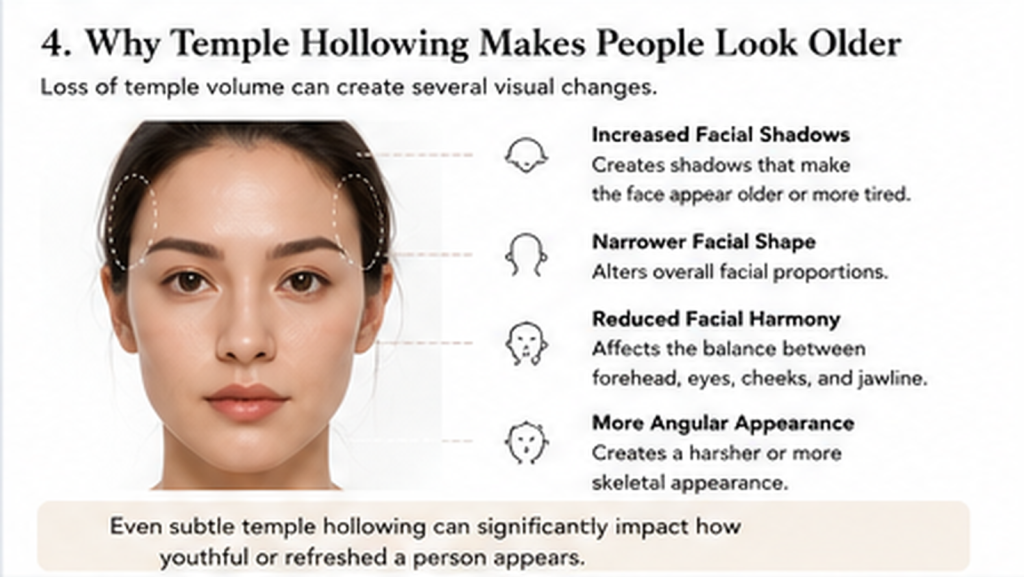
The temples play an important role in upper-face balance.
When temple volume decreases, several visual changes may occur.
Increased Facial Shadows
Temple hollowing creates shadowing that may make the face appear older or more tired.
Narrower Facial Shape
Loss of temple fullness may alter overall facial proportions.
Reduced Facial Harmony
Changes in the temples can affect the balance between:
- Forehead
- Eyes
- Cheeks
- Jawline
More Angular Appearance
A reduction in soft tissue support may create a harsher or more skeletal appearance.
Even subtle temple hollowing can have a significant impact on how youthful or refreshed a person appears.
Temple Hollowing and Facial Harmony
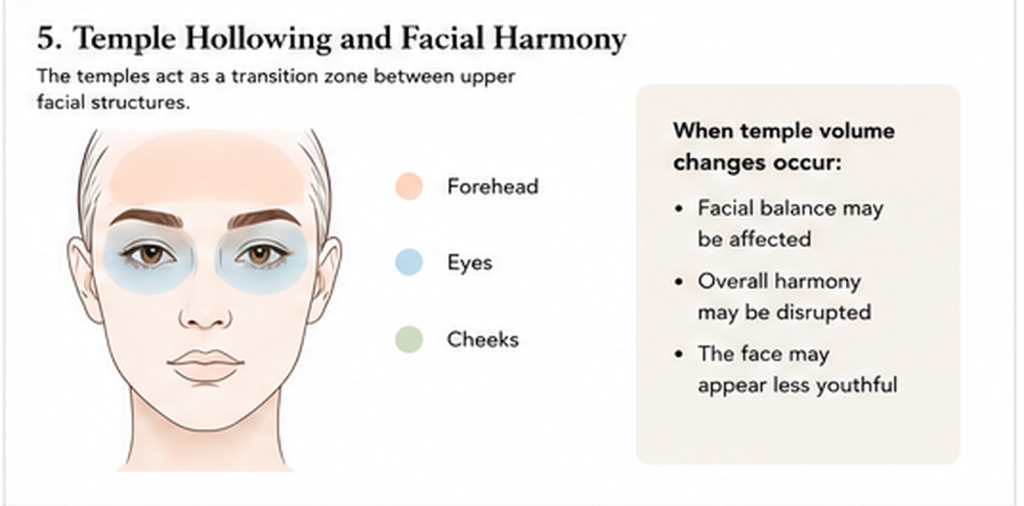
Modern aesthetic medicine increasingly focuses on facial harmony rather than isolated features.
Facial harmony refers to the balance between all facial structures.
The temples act as a transition zone between:
- Forehead
- Eyes
- Cheeks
When volume changes occur in this area, the balance of the entire face may be affected.
This is why experienced practitioners often assess temple volume as part of a comprehensive facial evaluation.
Temple Hollowing in Asian Faces
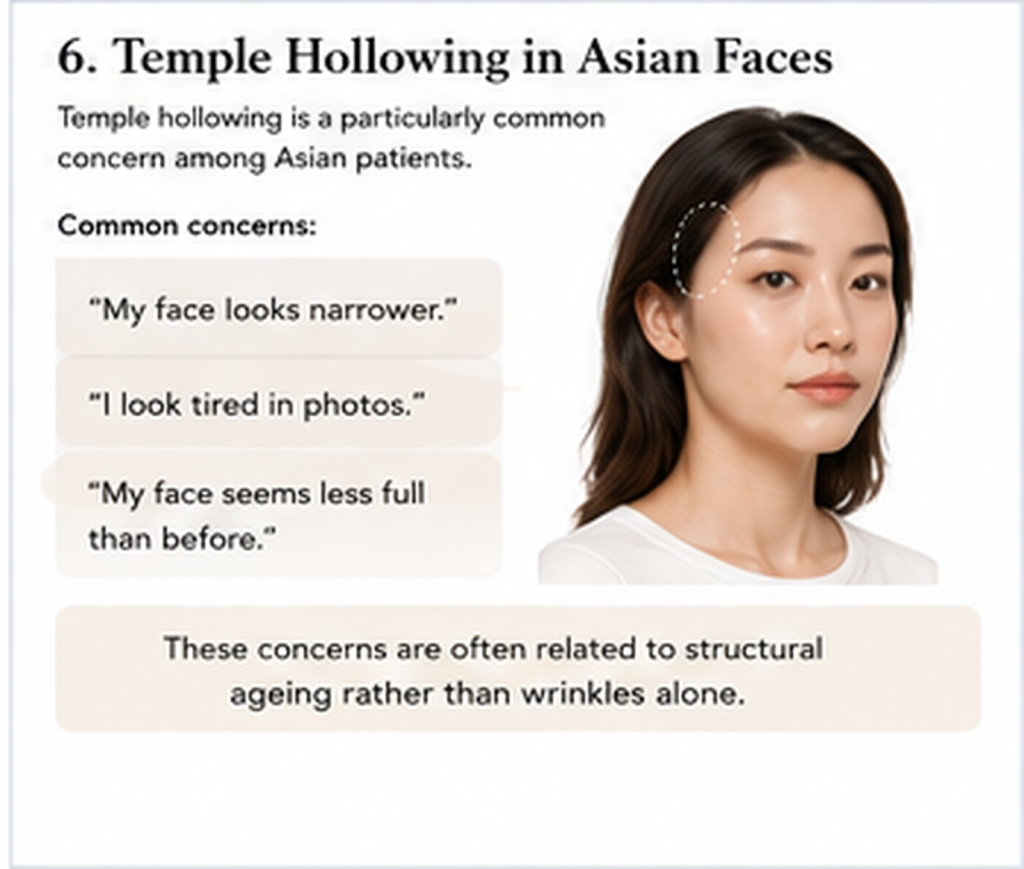
Temple hollowing is a particularly common concern among Asian patients.
Asian facial anatomy often includes:
- Wider facial proportions
- Fuller midface support
- Strong facial framing
As age-related volume changes occur, temple hollowing may become more noticeable because it alters facial width and overall balance.
Patients frequently report:
> “My face looks narrower.”
> “I look tired in photos.”
> “My face seems less full than before.”
These concerns are often related to structural ageing rather than wrinkles alone.
Common Signs of Temple Hollowing
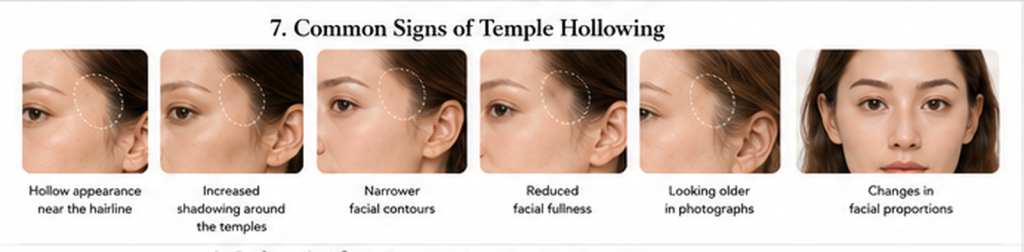
Patients may notice:
- Hollow appearance near the hairline
- Increased shadowing around the temples
- Narrower facial contours
- Reduced facial fullness
- Looking older in photographs
- Changes in facial proportions
These changes often develop gradually over many years.
Lifestyle Factors That Influence Facial Ageing

While ageing is inevitable, certain lifestyle factors may influence how facial ageing appears.
Sun Exposure
Australia’s high UV exposure contributes to visible skin ageing.
Smoking
Smoking is associated with accelerated ageing and reduced skin quality.
Nutrition
Balanced nutrition supports healthy skin function and overall wellbeing.
Sleep
Adequate sleep supports recovery and general health.
Exercise
Regular physical activity supports circulation and overall wellness.
Stress
Long-term stress may affect both physical wellbeing and appearance.
Why a Comprehensive Assessment Matters
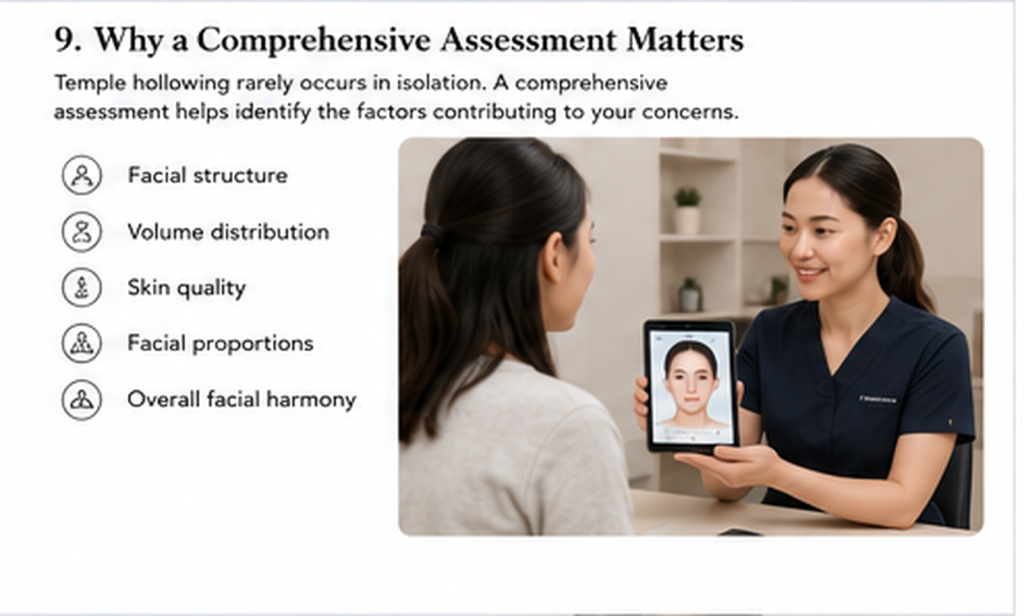
Temple hollowing rarely occurs in isolation.
When evaluating facial ageing, practitioners may assess:
- Facial structure
- Volume distribution
- Skin quality
- Facial proportions
- Overall facial harmony
A comprehensive assessment helps identify the factors contributing to a patient’s concerns and supports personalised recommendations.
Final Thoughts
Temple hollowing is a common but often overlooked sign of facial ageing. Changes in facial volume, collagen production, bone structure, genetics, and lifestyle factors can all contribute to a hollow appearance in the temple region.
Because the temples play an important role in facial framing and harmony, even subtle volume changes can significantly influence how youthful, balanced, and refreshed the face appears.
Whether you are located in Sydney CBD, Macquarie Park, Chatswood, North Ryde, Epping, or surrounding suburbs, understanding temple hollowing is an important step in understanding the broader facial ageing process.