

Understanding Midface Ageing: Why the Centre of the Face Changes Over Time
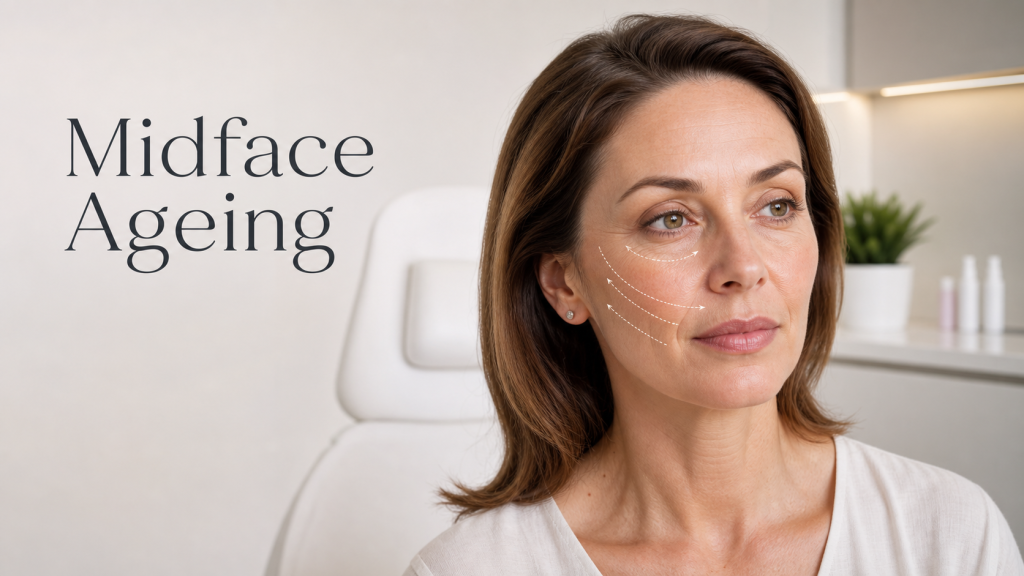
When people think about facial ageing, they often focus on wrinkles around the eyes or forehead. However, one of the most important areas involved in facial ageing is the midface.
The midface plays a central role in facial structure, support, and overall appearance. In fact, many of the earliest signs of ageing occur in this region long before deep wrinkles become noticeable.
Patients frequently describe concerns such as:
- Looking tired all the time
- Looking older in photographs
- Flatter cheeks
- Reduced facial definition
- Less youthful facial contours
These concerns are often associated with changes occurring within the midface.
For patients in Sydney CBD, Macquarie Park, Chatswood, North Ryde, and surrounding suburbs, understanding midface ageing can help explain why facial appearance changes over time and why facial rejuvenation assessments often focus on more than wrinkles alone.
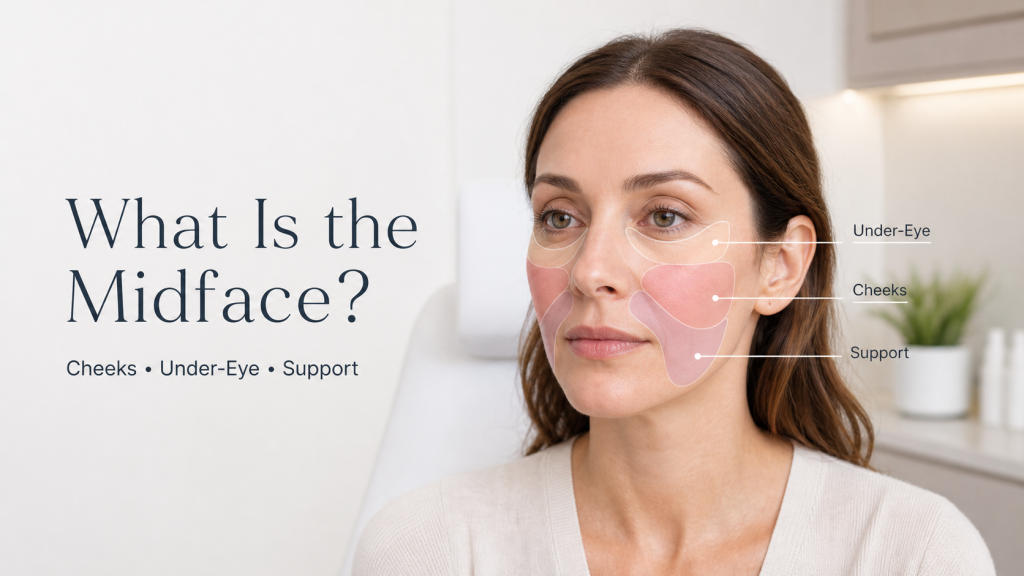
What Is the Midface?
The midface refers to the central portion of the face, including:
- Cheeks
- Upper cheek area
- Areas beneath the eyes
- Central facial support structures
The midface acts as a structural foundation for many surrounding facial features.
It contributes significantly to:
- Facial balance
- Facial harmony
- Facial support
- Youthful facial contours
When the midface is well supported, the face often appears:
- Refreshed
- Balanced
- Healthy
- More youthful
Because this region occupies a large portion of the face, even subtle changes can have a significant impact on overall appearance.
Why the Midface Is Important
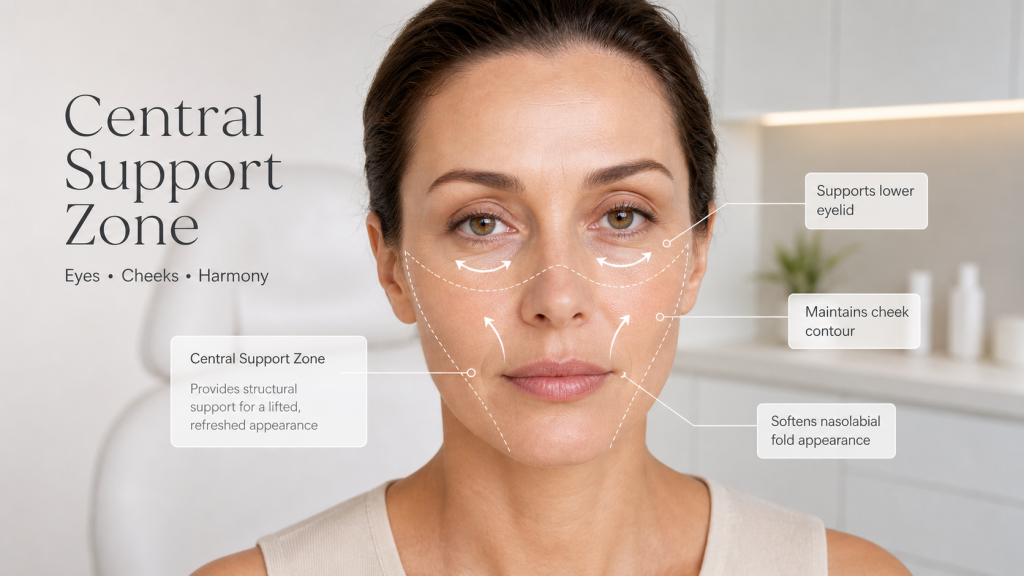
The midface functions as one of the primary support zones of the face.
It helps support:
- The lower eyelids
- The cheeks
- Facial contours
- Overall facial proportions
As a result, changes within the midface may influence multiple areas simultaneously.
This is one reason why patients often notice a general change in appearance without being able to identify a specific cause.
What Happens During Midface Ageing?
Ageing affects every layer of the face.
Changes occur within:
- Skin
- Fat compartments
- Connective tissues
- Muscles
- Bone structure
Over time, these changes can alter the support and contours of the midface.
Facial Volume Changes
One of the most significant aspects of midface ageing is facial volume loss.
When we are younger, the midface contains well-supported fat compartments that contribute to:
- Smooth facial contours
- Balanced facial proportions
- Youthful facial fullness
As we age, these compartments may:
- Lose volume
- Shift position
- Provide less support
This may contribute to:
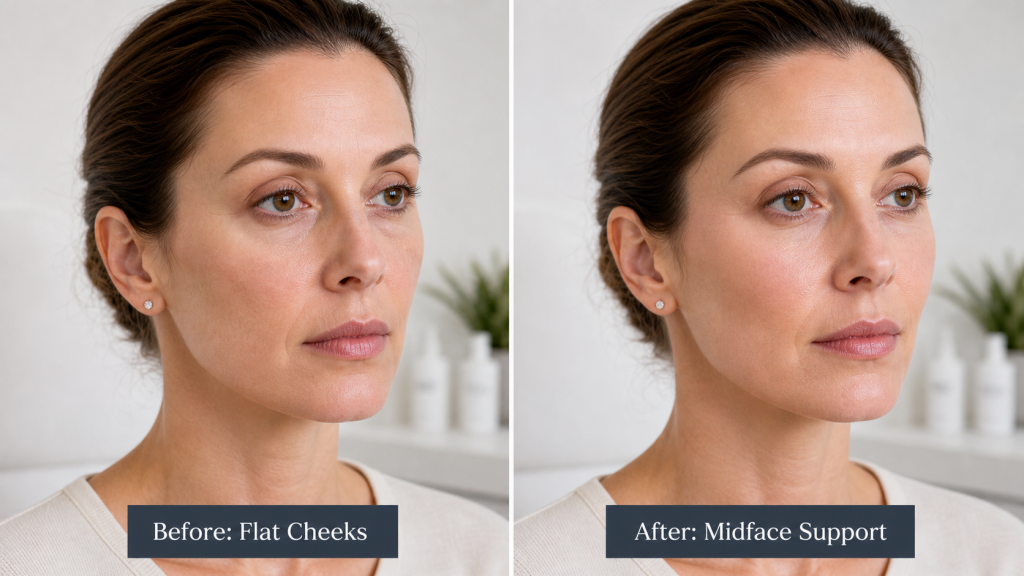
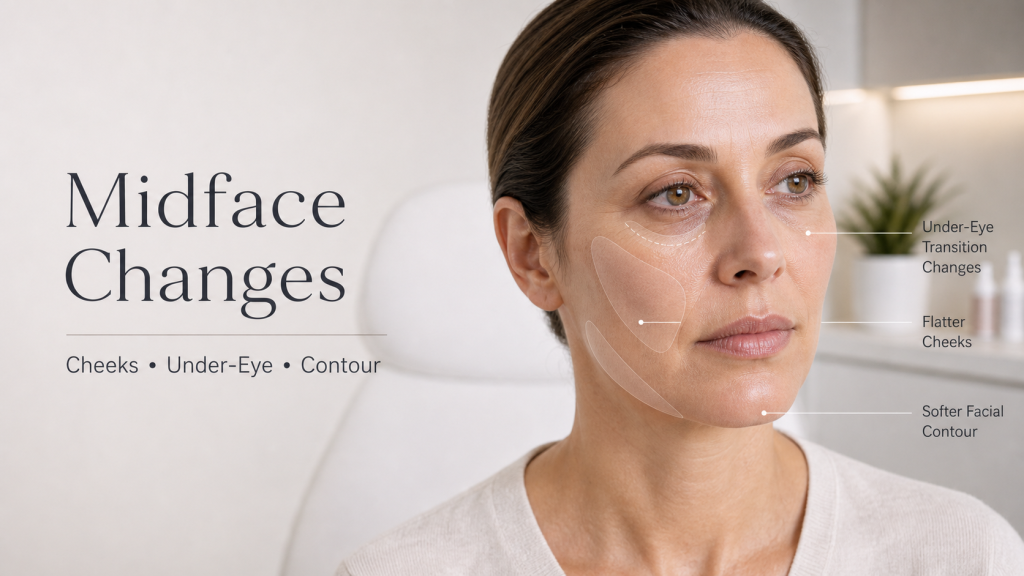
- Flatter cheeks
- Reduced facial definition
- Increased shadowing
- A tired appearance
Many people incorrectly assume that wrinkles are the primary cause of ageing when volume changes often play a much larger role.
Why Cheeks Flatten With Age
The cheeks are one of the most visible parts of the midface.
Over time, structural changes may contribute to:
- Reduced cheek projection
- Flatter facial contours
- Less support beneath the eyes
Patients frequently say:
> “My face looks flatter.”
> “My cheeks aren’t as full as they used to be.”
> “I don’t look as refreshed.”
These concerns are commonly associated with midface ageing.
Under-Eye Changes and Midface Support
The under-eye area is closely connected to the midface.
As midface support changes, patients may notice:
- Increased shadowing beneath the eyes
- A tired appearance
- Reduced facial brightness
Because the eyes are a focal point of the face, even small changes in this region can significantly influence overall appearance.
Many individuals who feel they look tired are actually noticing changes related to midface support rather than lack of sleep.
Collagen Decline and Skin Support
Collagen is an important structural protein that contributes to skin firmness and support.
From our mid-20s onward, collagen production gradually decreases.
Over time, this natural decline may contribute to:
- Reduced skin elasticity
- Softer facial contours
- Less tissue support
- Changes in facial structure
These changes often become more noticeable during the 40s and 50s.
Bone Structure Changes
Many people are surprised to learn that facial bones also change with age.
The facial skeleton provides support for:
- Skin
- Fat compartments
- Muscles
- Connective tissues
Natural age-related changes in bone structure may reduce support within the midface.
As a result, facial contours may gradually appear flatter or less defined.
Why Midface Ageing Makes You Look Tired
One of the most common concerns associated with midface ageing is looking tired.
Patients often report:
> “People keep asking if I’m tired.”
> “I look exhausted in photos.”
> “I feel younger than I look.”
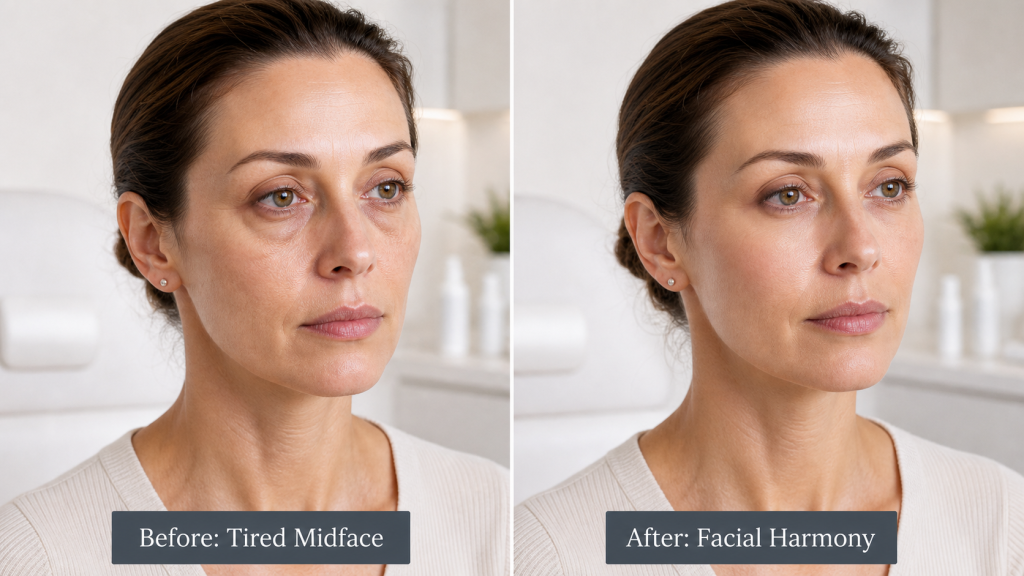
This occurs because changes within the midface can create:
- Facial shadowing
- Reduced support beneath the eyes
- Less facial brightness
- Changes in facial contours
The face may appear fatigued even when a person feels energetic and healthy.
Midface Ageing and Asian Faces
Asian facial ageing often follows different patterns compared with Western facial ageing.
Many Asian patients experience:
- Midface volume changes
- Reduced facial support
- Temple hollowing
- Changes in facial contours
before deep wrinkles become a major concern.
Common observations include:
- Looking older in photographs
- Looking less refreshed
- Reduced facial fullness
- Loss of facial definition
Because facial structure differs between ethnic groups, personalised assessment is particularly important.
Facial Harmony and the Midface
The midface plays a major role in facial harmony.
Facial harmony refers to the balance between:
- Forehead
- Temples
- Eyes
- Cheeks
- Nose
- Lips
- Chin
- Jawline
Changes in midface support can influence how the entire face is perceived.
This is why experienced practitioners often assess the whole face rather than focusing on one isolated concern.
Lifestyle Factors That Influence Midface Ageing
Although ageing is inevitable, certain factors may influence how facial ageing appears.
Sun Exposure
Australia’s high UV exposure contributes significantly to visible skin ageing.
Smoking
Smoking is associated with accelerated skin ageing and reduced skin quality.
Sleep
Adequate sleep supports overall wellbeing and healthy appearance.
Nutrition
Balanced nutrition supports healthy skin function and general health.
Exercise
Regular physical activity contributes to overall wellbeing.
Stress
Long-term stress may influence both health and appearance.
When Should You Seek Professional Advice?
You may wish to seek professional advice if you notice:
- Flatter cheeks
- Reduced facial definition
- Persistent tired appearance
- Changes in facial contours
- Concerns regarding facial ageing
A consultation with an appropriately qualified healthcare professional can help identify the factors contributing to these changes and provide personalised guidance.
Final Thoughts
Midface ageing is one of the most important yet often overlooked aspects of facial ageing. Changes in facial volume, collagen production, structural support, and facial proportions can significantly influence how youthful, refreshed, and balanced the face appears.
Understanding midface ageing can help patients better appreciate why they may look different over time and why modern facial rejuvenation increasingly focuses on facial structure and harmony rather than wrinkles alone.
Whether you are located in Sydney CBD, Macquarie Park, Chatswood, North Ryde, Epping, or surrounding suburbs, understanding the role of the midface is an important step towards understanding the ageing process and maintaining realistic expectations regarding healthy ageing.
Disclaimer
This article is intended for general educational purposes only and does not constitute medical advice. Any medical or cosmetic treatment should only be considered following consultation with an appropriately qualified healthcare professional. Treatment suitability, risks, benefits, and alternatives should be assessed on an individual basis.