

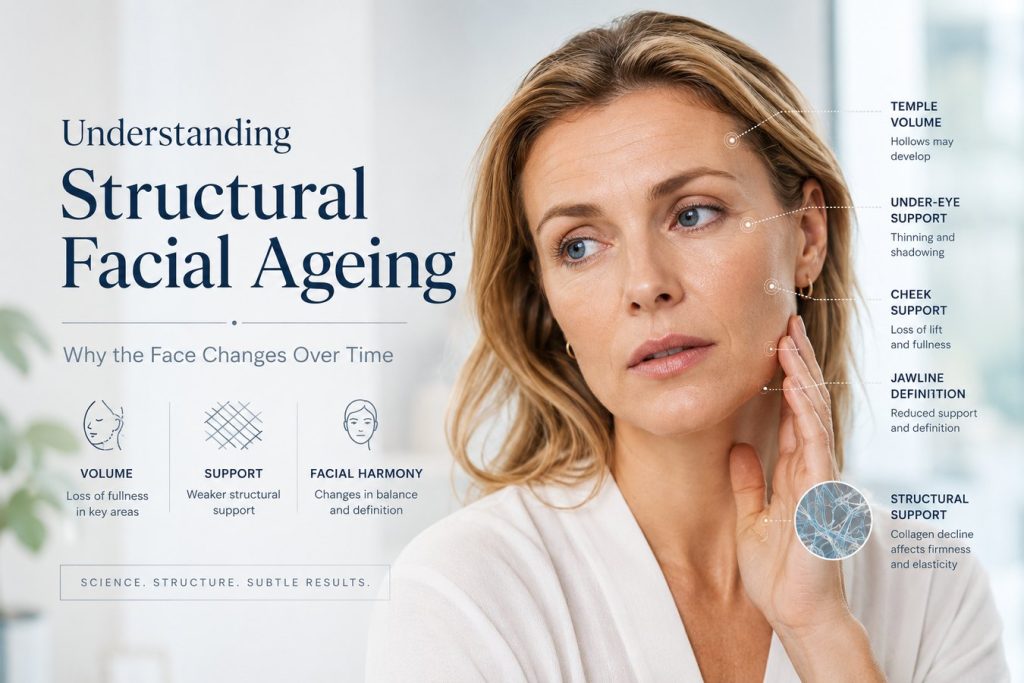
Many people associate ageing with wrinkles and fine lines. However, modern aesthetic medicine has shown that facial ageing is much more complex than changes in the skin alone.
One of the most important concepts in facial rejuvenation is structural facial ageing. This refers to the gradual changes that occur beneath the skin, affecting the bones, fat compartments, connective tissues, muscles, and overall facial support.
For many individuals in Sydney, Sydney CBD, Macquarie Park, Chatswood, North Ryde, and surrounding suburbs, structural facial ageing may contribute to changes in facial definition and overall appearance over time.
Understanding these deeper changes can help explain why facial appearance evolves over time and why ageing is about much more than wrinkles.
What Is Structural Facial Ageing?
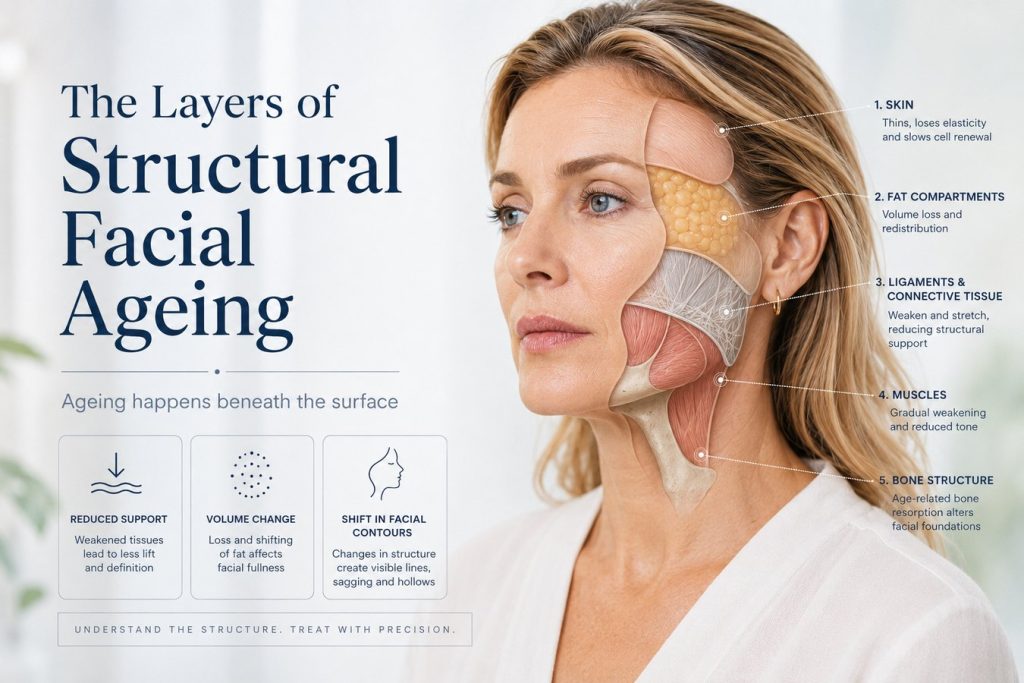
Structural facial ageing refers to the age-related changes that occur in the deeper layers of the face.
These changes affect:
Facial bones Fat compartments Ligaments Connective tissues Muscles Skin support structures
Unlike fine lines that develop on the surface of the skin, structural ageing affects the foundation of the face.
As these deeper structures change, facial contours, proportions, and overall harmony may gradually shift.
Why Structural Ageing Matters
Many people wonder why they look older despite having relatively few wrinkles.
The answer often lies beneath the skin.
Structural ageing can contribute to:
Changes in facial definition
Changes in facial contours
Changes in facial shape
Changes in facial harmony
In fact, facial volume and structural changes often contribute more to visible ageing than wrinkles alone.
The Facial Skeleton Changes With Age
One of the least understood aspects of ageing is that facial bones change over time.
The facial skeleton serves as the framework that supports:
Skin Fat compartments Muscles Connective tissues
As we age, natural bone remodelling occurs.
This may contribute to:
Reduced facial support Changes in facial proportions Altered facial contours Less structural definition
Because bone provides the foundation for the face, even subtle changes can influence overall appearance.
Facial Volume Loss and Ageing
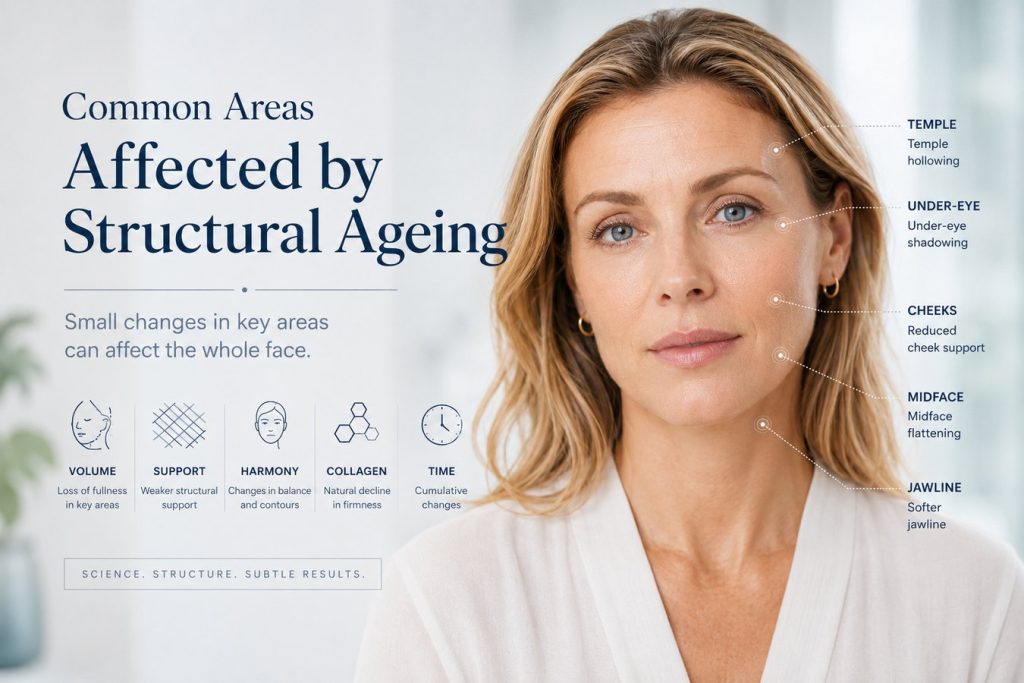
Another major component of structural ageing is facial volume loss.
The face contains multiple fat compartments that contribute to youthful facial contours.
Over time, these compartments may:
Decrease in volume Shift position Lose structural support
Common areas affected include:
Temples
Temple volume contributes to upper-face balance and facial framing.
Volume changes may create:
Hollowing Increased shadowing Narrower facial appearance Cheeks
The cheeks provide important support for the midface.
Changes in this area may contribute to:
Flatter facial contours Reduced facial definition A tired appearance Under-Eye Area
Volume changes around the eyes may create:
Shadowing Hollow appearance Increased signs of fatigue
These concerns are commonly reported during facial rejuvenation consultations.
Ligament and Connective Tissue Changes
Facial ligaments help support facial tissues and maintain facial structure.
As we age, these supporting structures may gradually lose strength and elasticity.
This can contribute to:
Changes in facial contours Reduced support Altered facial proportions
Because ligaments help maintain the position of facial tissues, these changes can influence how the face ages over time.
Collagen Decline and Structural Support
Collagen is one of the most important proteins responsible for skin and tissue support.
From our mid-20s onwards, collagen production gradually declines.
This natural process may contribute to:
Reduced skin firmness Changes in elasticity Less structural support Increased skin laxity
Although collagen decline affects the skin, it also influences the overall support system of the face.
Why Facial Definition Changes With Age
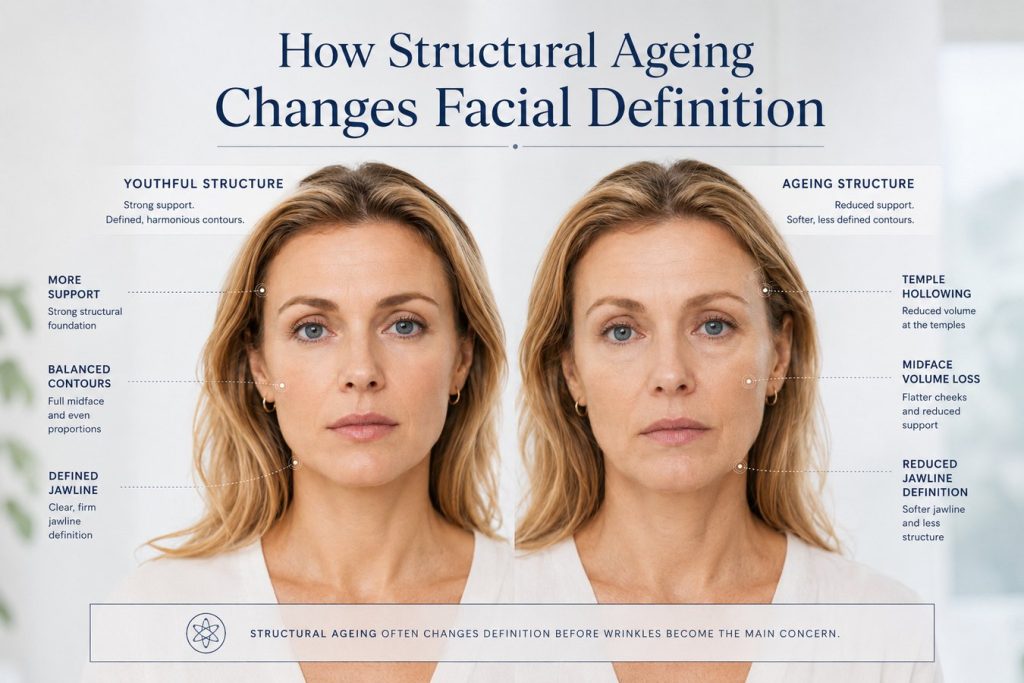
One of the most common concerns among adults in their 40s and 50s is:
“My face doesn’t look as defined as it used to.”
Structural ageing often contributes to:
Softer jawlines Reduced cheek definition Changes in facial shape Less prominent facial contours
These changes can occur even when body weight remains stable.
Why Structural Ageing Often Creates a Tired Appearance
Many individuals notice changes in their facial appearance over time.
This is often related to structural changes rather than fatigue itself.
Changes in:
Temple volume Midface support Facial contours Under-eye structure
can create visual cues associated with tiredness.
As a result, people may appear older or more fatigued despite feeling healthy and energetic.
Structural Facial Ageing in Asian Faces
Facial ageing patterns can vary between individuals and populations.
Many Asian patients notice:
Midface volume changes Temple hollowing Reduced facial support Loss of facial width Changes in facial harmony
before deep wrinkles become prominent.
Common concerns include:
Looking tired Looking older in photographs Loss of facial definition Changes in facial balance
Because facial anatomy differs between individuals and ethnic groups, personalised assessment is essential.
Why Facial Harmony Changes Over Time
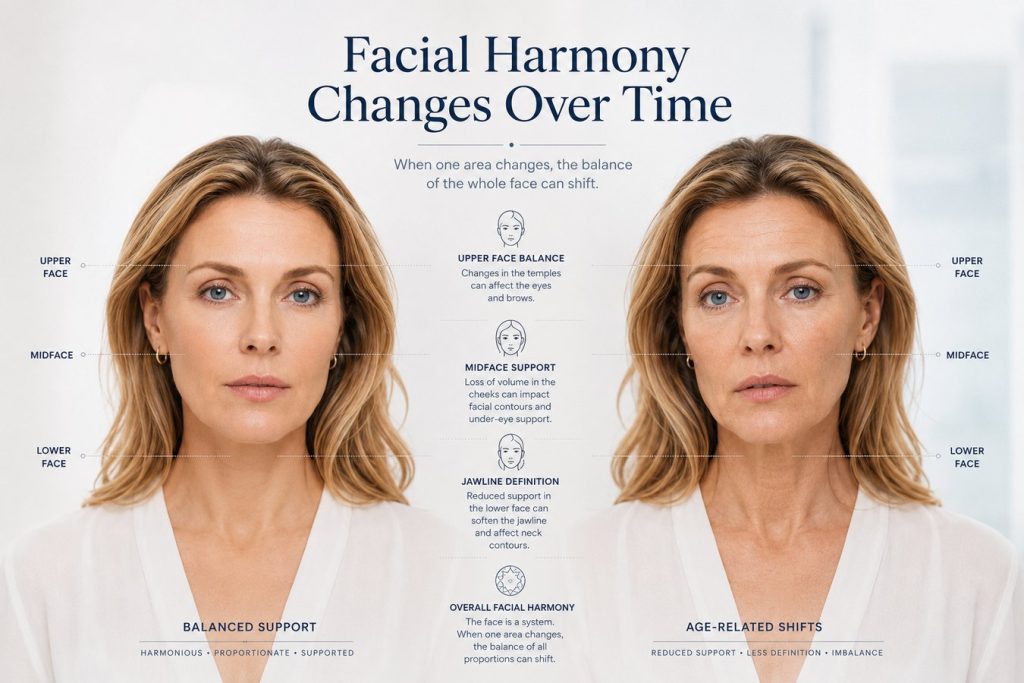
Facial harmony refers to the balance between different facial features and facial regions.
Structural ageing may influence:
Upper face proportions Midface support Jawline definition Facial contours
Even small changes in one area can affect the appearance of the entire face.
This is why modern aesthetic medicine increasingly focuses on facial harmony rather than individual features alone.
Lifestyle Factors That Influence Structural Ageing
While ageing is a natural process, several lifestyle factors may influence how facial ageing appears.
Sun Exposure
Australia’s high UV exposure contributes significantly to visible skin ageing.
Smoking
Smoking is associated with accelerated ageing and reduced skin quality.
Sleep
Adequate sleep supports recovery and overall wellbeing.
Nutrition
A balanced diet contributes to healthy skin and general health.
Exercise
Regular physical activity supports circulation and overall wellness.
Stress Management
Managing stress supports both physical and emotional wellbeing.
Understanding Healthy Ageing
Healthy ageing is not about preventing age altogether.
Instead, it focuses on:
Maintaining confidence Supporting skin health Preserving facial harmony Encouraging realistic expectations Promoting long-term wellbeing
Many individuals simply want to maintain a refreshed, healthy, and natural appearance.
Final Thoughts
Structural facial ageing is one of the most important yet least understood aspects of the ageing process. Changes in bone structure, facial volume, connective tissues, collagen production, and facial support all contribute to how the face evolves over time.
Understanding these deeper structural changes can help explain why many people notice reduced facial definition, increased tiredness, or changes in facial shape long before wrinkles become a major concern.
Whether you are located in Sydney CBD, Macquarie Park, Chatswood, North Ryde, Epping, or surrounding suburbs, learning about structural facial ageing can help you better understand your appearance and support informed discussions during cosmetic consultations.
Personalised Consultation
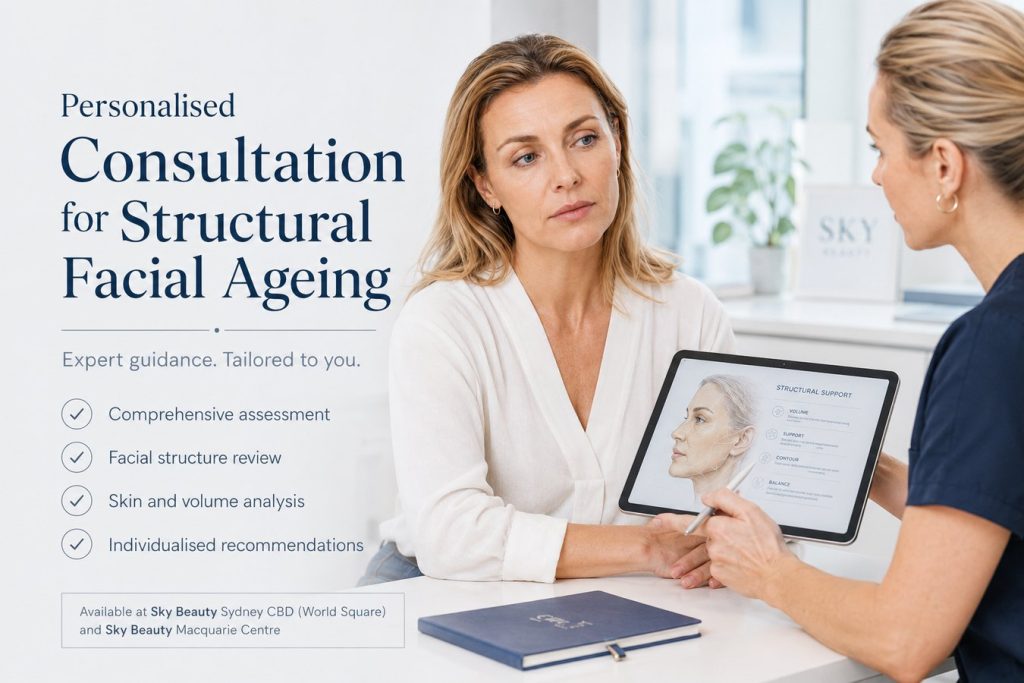
Every individual’s facial anatomy, skin characteristics, and aesthetic goals are unique. As a result, the most suitable treatment approach will vary from person to person.
If you would like professional and personalised advice, we welcome you to book a consultation at Sky Beauty Sydney CBD (World Square) or Sky Beauty Macquarie Centre. Our experienced team will conduct a comprehensive assessment of your concerns and discuss suitable treatment options based on your individual needs and goals.
All treatment recommendations are provided following a thorough consultation and assessment by an appropriately qualified healthcare professional.
Disclaimer
This article is intended for general educational purposes only and does not constitute medical advice. Any medical or cosmetic treatment should only be undertaken following consultation with an appropriately qualified healthcare professional. Treatment suitability, risks, benefits, and alternatives should be assessed on an individual basis.