

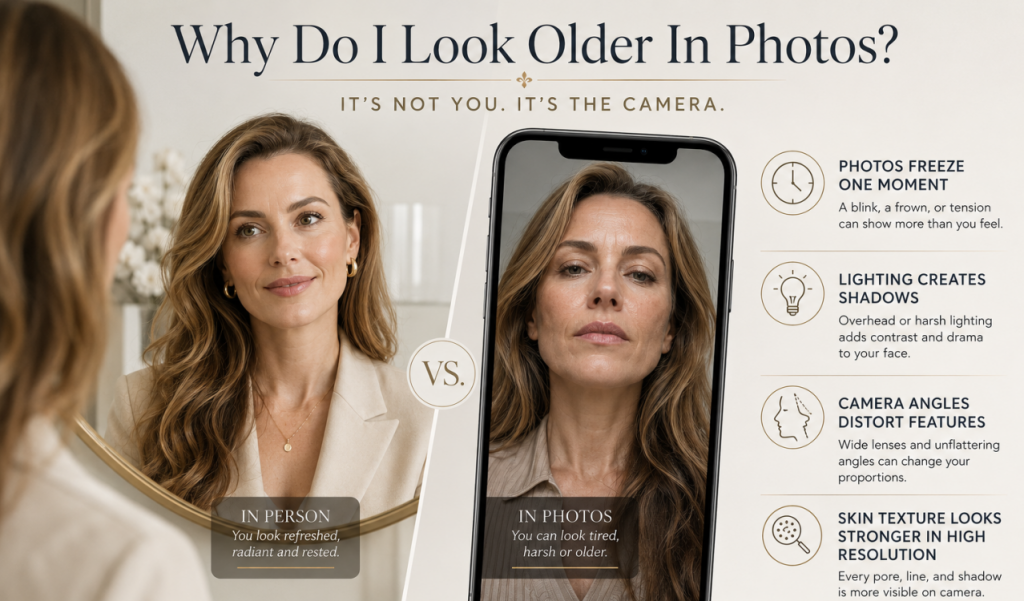
Have you ever looked in the mirror and felt perfectly fine, only to see a photograph of yourself and wonder:
“Why do I look so much older in photos?”
 This is one of the most common concerns discussed during cosmetic consultations. Many people feel that they look healthy and youthful in person, yet photographs seem to highlight features they rarely notice in the mirror.
The good news is that this experience is extremely common.
In many cases, photographs reveal subtle aspects of facial ageing, lighting, facial structure, and image distortion that are not as obvious during everyday interactions.
For individuals in Sydney, Macquarie Park, Chatswood, North Ryde, and surrounding areas, understanding why you may appear older in photographs can help you better understand the ageing process and develop realistic expectations about facial appearance.
Why Photos and Mirrors Look Different
One of the biggest reasons people look different in photographs is that photographs capture a single frozen moment.
When you look in the mirror, you see:
- Facial movement
- Natural expressions
- Different lighting angles
- Continuous motion
In contrast, a photograph captures:
- A fixed expression
- Specific lighting conditions
- A single camera angle
- Shadows and contours
This often exaggerates features that are much less noticeable in real life.
Lighting Can Add Years to Your Appearance
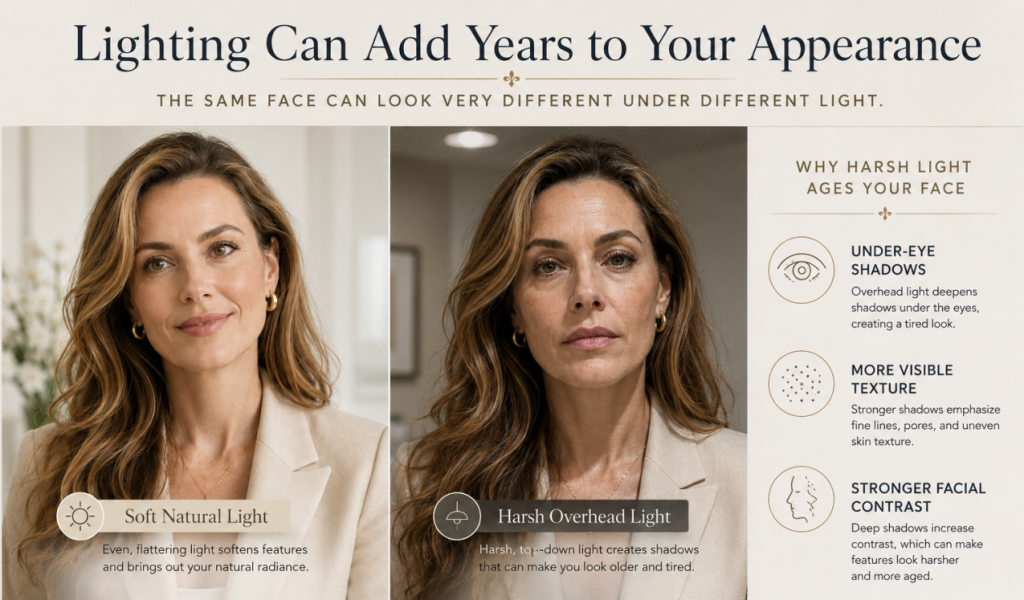
Professional photographers understand that lighting can dramatically change how a face appears.
Poor lighting may create:
- Dark circles
- Facial shadows
- Hollow-looking features
- More visible skin texture
- Increased contrast around facial contours
Overhead lighting is particularly known for creating shadows beneath:
- Eyes
- Cheeks
- Nose
- Jawline
These shadows may make the face appear older or more tired.
This is why many people feel they look older in workplace lighting, elevators, or certain indoor environments.
Facial Volume Changes Become More Visible in Photos
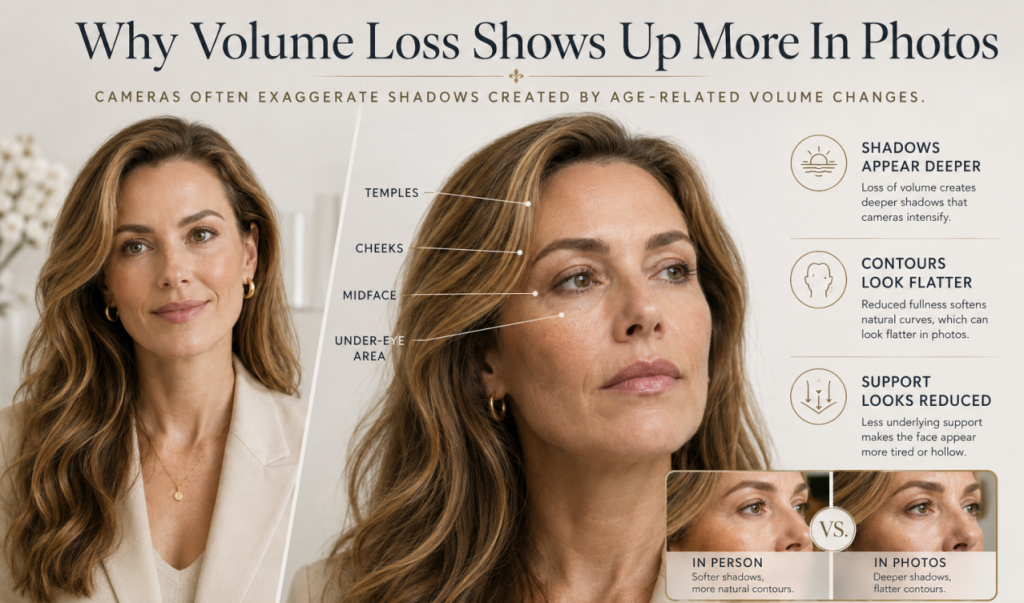
One of the most overlooked aspects of facial ageing is facial volume loss.
As we age, natural changes occur within:
- Fat compartments
- Connective tissues
- Skin
- Facial support structures
These changes can influence:
- Cheek contours
- Midface support
- Temple fullness
- Under-eye appearance
Photographs often highlight these changes because cameras capture shadows more dramatically than the human eye.
As a result, volume changes that are barely noticeable in person may appear more obvious in pictures.
The Under-Eye Area Often Appears Worse in Photos
The eye area plays a major role in how youthful or tired someone appears.
Even subtle shadowing beneath the eyes can create the impression of:
- Fatigue
- Stress
- Ageing
Many people who complain about looking older in photographs are actually noticing increased shadowing around the eye area.
In photographs, these shadows may appear darker and more pronounced than they do in everyday life.
Why Smartphones Can Distort Facial Features
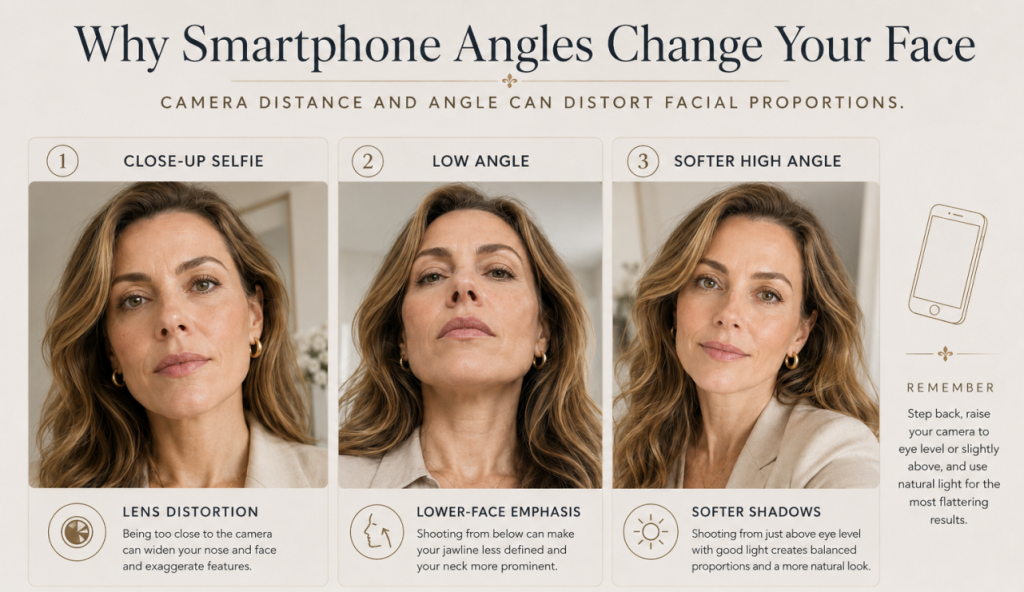
Most modern photographs are taken with smartphones.
While smartphone cameras are convenient, they can distort facial proportions depending on:
- Camera distance
- Lens type
- Shooting angle
For example:
Close-Up Selfies
Selfies taken at arm’s length may exaggerate:
- Nose size
- Facial width
- Facial proportions
Low Camera Angles
Photos taken from below can:
- Emphasise the lower face
- Reduce jawline definition
- Create less flattering shadows
High Camera Angles
Photos taken from above often create a softer appearance and reduce visible facial shadows.
This is one reason why the same person may appear dramatically different in two photographs taken only minutes apart.
Why Facial Definition Changes With Age
Another common reason people look older in photographs is reduced facial definition.
As we age, changes may occur in:
- Facial volume
- Skin elasticity
- Structural support
- Facial contours
Patients often notice:
- Softer jawlines
- Less cheek definition
- Changes in facial shape
Because photographs capture facial contours in a static image, these changes can appear more noticeable than they do during face-to-face conversations.
Skin Quality Is More Visible in High-Resolution Photos
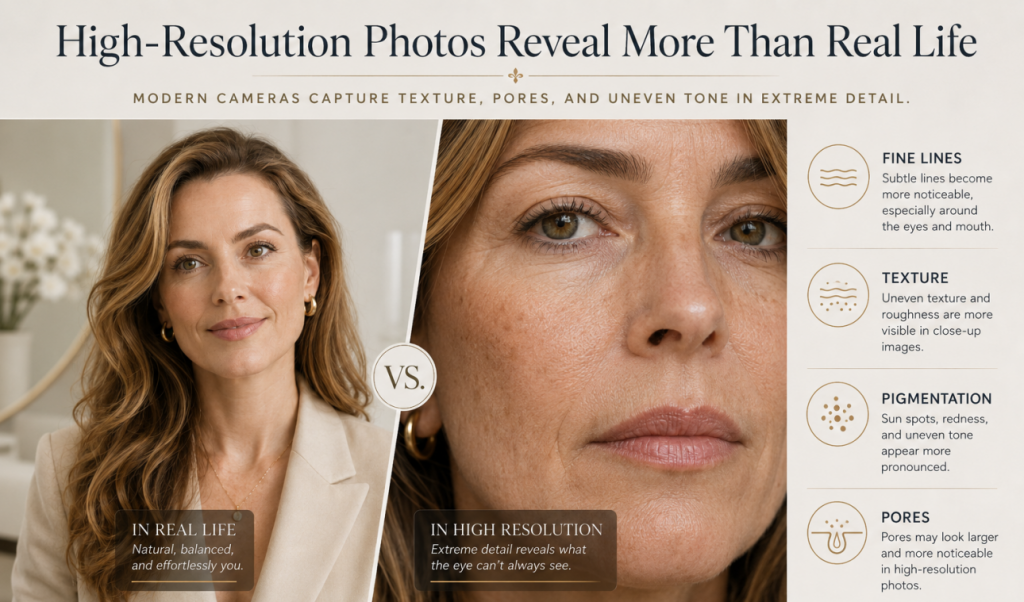
Modern smartphone cameras capture extraordinary levels of detail.
High-resolution photography may highlight:
- Fine lines
- Skin texture
- Pigmentation
- Pores
- Uneven skin tone
Many people are surprised to discover that concerns they barely notice in the mirror appear much more visible in photographs.
This does not necessarily mean that others see these features in everyday life.
Why Asian Patients Often Notice This Earlier
Many Asian patients seeking facial rejuvenation consultations do not initially complain about wrinkles.
Instead, they often say:
> “I look older in photos.”
> “I look tired in every picture.”
> “My face looks flatter than it used to.”
This is often related to age-related changes in:
- Midface support
- Facial volume
- Facial balance
- Temple fullness
Because Asian facial ageing frequently involves structural changes before deep wrinkles develop, photographs may reveal subtle ageing changes earlier than expected.
Social Media and Unrealistic Comparisons
Another reason many people feel older in photographs is comparison.
Social media images are often influenced by:
- Professional lighting
- Filters
- Editing
- Camera angles
- Image selection
Comparing a candid photograph of yourself to a highly curated online image can create unrealistic expectations.
It is important to remember that most people do not look like their social media photographs all the time.
Healthy Habits That Support a Refreshed Appearance
While ageing is inevitable, healthy lifestyle habits may help support long-term skin health and overall appearance.
Important habits include:
Daily Sun Protection
Australia’s high UV exposure contributes significantly to visible skin ageing.
Quality Sleep
Sleep supports recovery, skin health, and overall wellbeing.
Regular Exercise
Physical activity supports circulation and general health.
Healthy Nutrition
A balanced diet contributes to healthy skin function and overall wellness.
Hydration
Maintaining hydration supports overall skin health.
Avoiding Smoking
Smoking is associated with accelerated skin ageing and reduced skin quality.
When Should You Seek Professional Advice?
If you consistently feel that you appear:
- Older than you feel
- Tired in photographs
- Less defined than before
- Different from how you see yourself in the mirror
you may choose to seek advice from an appropriately qualified healthcare professional.
A comprehensive consultation can help identify factors contributing to these concerns and provide personalised guidance.
Final Thoughts
Looking older in photographs is a common concern and is often influenced by far more than age alone. Lighting, camera distortion, facial volume changes, skin quality, facial definition, and photography angles can all affect how a face appears in an image.
Understanding these factors can help you view photographs more realistically and better understand the natural changes that occur as part of the ageing process.
Whether you are located in Sydney CBD, Macquarie Park, Chatswood, North Ryde, Epping, or surrounding suburbs, a personalised consultation with an appropriately qualified healthcare professional can help you better understand your facial ageing concerns and discuss appropriate management options.
Disclaimer
This article is intended for general educational purposes only and does not constitute medical advice. Any medical or cosmetic treatment should only be considered following consultation with an appropriately qualified healthcare professional. Treatment suitability, risks, benefits, and alternatives should be assessed on an individual basis.