


One of the most overlooked signs of facial ageing is temple hollowing.
Many people focus on wrinkles, cheeks, or jawline definition when they think about ageing. However, subtle changes in the temples can have a surprisingly significant impact on overall facial appearance.
Patients often describe concerns such as:
- Looking tired despite feeling well-rested
- Looking older in photographs
- A narrower or less balanced facial shape
- Reduced facial fullness
- Changes in overall facial harmony
In many cases, temple hollowing may contribute to these concerns.
For patients in Sydney CBD, Macquarie Park, Chatswood, North Ryde, and surrounding suburbs, understanding why temple hollowing occurs can help provide insight into the facial ageing process and support more informed discussions during cosmetic consultations.
What Are the Temples?
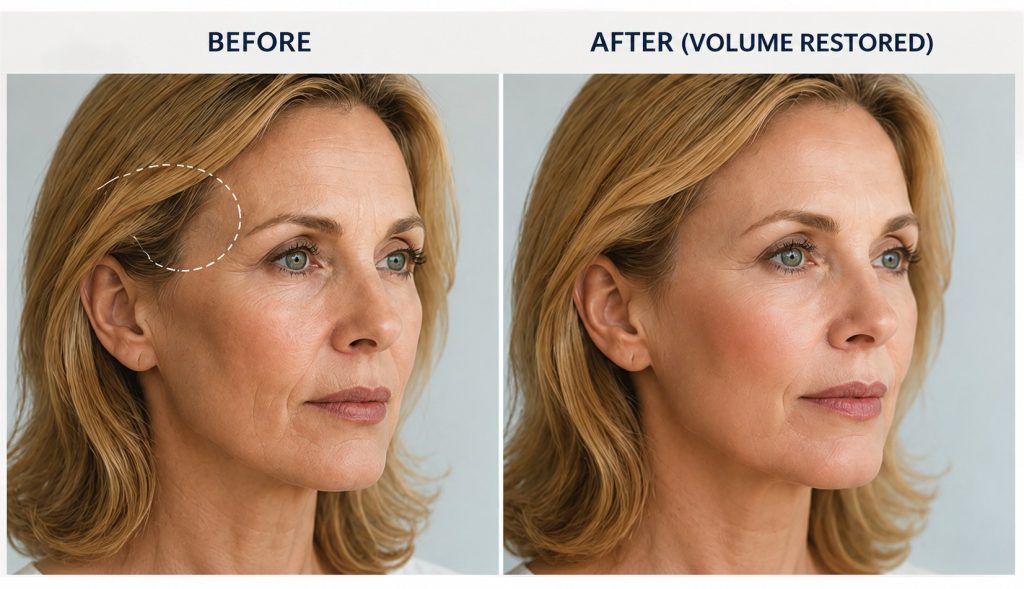
The temples are the areas located on either side of the forehead between the outer corner of the eyes and the hairline.
Although often overlooked, the temples play an important role in:
- Facial balance
- Facial framing
- Upper-face support
- Overall facial harmony
When temple volume is well supported, the face often appears softer, healthier, and more balanced.
When volume changes occur in this area, the face may appear narrower, more angular, or more fatigued.
What Is Temple Hollowing?
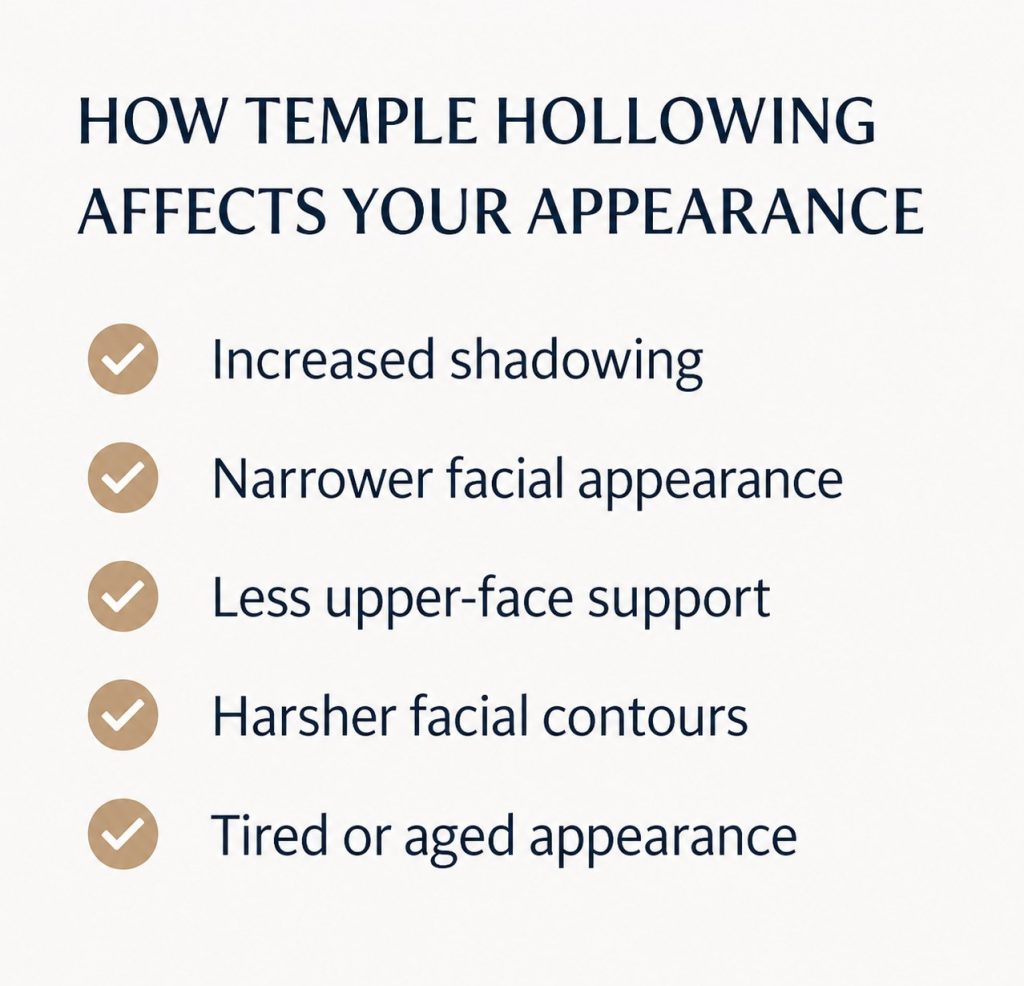
Temple hollowing refers to a gradual reduction in fullness within the temple region.
This may create:
- Visible concavity
- Increased shadowing
- A hollow appearance
- Changes in facial contours
Temple hollowing often develops gradually and may not be immediately obvious to the person experiencing it.
However, it can significantly influence how youthful or refreshed the face appears.
Why Does Temple Hollowing Occur?
Temple hollowing is usually caused by a combination of natural ageing processes.
Facial Volume Changes
One of the most important contributors is age-related volume loss.
As we age, changes may occur within the soft tissues of the face, including:
- Fat compartments
- Connective tissues
- Structural support systems
Over time, these changes may reduce fullness within the temple region.
Collagen Decline
Collagen is an important structural protein that helps support skin and soft tissues.
Natural collagen production gradually decreases with age.
This decline may contribute to:
- Reduced tissue support
- Changes in skin quality
- Less fullness in certain facial areas
including the temples.
Structural Ageing
Ageing affects every layer of the face.
Changes can occur within:
- Skin
- Fat
- Connective tissue
- Muscles
- Bone structure
These combined changes influence facial contours and overall appearance.
Genetics
Some individuals naturally have more prominent temple hollowing due to inherited facial structure.
In these cases, temple hollowing may become noticeable at a younger age.
Weight Loss
Significant weight loss may reduce facial fat volume.
Because the temples contain relatively little soft tissue compared with other facial regions, changes in body weight can sometimes make temple hollowing more apparent.
Why Temple Hollowing Makes People Look Older
Temple hollowing is often associated with an aged appearance because it alters facial proportions and balance.
The temples contribute to the overall shape of the upper face.
When volume changes occur:
- Facial framing may appear narrower
- The upper face may appear less supported
- Shadows may become more noticeable
- Facial contours may appear harsher
These changes can create the impression of ageing even when wrinkles are minimal.
Temple Hollowing and Facial Harmony
Modern aesthetic medicine places increasing emphasis on facial harmony.
Facial harmony refers to the balance between:
- Forehead
- Temples
- Eyes
- Cheeks
- Nose
- Lips
- Chin
- Jawline
Because the temples occupy a key transitional area between the forehead and midface, changes in temple volume can influence how the entire face is perceived.
Many patients are surprised to learn that subtle changes in the temples can affect overall facial appearance more than expected.
Temple Hollowing in Asian Faces
Temple hollowing is a common concern among Asian patients.
Asian facial anatomy often includes:
- Wider facial proportions
- Fuller midface structure
- Strong facial framing
As age-related volume changes occur, temple hollowing may become particularly noticeable because it alters facial balance and width.
Patients frequently report concerns such as:
- Looking tired
- Looking less youthful
- Looking less balanced in photographs
even when skin quality remains relatively good.
This is one reason why comprehensive facial assessment is important when discussing facial ageing.
Common Signs of Temple Hollowing
Patients may notice:
Increased Shadowing
The temples may appear darker due to the way light interacts with facial contours.
Narrower Facial Appearance
Loss of upper-face fullness can create a narrower facial silhouette.
More Prominent Facial Structures
Temple hollowing may make nearby structures appear more prominent.
Looking Tired or Aged
Many patients report that they appear less refreshed despite feeling healthy and energetic.
Lifestyle Factors That May Influence Facial Ageing
Although ageing is a natural process, several factors can influence facial appearance over time.
Sun Exposure
Australia’s high UV exposure contributes to visible skin ageing and changes in skin quality.
Smoking
Smoking is associated with accelerated skin ageing and reduced tissue quality.
Nutrition
Balanced nutrition supports overall health and skin function.
Sleep
Adequate sleep contributes to overall wellbeing and healthy appearance.
Exercise
Regular physical activity supports circulation and general health.
Why a Comprehensive Consultation Matters
Temple hollowing rarely occurs in isolation.
A qualified healthcare professional may assess:
- Facial proportions
- Skin quality
- Volume distribution
- Facial structure
- Overall facial harmony
This comprehensive approach helps identify the factors contributing to a patient’s concerns.
Because every face is unique, personalised assessment remains essential.
Choosing a Cosmetic Clinic in Sydney CBD or Macquarie Park
When considering a cosmetic consultation, look for practitioners who prioritise:
- Comprehensive facial assessment
- Patient education
- Natural-looking outcomes
- Personalised treatment planning
- Realistic expectations
A quality consultation should focus on understanding the entire face rather than a single isolated concern.
Final Thoughts
Temple hollowing is a common and often overlooked aspect of facial ageing. Changes in facial volume, collagen production, structural support, genetics, and lifestyle factors can all contribute to a hollow appearance in the temple region.
Because the temples play an important role in facial framing and harmony, even subtle changes can influence how youthful, balanced, and refreshed the face appears.
Whether you are located in Sydney CBD, Macquarie Park, Chatswood, North Ryde, or surrounding suburbs, understanding temple hollowing can help you better understand the facial ageing process and have more informed discussions during cosmetic consultations.
Disclaimer
This article is intended for general educational purposes only and does not constitute medical advice. Any medical or cosmetic treatment should only be considered following consultation with an appropriately qualified healthcare professional. Treatment suitability, risks, benefits, and alternatives should be assessed on an individual basis.