

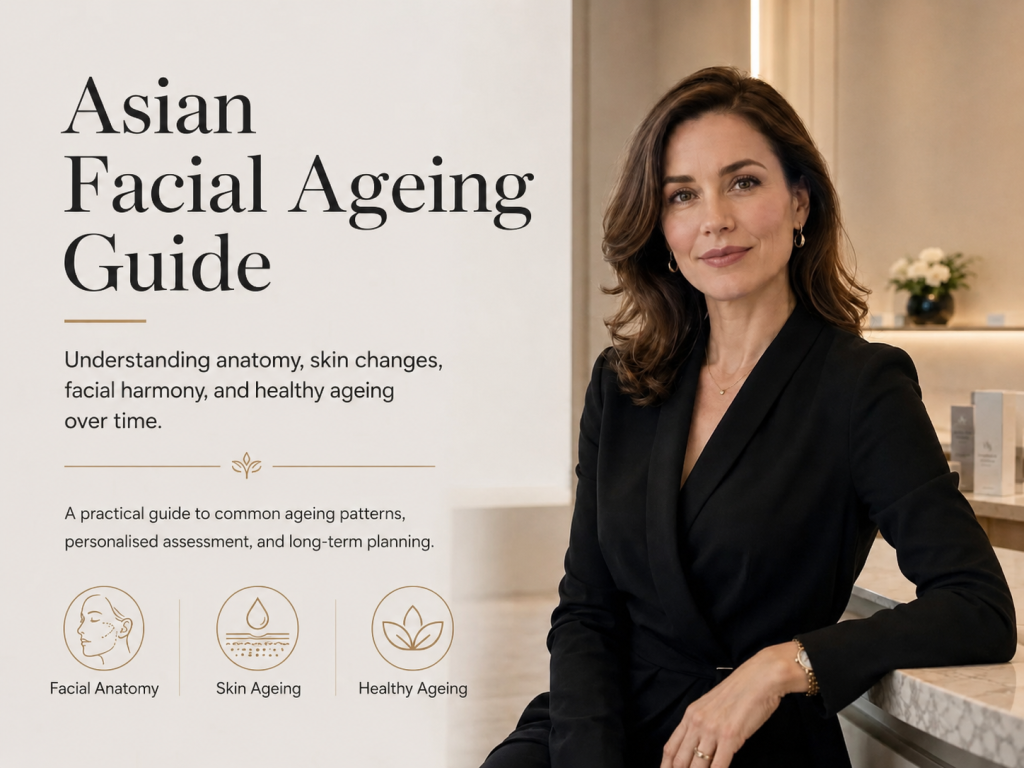
Ageing is a natural process that affects everyone differently. However, facial ageing patterns can vary significantly across ethnic backgrounds due to differences in facial anatomy, skin structure, bone support, and ageing characteristics.
For many Asian individuals in Sydney, understanding how facial features change over time can help create realistic expectations and support informed conversations with qualified professionals.
This guide explores common patterns of facial ageing seen in Asian faces and the factors that may influence long-term facial appearance.
Understanding Asian Facial Anatomy
Asian facial anatomy differs from Caucasian facial anatomy in several important ways.
While every individual is unique, common characteristics may include:
- Wider facial proportions
- Stronger midface projection
- Shorter facial height
- Fuller soft tissue distribution
- Different skeletal support patterns
- Thicker skin in some facial regions
These anatomical differences influence how ageing appears over time.
Because facial structure varies significantly between individuals and ethnic groups, personalised assessment remains essential.
How Asian Facial Features Change Over Time
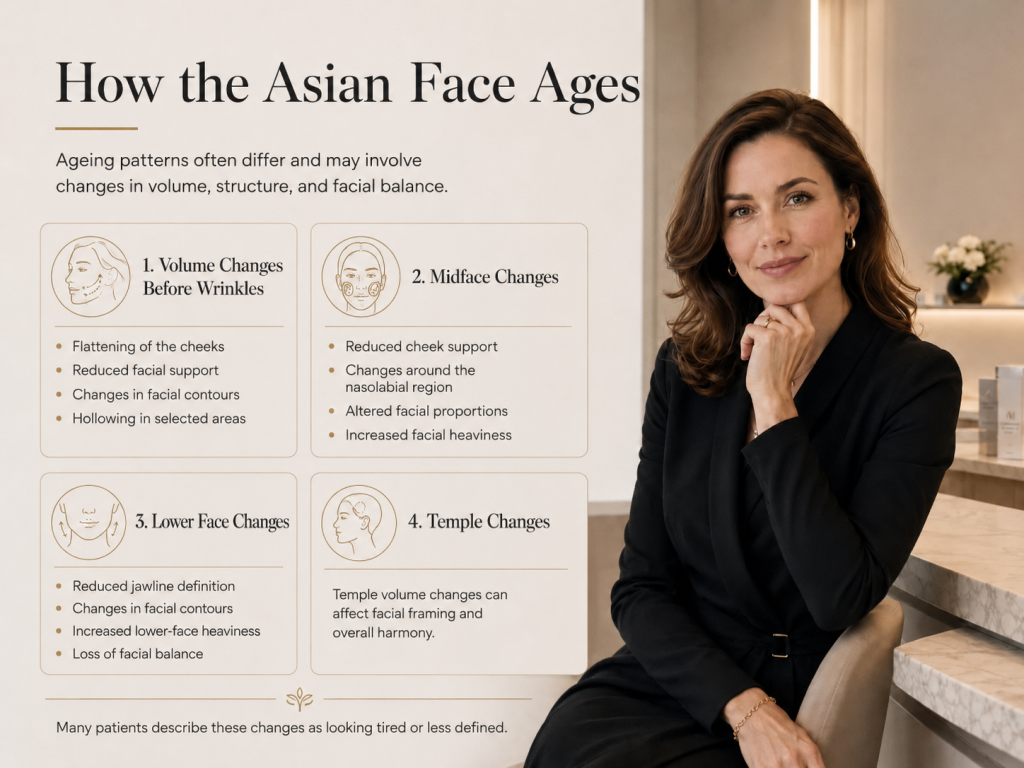
One of the most common misconceptions is that Asian faces age in the same way as Western faces.
In reality, ageing patterns often differ.
Many Asian patients may experience:
Volume Changes Before Wrinkles
Compared with some other ethnic groups, visible volume changes may become noticeable before deep wrinkles develop.
Patients may observe:
- Flattening of the cheeks
- Reduced facial support
- Changes in facial contours
- Hollowing in selected areas
These changes may influence overall facial appearance and balance.
Midface Changes
The midface plays a major role in facial harmony.
Over time, some patients may notice:
- Reduced cheek support
- Changes around the nasolabial region
- Altered facial proportions
- Increased facial heaviness
These changes often influence overall facial appearance more than individual lines or wrinkles.
Lower Face Changes
As structural support changes with age, the lower face may also evolve.
Common observations may include:
- Changes in jawline definition
- Changes in facial contours
- Differences in lower-face proportions
- Changes in facial balance
Many patients describe these changes as looking “tired” or “less defined.”
Temple Changes
Temple volume changes can occur gradually and may influence overall facial harmony.
Because temples contribute to facial framing, subtle changes in this area can affect how youthful or balanced the face appears.
Skin Ageing in Asian individuals
Asian skin often demonstrates unique ageing characteristics.
Many patients experience:
Pigmentation Concerns
Pigmentation and uneven skin tone are among the most common concerns seen during cosmetic consultations.
Factors contributing to pigmentation may include:
- Sun exposure
- Hormonal influences
- Genetics
- Inflammation
- Environmental factors
Texture Changes
Ageing can affect skin texture through:
- Reduced collagen production
- Environmental damage
- Lifestyle factors
- Natural ageing processes
Elasticity Changes
As collagen and elastin decline over time, skin may gradually lose firmness and resilience.
These changes are a normal part of ageing.
Why Facial Ageing Is About More Than Wrinkles
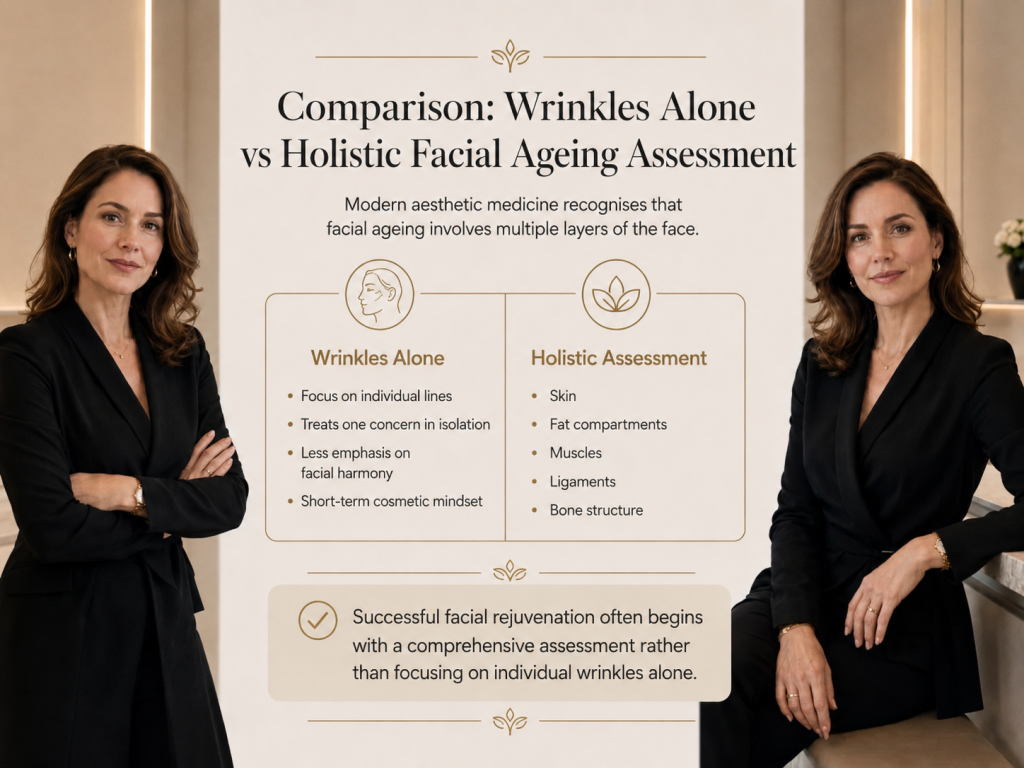
Modern aesthetic medicine increasingly recognises that facial ageing involves multiple layers of the face.
Changes may occur in:
- Skin
- Fat compartments
- Muscles
- Ligaments
- Bone structure
As a result, understanding facial appearance often involves considering multiple factors.
A holistic evaluation helps practitioners understand the factors contributing to a patient’s concerns.
The Importance of Facial Harmony
Many Asian patients prioritise natural-looking outcomes and facial balance.
Rather than pursuing dramatic changes, consultation goals often focus on:
- Facial harmony
- Healthy appearance
- Balanced proportions
- Skin quality
- Natural-looking appearance
This approach aligns with broader trends in modern aesthetic medicine.
Lifestyle Factors That Influence Facial Ageing
While ageing is inevitable, several lifestyle factors can influence how quickly visible changes occur.
Sun Protection
Australia has one of the highest levels of ultraviolet exposure globally.
Daily sun protection remains one of the most important habits for maintaining healthy skin.
Nutrition
A balanced diet supports overall health and may contribute to skin function and appearance.
Sleep
Sleep plays an important role in recovery and general wellbeing.
Hydration
Adequate hydration supports overall health and skin comfort.
Smoking
Smoking is associated with accelerated skin ageing and reduced skin quality.
Stress Management
Chronic stress may influence overall health and wellbeing, including skin appearance.
Choosing a Cosmetic Clinic in Sydney
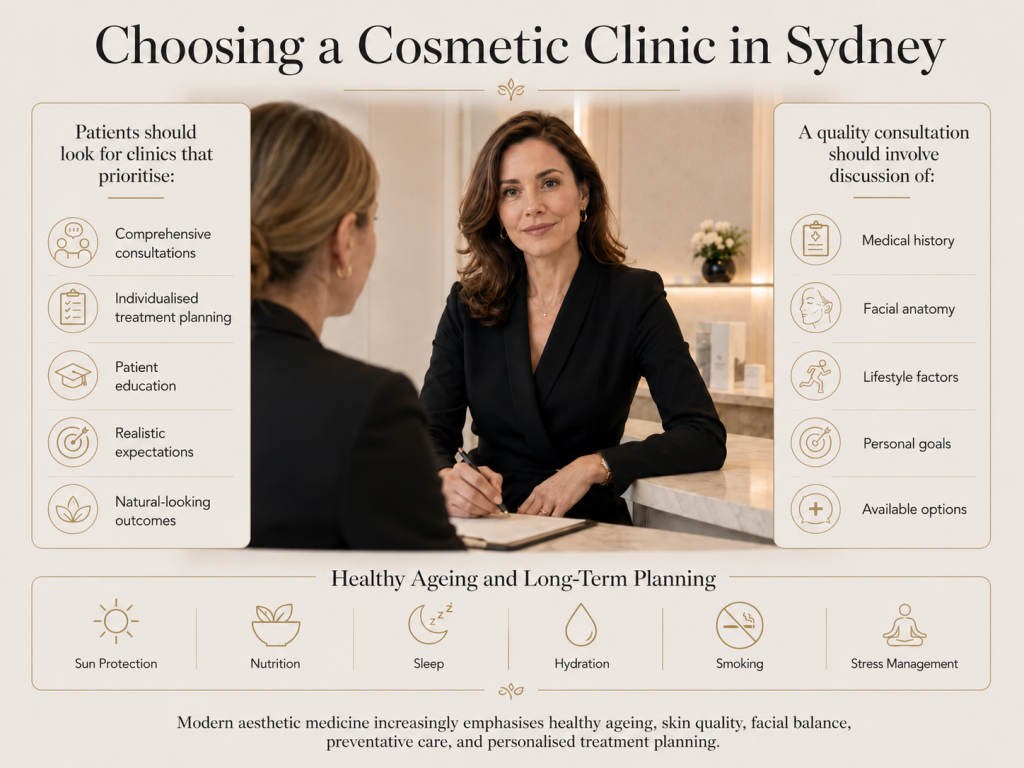
When considering facial rejuvenation, selecting an experienced practitioner is one of the most important decisions you can make.
Patients should look for clinics that prioritise:
- Comprehensive consultations
- Individualised treatment planning
- Patient education
- Realistic expectations
- Natural-looking outcomes
A quality consultation should involve discussion of:
- Medical history
- Facial anatomy
- Lifestyle factors
- Personal goals
- Available options
Patients should feel informed and comfortable before making treatment decisions.
Questions to Ask During a Consultatio
Before considering any cosmetic procedure, patients may wish to ask:
- What factors are contributing to my concerns?
- What options may be appropriate for my goals?
- What results can realistically be expected?
- What are the potential risks and limitations?
- How will my treatment plan be personalised?
- What follow-up care is recommended?
Open communication is an important part of achieving positive patient experiences.
Healthy Ageing and Long-Term Planning
The most successful facial rejuvenation strategies are often those that focus on long-term maintenance rather than short-term change.
Modern aesthetic medicine increasingly emphasises:
- Healthy ageing
- Skin quality
- Facial balance
- Preventative care
- Personalised treatment planning
This approach allows patients to make gradual and informed decisions over time.
Final Thoughts
Asian facial ageing follows unique patterns influenced by anatomy, skin characteristics, genetics, and lifestyle factors. Understanding these changes can help patients develop realistic expectations and have more meaningful conversations during cosmetic consultations.
Whether you are located in Sydney CBD, Macquarie Park, Chatswood, North Ryde, Epping, or surrounding suburbs, a comprehensive assessment by an appropriately qualified healthcare professional is an important first step in understanding your individual facial characteristics and available options.
Disclaimer
This article is intended for general educational purposes only and does not constitute medical advice. Any discussion regarding medical or cosmetic treatments should occur during a consultation with an appropriately qualified healthcare professional. Treatment suitability, risks, benefits, and alternatives should be assessed on an individual basis.