

A sharper lower face is one of the most requested aesthetic goals in clinic, but the right treatment depends on why your jaw looks the way it does. When patients ask about Masseter vs Jawline Filler Sydney, they are usually comparing two very different approaches: one reduces muscle bulk, while the other adds structure and definition. The best option is not about trends. It is about facial anatomy, balance, and choosing a treatment that suits your features rather than changing them too aggressively.
Masseter vs Jawline Filler Sydney: what is the difference?
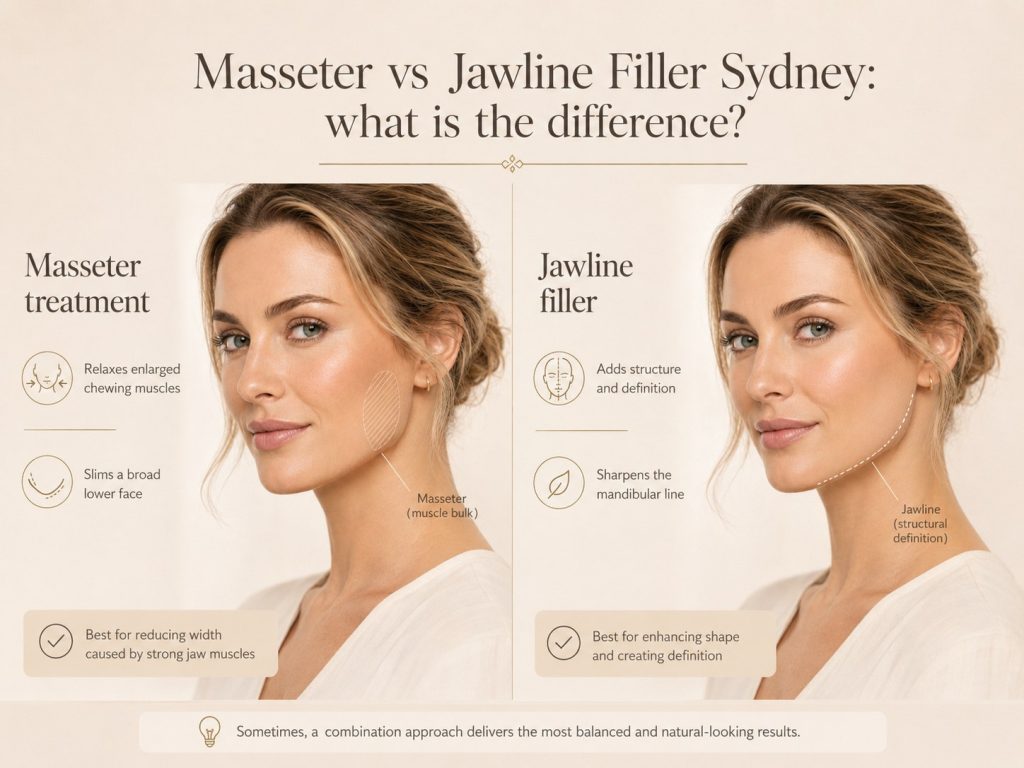
Masseter treatment uses anti-wrinkle injections to relax the large chewing muscles at the angle of the jaw. Over time, this can slim a square or heavy lower face caused by enlarged masseter muscles. It is often chosen by patients who clench, grind their teeth, or feel their face looks too broad from the side or front.
Jawline filler works very differently. Instead of reducing volume, it creates it in precise areas along the jaw to improve contour, sharpen the mandibular line, and support a softer or less defined lower face. This option is often ideal when the concern is structural rather than muscular.
That distinction matters. If your jaw appears wide because of strong muscle, filler can make the area look heavier. If your jaw lacks projection or definition, masseter treatment will not create the sculpted outline you may be hoping for.
Who usually suits masseter treatment?

Masseter slimming is best for patients with visible muscle prominence, especially when they bite down and the muscle bulges outward. In many cases, these patients also report jaw tension, headaches, or teeth grinding. The aesthetic result is typically a softer, more tapered lower face rather than a dramatically carved jaw.
Results develop gradually. Most patients notice a change over several weeks as the muscle reduces in size, with the full effect becoming clearer after repeated treatment. That slower progression appeals to patients who want refinement without looking obviously treated.
There are limits, though. If lower-face heaviness is caused by bone structure, skin laxity, or submental fullness rather than muscle, masseter injections alone may not deliver enough change.
Who usually suits jawline filler?
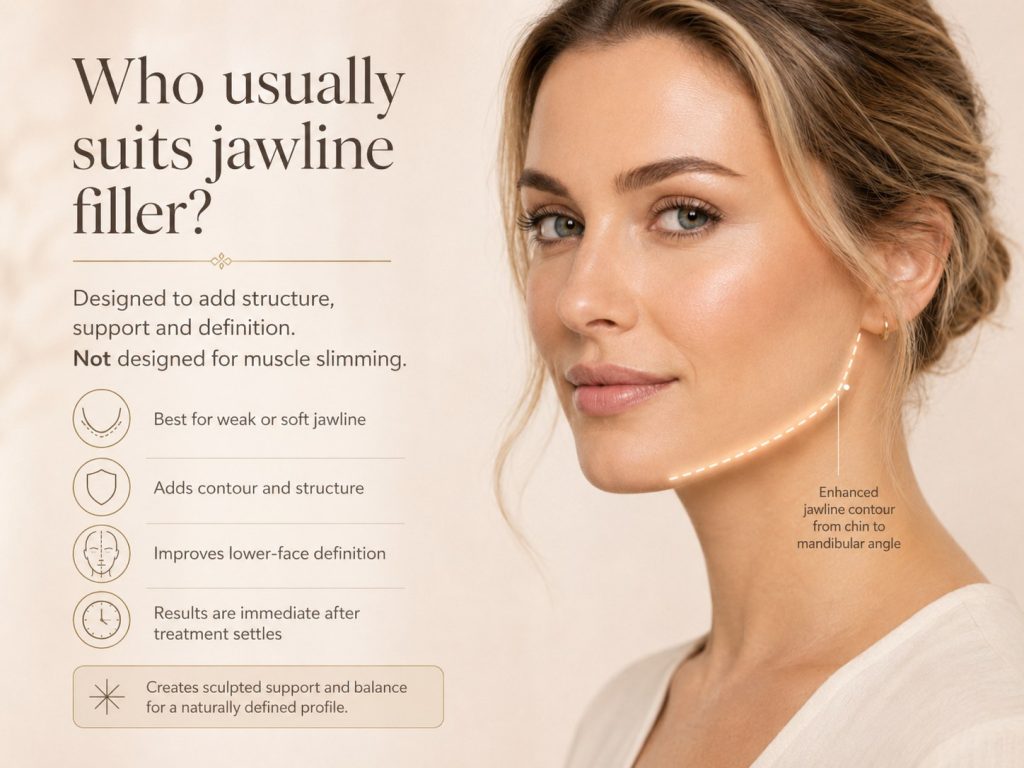
Jawline filler is designed for contour. It can improve a weak jawline, reduce the appearance of jowling by creating cleaner definition, and bring better balance between the chin, jaw, and lower cheeks. In both women and men, the goal is usually not to make the face look bigger. It is to create cleaner lines and stronger support.
This treatment can be especially effective for patients whose profile lacks structure, or for those who want more symmetry along the lower face. Results are immediate, although the final look settles once swelling eases.
Filler also requires precision. Too much product, poor placement, or treating the wrong candidate can make the jaw look bulky or unnatural. A refined result depends on careful facial assessment and a tailored plan.
Which treatment looks more natural?

Both can look natural when selected correctly. Masseter treatment tends to produce a subtle slimming effect over time, which many patients find elegant and understated. Jawline filler can also look very natural, but only when it respects the patient’s existing proportions.
The less natural outcome usually comes from choosing the wrong treatment for the problem. A broad muscular jaw treated with filler may appear wider. A structurally soft jaw treated only with masseter injections may still lack definition.
Can you combine them?
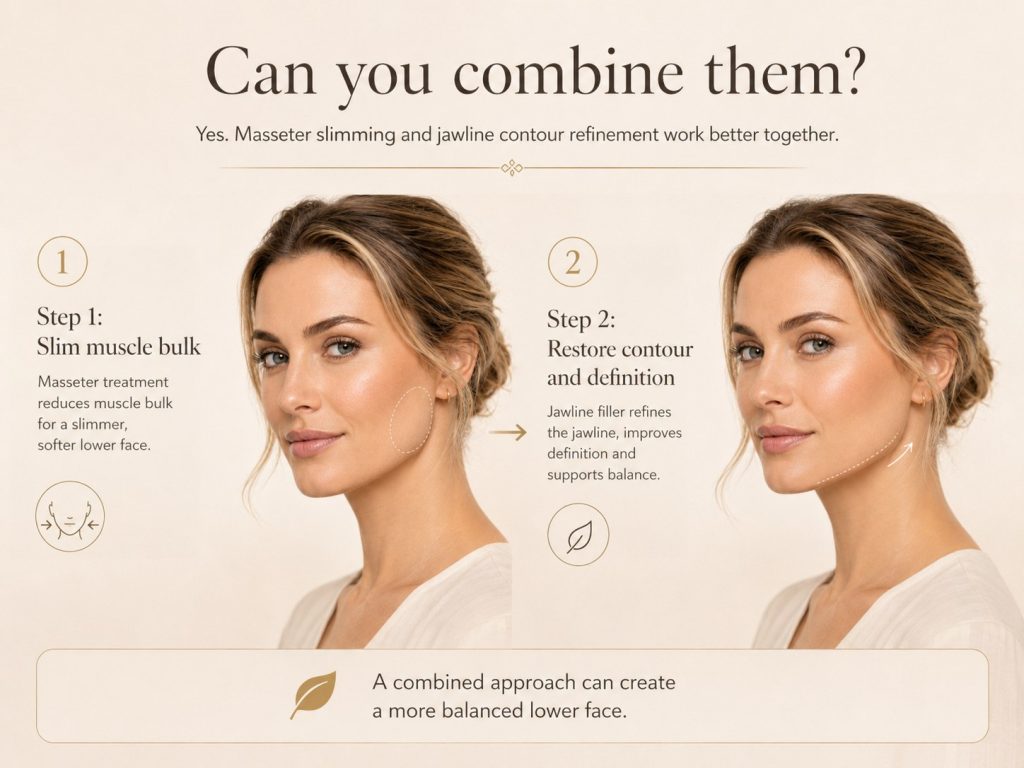
Yes, and in some patients that is the most sophisticated approach. A person may have both enlarged masseter muscles and limited jawline definition. In that case, slimming the muscle first and then restoring contour with filler can create a more balanced result.
Timing matters. Often, the lower face is reassessed after the masseter begins to reduce, because once muscle bulk softens, the amount of filler needed may be less than expected.
Cost, downtime, and maintenance
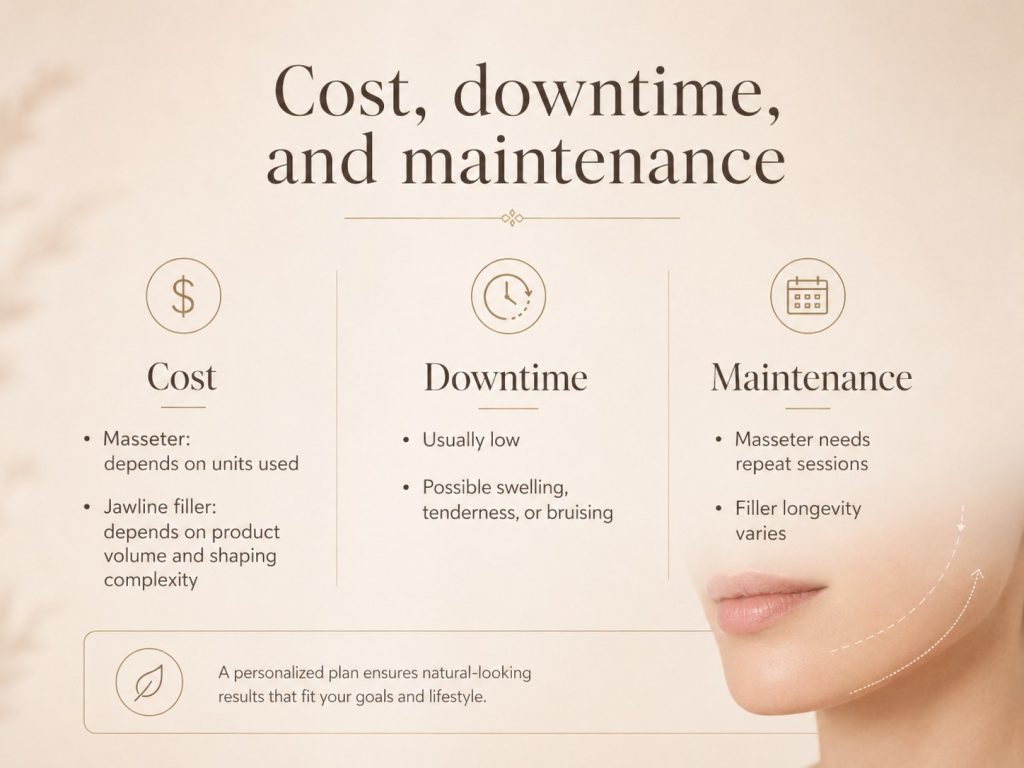
Masseter treatment and jawline filler differ in both cost structure and upkeep. Masseter pricing often depends on the units required, which can vary significantly based on muscle size and strength. Jawline filler cost is usually based on the amount of product needed and the complexity of shaping.
Downtime for both is generally low. Mild swelling, tenderness, or bruising can occur, particularly with filler. Masseter treatment has little visible downtime for most patients, but the aesthetic result takes longer to appear. Jawline filler offers immediate contour, though final refinement is seen once any swelling settles.
Maintenance also differs. Masseter slimming needs repeat sessions to maintain muscle reduction. Jawline filler longevity varies depending on product choice, metabolism, and movement in the area.
How to decide between masseter and jawline filler
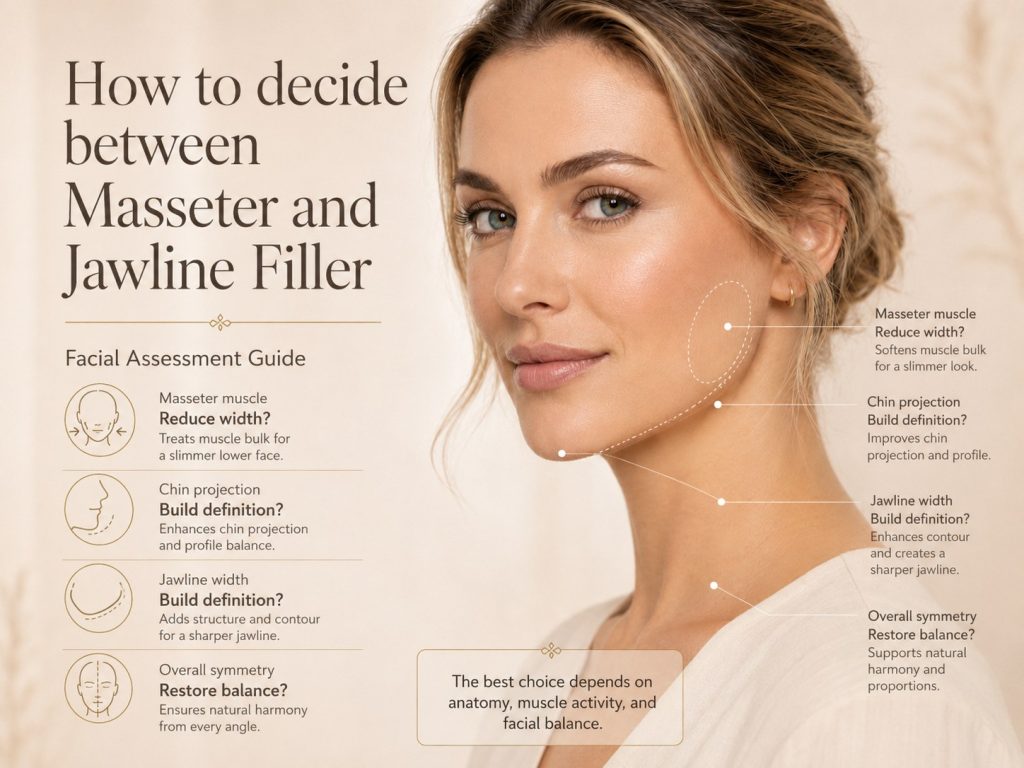
The most accurate answer comes from clinical assessment, not online comparison photos. Your practitioner should evaluate muscle activity, bone structure, facial width, chin projection, skin quality, and overall symmetry before recommending a plan.
For Sydney patients comparing masseter and jawline filler, the key question is simple: are you trying to reduce width, or build definition? Once that is clear, the treatment pathway becomes much easier to personalize.
At Sky Beauty Cosmetic Clinic, this is where a consultation makes the difference. The right lower-face treatment should feel considered, not generic, and the best result is one that brings harmony to your features while still looking like you.
Clients can visit our Sydney CBD or Macquarie Park clinic for personalised treatment consultations.