

The 4 Main Causes of Dark Circles Under the Eyes

Dark circles are one of the most common concerns people notice when looking in the mirror. They can make the face appear tired, stressed, or older than it actually is, even after a good night’s sleep.
Many people assume that dark circles are simply caused by fatigue. While lack of sleep can contribute to their appearance, the reality is often more complex. Dark circles can develop due to a combination of genetic, anatomical, lifestyle, and age-related factors.
Understanding the underlying cause is important because different types of dark circles require different approaches. In many cases, what appears to be a single concern may actually be caused by multiple factors working together.
In this guide, we’ll explore the four most common causes of dark circles and why identifying the cause matters when considering treatment options.
1. Pigmentation Around the Eyes

One of the most common causes of dark circles is pigmentation in the skin surrounding the eyes.
Pigmented dark circles typically appear brown, dark brown, or grey in colour and are often caused by an increase in melanin production around the eye area.
Several factors may contribute to pigmentation:
- Genetics
- Sun exposure
- Skin inflammation
- Frequent rubbing of the eyes
- Allergies
- Previous skin irritation
For some individuals, pigmentation develops gradually over time, while others may naturally have darker skin around the eyes due to hereditary factors.
Unlike shadows caused by facial structure, pigmented dark circles remain visible regardless of lighting conditions and may become more noticeable after sun exposure.
Because the skin around the eyes is particularly delicate, it can also be more susceptible to pigmentation changes compared to other areas of the face.
2. Volume Loss and Tear Trough Hollowing
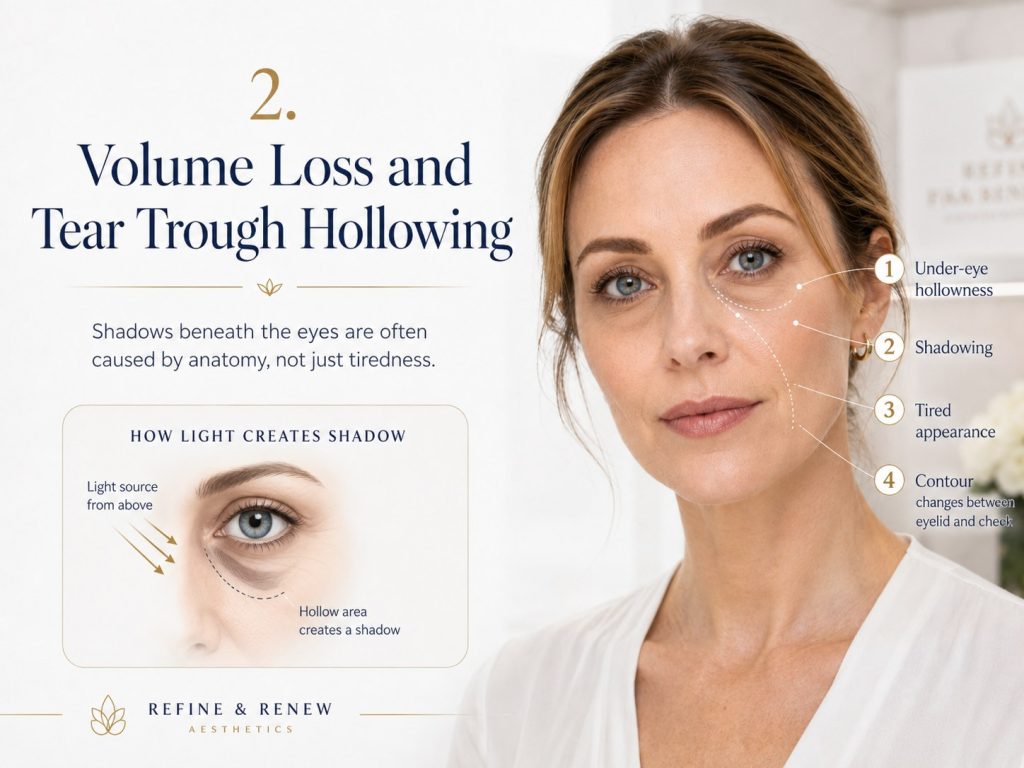
Another common cause of dark circles is volume loss beneath the eyes.
As we age, natural changes occur in facial fat, collagen, and supporting structures. The under-eye area can gradually lose volume, creating a hollow appearance often referred to as the tear trough.
When light falls onto this hollow region, shadows may form beneath the eyes, making the area appear darker and more tired.
This type of dark circle is often characterised by:
- Under-eye hollowness
- Shadowing beneath the eyes
- A tired appearance despite adequate sleep
- Visible contour changes between the lower eyelid and cheek
Many people are surprised to learn that these dark circles are often caused by facial anatomy rather than skin colour.
Ageing can make tear trough hollowing more noticeable, although some individuals naturally have a deeper under-eye structure from a younger age.
3. Thin Skin and Visible Blood Vessels

The skin around the eyes is among the thinnest on the body.
Because the skin is so delicate, underlying blood vessels can sometimes become visible through the surface, creating a blue, purple, or reddish appearance.
This type of dark circle is often influenced by:
- Genetics
- Naturally thin skin
- Fair skin tones
- Age-related collagen loss
- Reduced skin thickness over time
As collagen production declines with age, the skin may become thinner, making underlying structures more visible.
In some cases, what appears to be pigmentation is actually the colour of blood vessels showing through the skin.
This is why dark circles can vary significantly in colour from one person to another.
4. Lifestyle Factors and Fatigue

While dark circles are not always caused by lack of sleep, lifestyle factors can certainly contribute to their appearance.
Common factors include:
Poor Sleep Quality
Insufficient sleep may lead to a dull complexion and make shadows beneath the eyes appear more noticeable.
Stress
Chronic stress can affect overall skin health and may contribute to a tired-looking appearance.
Dehydration
When the body is dehydrated, the skin can appear less plump and vibrant, making under-eye concerns more noticeable.
Smoking
Smoking has been associated with premature skin ageing and reduced skin quality.
Allergies
Allergies can cause inflammation, rubbing of the eyes, and increased pigmentation over time.
In many cases, lifestyle factors do not directly cause dark circles but can worsen existing concerns related to pigmentation, volume loss, or skin quality.
Why Some People Have Multiple Types of Dark Circles
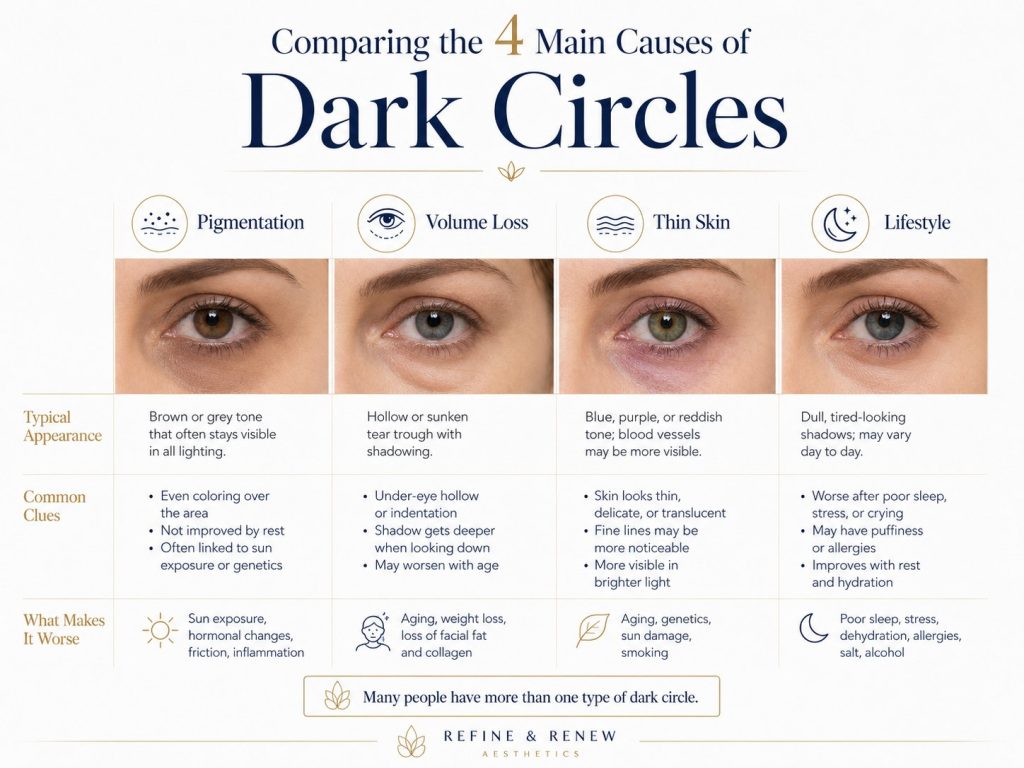
One of the reasons dark circles can be difficult to address is that they are often caused by more than one factor.
For example, an individual may experience:
- Pigmentation around the eyes
- Tear trough hollowing
- Thin skin
- Lifestyle-related fatigue
at the same time.
This combination can create a more pronounced appearance and highlights the importance of understanding the underlying causes before considering any treatment approach.
Can Dark Circles Be Prevented?
Not all dark circles can be prevented, particularly when genetics or facial anatomy play a significant role.
However, healthy lifestyle habits may help support overall skin health and reduce factors that contribute to a tired-looking appearance.
These include:
- Wearing sunscreen daily
- Getting adequate sleep
- Staying hydrated
- Managing allergies appropriately
- Avoiding excessive rubbing of the eyes
- Following a consistent skincare routine
Protecting the delicate eye area from UV exposure is particularly important, as sun damage can contribute to pigmentation and accelerated skin ageing.
When Should You Seek Professional Advice?
If dark circles are affecting your confidence or you are unsure what is causing them, a professional assessment can help identify the underlying factors.
Because different types of dark circles require different treatment approaches, understanding whether pigmentation, volume loss, skin quality, or lifestyle factors are involved is often the first step towards developing a personalised plan.
Final Thoughts
Dark circles are a common concern, but they are not all the same. Pigmentation, volume loss, thin skin, visible blood vessels, and lifestyle factors can all contribute to the appearance of dark circles beneath the eyes.
Understanding the cause is essential because effective management begins with accurate assessment. What works for one person may not be suitable for another.
If you would like personalised advice regarding dark circles, under-eye concerns, or overall facial rejuvenation, the team at Sky Beauty Cosmetic Clinic is here to help.
We welcome clients at both our Sydney CBD (World Square) and Macquarie Centre locations, where our experienced practitioners provide professional assessments and tailored treatment recommendations.
Contact Sky Beauty to book a consultation and learn more about the options available to you.